The Weekly Newsletter of Chubeza Farm
THANK YOU!!
This week, we’re delighted to bring you more new, very distinctive products from very special producers.
The amazing “Pele Bread” Bakery is expanding their product line! In her extraordinary bakery in Moshav Hogla, Shirley of “Pele Bread” offers whole-grain sourdough bread, gluten free, sprouted legumes and flaxseed, all stone mill-ground and kneaded by hand. No yeast, no added sugar, and no oil! All these very special ingredients combine to create nutritious bread, rich in complete plant-based protein and dietary fibers, with a low glycemic index.
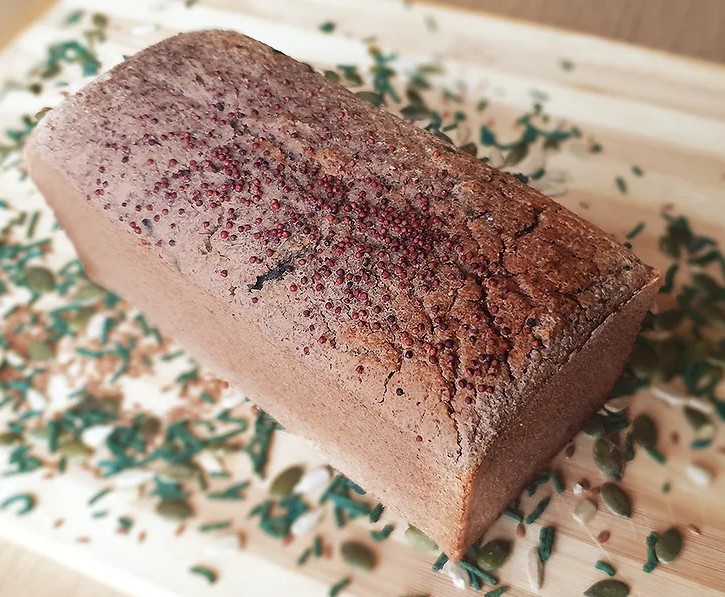
Making its debut this week to join our favorite “Pele Bread” varieties is “Treasure Bread,” a buckwheat and millet bread filled with such delightful treats as sunflower and pumpkin seeds, almonds, flaxseed, and chia seed. Don’t miss these incredible products!
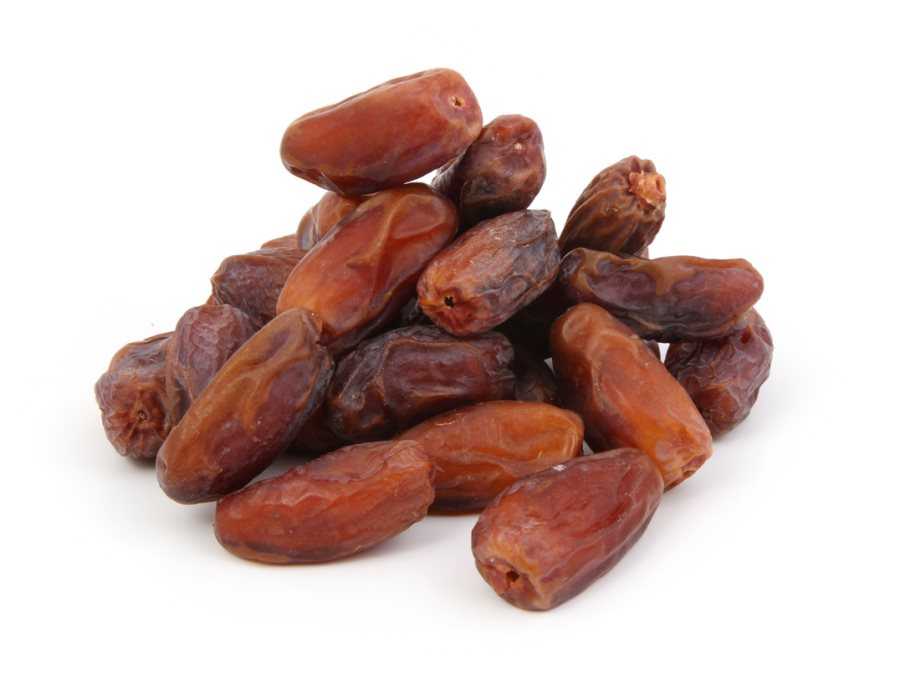
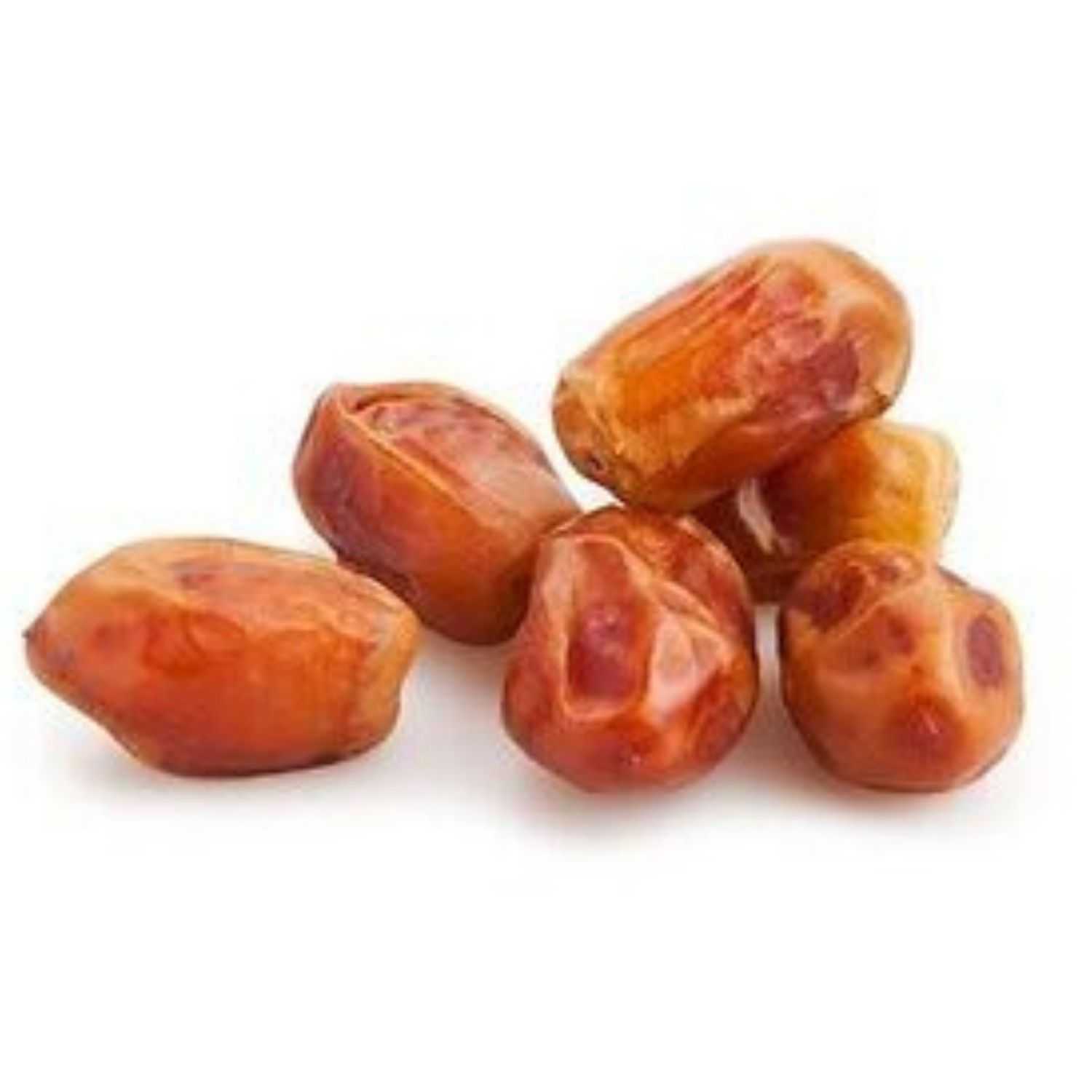
More good news! Delicious Dekel Noor dates from Kibbutz Samar are back in a limited edition. Plus, Zahidi dates are back in stock, joining the esteemed lineup of the superb date selection from Kibbutz Samar in the southern Arava. Take your choice which yummy dates to be delivered in your Chubeza box: luscious large Medjool dates, soft and sweet Barhi dates, long and nutty Dekel Noor dates, or light and delicate Zahidi dates.
ADD THESE EXTRAORDINARY BREADS, DATES, AND OTHER AMAZING PRODUCTS VIA CHUBEZA’S ORDER SYSTEM!
This week’s sunny days promise to warm up to genuine summery temperatures. Although we’d never hazard to predict what lies ahead in the ever-changing weather reality of recent years, there is a possibility that this year’s very mild winter is over. A warm winter nearly devoid of rain, marked by only occasional cold and showers. With that in mind, we now seize the last opportunity for this week’s Newsletter to spotlight a true winter vegetable, embodying a green explosion from a plant that loves rain, gray skies, and especially the cold. (Our thanks to the wonderful Chana Netzer for these very special photos from the field!)
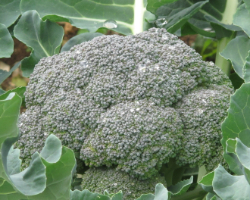
The Battle of the Broccoli fought between mother and child has been here since time immemorial. But it’s always interesting to note that fathers, too, pay some attention to their children’s eating habits, even in days of old. Rumor has it that Drusus, son of the Roman Emperor Tiberius, loved broccoli so much that he ate broccoli and only broccoli for over a month. After his urine turned green and his father scolded him, Drusus was forced to take a sad leave of absence from his favorite veggie.
Romans have always been the most loyal and ancient broccoli consumers. The vegetable’s name is derived from the Latin brachium, meaning branch or arm, which aptly describes the way broccoli flower heads branch out. Broccoli has resided in Italy from the 8th century BC, i.e. nearly 3,000 years, but it probably originated in Turkey and the Eastern Mediterranean region. The Etruskans (an ancient people who migrated from Asia Minor to Italy) raised crops from the Brassica family. Since no written history remains about the Etruskans, their culture and beliefs remain somewhat of a mystery to this day, save for several preserved facts like their love for the cabbage family… The Etruskans bequeathed this affinity to all the nations in the region with whom they traded: the Greeks, Phoenicians, Sicilians, Corsicans, Sardinians, and of course the Romans, who immediately fell in love with broccoli and continued to develop its family.
In Roman cuisine, broccoli became a sought-after gourmet delight, otherwise known as “the five green fingers of Jupiter.” However, the early broccoli varieties were leaner, forming less of a “head.” They were probably purple and turned green only in cooking. Over time, the Calabrese variety was developed, sporting a larger flower head, and remaining popular and widely grown to this day.
On the European continent, the spread of broccoli was delayed for a long time. Only in the 16th century did broccoli stamp its passport at the French border upon entering with the prestigious entourage of Katherina De’Medici, who emigrated from Italy to France to marry His Royal Highness Henry II. Turns out the French were not initially impressed with the green immigrant: the esteemed chefs must have turned up their noses and sneered (with a French accent): “Shame on him, this Levantine greenhorn! No chic whatsoever! All those green curls so out of control! Mon Dieu!!”
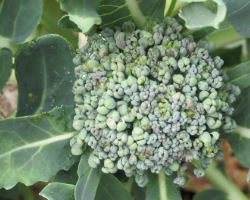
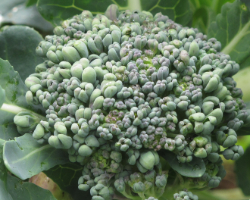
Broccoli is essentially a plant that has reached the moment just before flowering, and we actually eat the tightly packed flower buds that form at the top of the stem. If you leave the broccoli growing peacefully in the field rather than harvesting it, it will bloom. Its head will spread open, and yellow and white florets will bloom from the green, densely packed buds we eat. The flavor of these florets is sweet and spicy, but their stalks are already very fibrous and hardly suitable for cooking and eating. Here’s an example of a broccoli that passed its prime and is about to blossom:
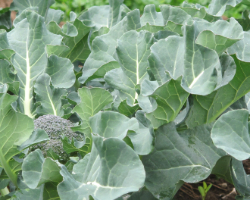
Not only the broccoli flower heads are edible. Here in the Middle East, it’s not common to eat broccoli leaves, but overseas in Italy or the Far East, there are broccoli varieties grown specifically for their greens, including broccoli rabe or Chinese broccoli. Usually, these varieties do not grow a dense head like the broccoli we know, but rather bloom immediately with a delicate bloom, and their leaves are picked when they are young and tender. They are very popular additions to pasta or stir-fries. The mature broccoli greens are used in a similar way to kale. Their nutritional value is quite high, rich in vitamins (A, B-complex, C) and minerals (iron and calcium).
Meanwhile, back to our initial question: is it really so important to eat your broccoli? Once again, Mom is right. Big time. Broccoli is very rich in Vitamin A, i.e., beta carotene, folic acid, calcium (a cup of cooked broccoli is equivalent to the calcium value of half a cup of milk) and iron (one cup contains 10% of your daily recommended intake) absorbed in the body with the help of its abundant Vitamin C content (one cup of broccoli equals one orange, Vitamin C-wise!). What’s more, broccoli contains Vitamins B1, B2, B3, B6, magnesium, zinc and potassium.
But besides its nutritional value, broccoli is gaining recognition for its significant contributions to good health. For one, broccoli lowers cholesterol levels in the blood. Broccoli (as well as onion, carrot and cabbage) contains pectin fiber which binds acids in the body, thus depositing more cholesterol in the liver and allowing less cholesterol to be released into the bloodstream. Research has found that its effectiveness is equivalent to certain cholesterol-lowering medications. Broccoli is also rich in the mineral chromium which improves insulin function to those with a tendency towards adult diabetes.
And there’s more! Glucosinolates – substances found in the Cruciferous family, those responsible for the bitter flavor section of the family – are warriors in battling cancer. Recent research indicates that when the plant is chewed, glucosinolates break down into important phytochemicals. Two have been particularly well researched: indole and sulforaphane. Both these compounds, which surface upon slicing, chewing or tearing apart the vegetable, have been found to inhibit the growth of cancerous stem cells. Their mode of action, similar to other anti-cancer substances already in clinical use, is by actively interfering with the cell division process. Sulforaphane and idole are even more prominent in broccoli sprouts. (While we’re on that subject, you can order broccoli sprouts and other excellent sprouts grown by “Udi’s Sprouts from Moshav Achituv” via our order system).
The bitterness (and spicy) characteristic of broccoli and its relatives also results from glucosinolates, and more precisely – the mustard oil within it. The family probably developed this trait for self-defense: when an animal or pest tries to harm the plant by chewing, cutting or injuring it, one dose of the powerful taste is enough to send the aggressor fleeing. The bitter taste can indeed drive away humans as well, including many children who recoil in the face of broccoli (except Drusus, apparently). Fortunately, as we grow older, our taste buds develop the skill to cope with bitterness and even enjoy it (coffee, beer, broccoli…). Good thing, too, as broccoli and its family members are super vegetables that are vital, tasty and healthy for us.
To avoid harming broccoli’s very valuable components, take care not to overcook. Though light cooking does have the advantage of making more broccoli segments edible, it’s best to consume your broccoli raw, steamed or very lightly cooked (10-15 minutes). Check our recipe section (in Hebrew) for excellent broccoli salads.
Hey, listen to your parents sometimes….
Tips
- Broccoli stores well in the fridge and needs the cold. Store it there in a plastic bag to protect its nutritional value, especially Vitamin C. Another possibility, albeit less popular, is to immerse the broccoli stalk in deep ice water (like a bouquet of flowers), covering the head with a loose plastic bag, and change the water daily.
- Do not wash the broccoli before you refrigerate. Moisture will cause it to spoil.
- When cooking/steaming/lightly sautéing broccoli, include all its parts. Begin with the stalks, as they are harder and need more cooking time. Only then add the florets and leaves. (Broccoli leaves are yummy and definitely worth a taste!).
- Go easy on the cooking so the broccoli remains firm, and strong-flavored. Best to steam, not cook.
May this week bring good news of the return of all the hostages to their homes!
Alon, Bat-Ami, Dror, Einat, and the entire Chubeza team