The Weekly Newsletter of Chubeza Farm
THANK YOU!!
FIESTA MELONS
In Benidorm there are melons,
Whole donkey-carts full
Of innumerable melons,
Ovals and balls,
Bright green and thumpable
Laced over with stripes
Of turtle-dark green.
Choose an egg-shape, a world-shape,
Bowl one homeward to taste
In the whitehot noon:
Cream-smooth honeydews,
Pink-pulped whoppers,
Bump-rinded cantaloupes
With orange cores.
Each wedge wears a studding
Of blanched seeds or black seeds
To strew like confetti
Under the feet of
This market of melon-eating
Fiesta-goers.
- SYLVIA PLATH
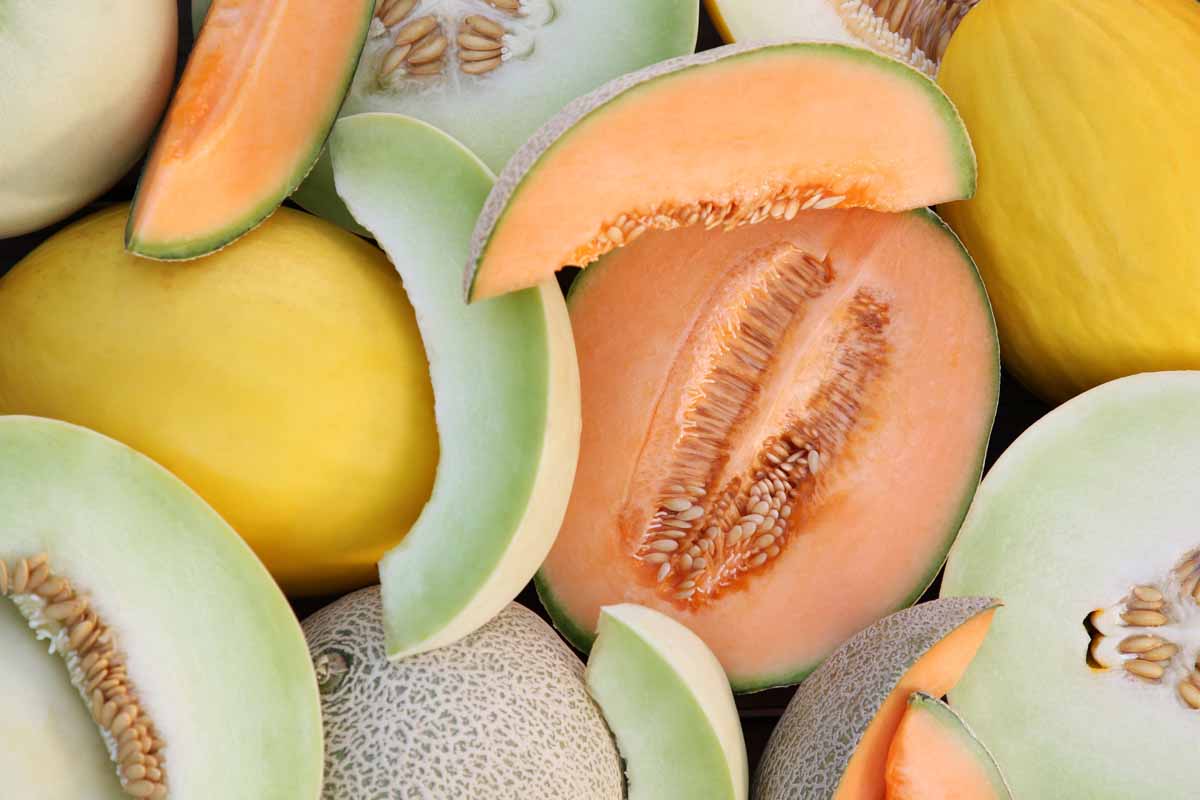
This week’s sweet summer newsletter is dedicated to the round, fragrant, delectable fruit now arriving in your boxes that makes the heat worth suffering. Welcome to our beloved Chubeza Newsletter star - the melon!
Sweetness is certainly not exclusive to just the fruit of trees. Which is why we are very pleased to claim the glory of the wonderful pair of fruits, the melon and watermelon – now regulars in our summer boxes – that grow neither on a tree nor a bush, but sprawled comfortably across Chubeza’s open field.
They belong to the Cucurbit family, a grand summer clan, cousins to other sprawling relatives – pumpkin, zucchini, cucumber, and fakus (and to those of you who still think we’re sending you two bags of squash, kindly take a second look at the recent Fakus Newsletter.) Though it pretends to behave as a cucumber substitute, the fakus is actually a melon picked before it had time to ripen. Which is a good thing, for unlike his melon brothers, the fakus will not get sweeter as he ages. But the melons will! As they ripen, the sugar level in the fruit rises, and they become desirable – not only to us, but also to birds and mice who are champs at detecting a ripe, juicy melon and fight for their fair share… (more on that later).
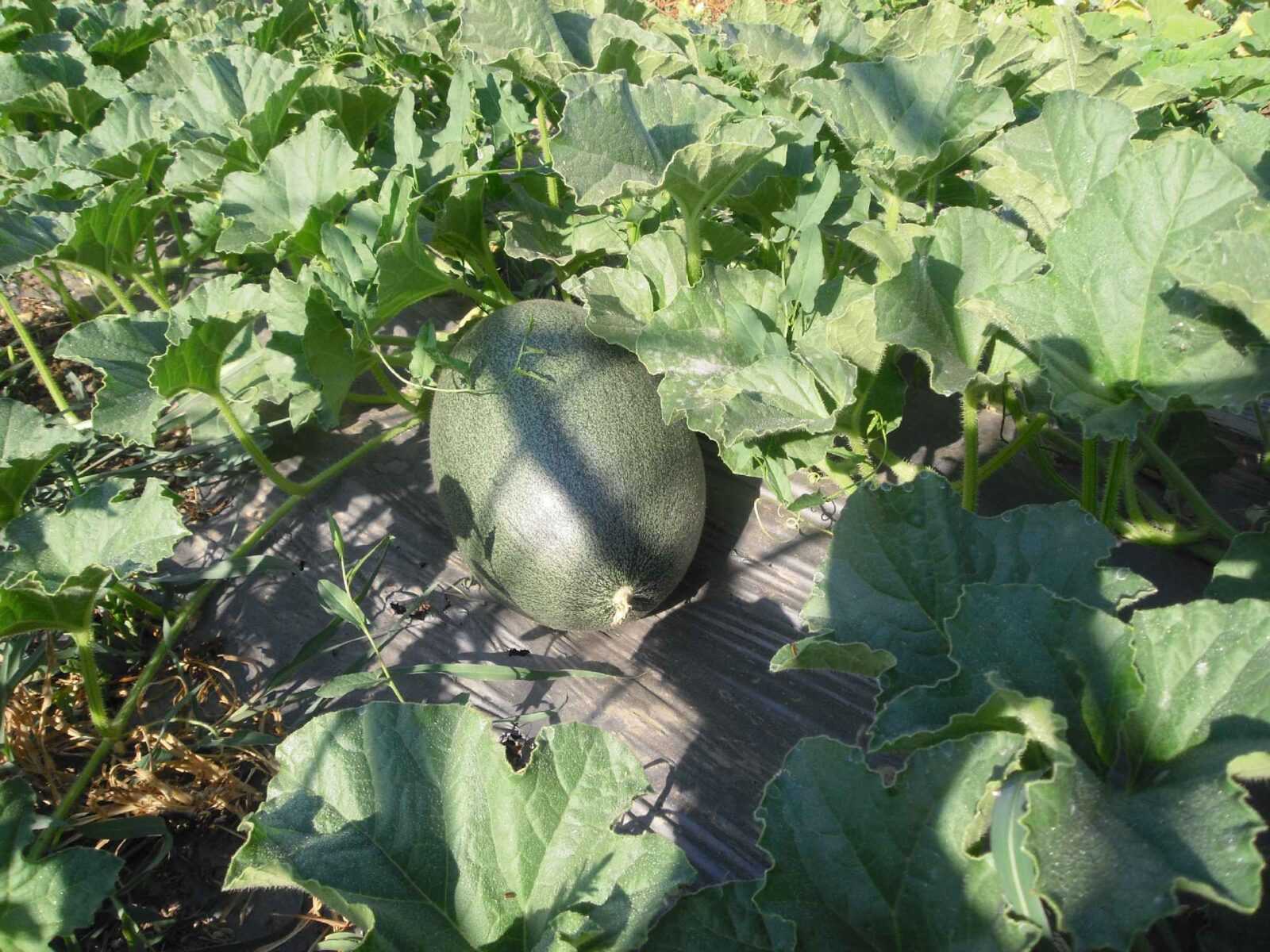
We try to plant melons as early as possible. We seeded and planted the first round of melons in the beginning of February and more rounds at the start of March, April and May. Since it was still truly winter at first, we protected the melons by covering them with plastic sheets to keep them warm, cozy, and able to grow and thrive in their comfy little hothouse beneath the plastic. As the weather warmed, the next rounds were planted in open beds.
At the beginning of the melon’s growth, we cover its bed with a thin, white fabric called “agryl,” allowing the plant to serenely grow, protected from viruses and other insect-transmitted diseases. Once the plant begins blossoming, we remove the white veil and allow the glowing bride to face the outside world. Despite the many dangers, only in the open air can the anticipated rendezvous with pollinating insects take place. Without that meeting, there will be no pollination, fertilization or sweet fruit.
It takes the first melons slightly less than two months to give us a roly-poly wink from their beds. Some 2-3 months after planting or sowing, they begin to change color, soften slightly inside, fill with sweet juice and detach easily from the plant. Melons begin ripening around 30 days after flowering, when the sugar levels and pH are on the rise. The sugars that make up the fruit’s solids are fructose, glucose and sucrose, accompanied by 90% water.
We strive to pick them at their peak ripeness, after their sugar content has reached its peak and they are sweet and juicy. Melons have no reserve of carbohydrates. Actually, most of their carbs are sugars, not starch, which is why they have no starch to convert to sugar after harvest. What you pick is what there is. Prematurely picked unripe melons will become juicier and softer over time, but they will not become yummy or sweet.
And thus, over the years, various methods to determine the ripeness of the fruit have been developed. Among the more scientific ones are the refractometer, a device for measuring sugar levels and NMRI (Nuclear Magnetic Resonance Imaging). But we plain farmers simply bend down and inhale (mmm… smells like a ripe fruit…), take a close look (and the color has changed from green to yellow!), feel (press the base of the fruit, where the flower once grew, and look for flexibility) and give it a little tug (if it detaches easily, great; if not, it needs some more time on the vine). We then gently roll the melons into long piles beside the bed and stroll through with our wheelbarrow to collect the melons at the end of the row, where we arrange them into low crates (they don’t like being stacked in piles) and bring them to the packing house to savor their intoxicating aroma.

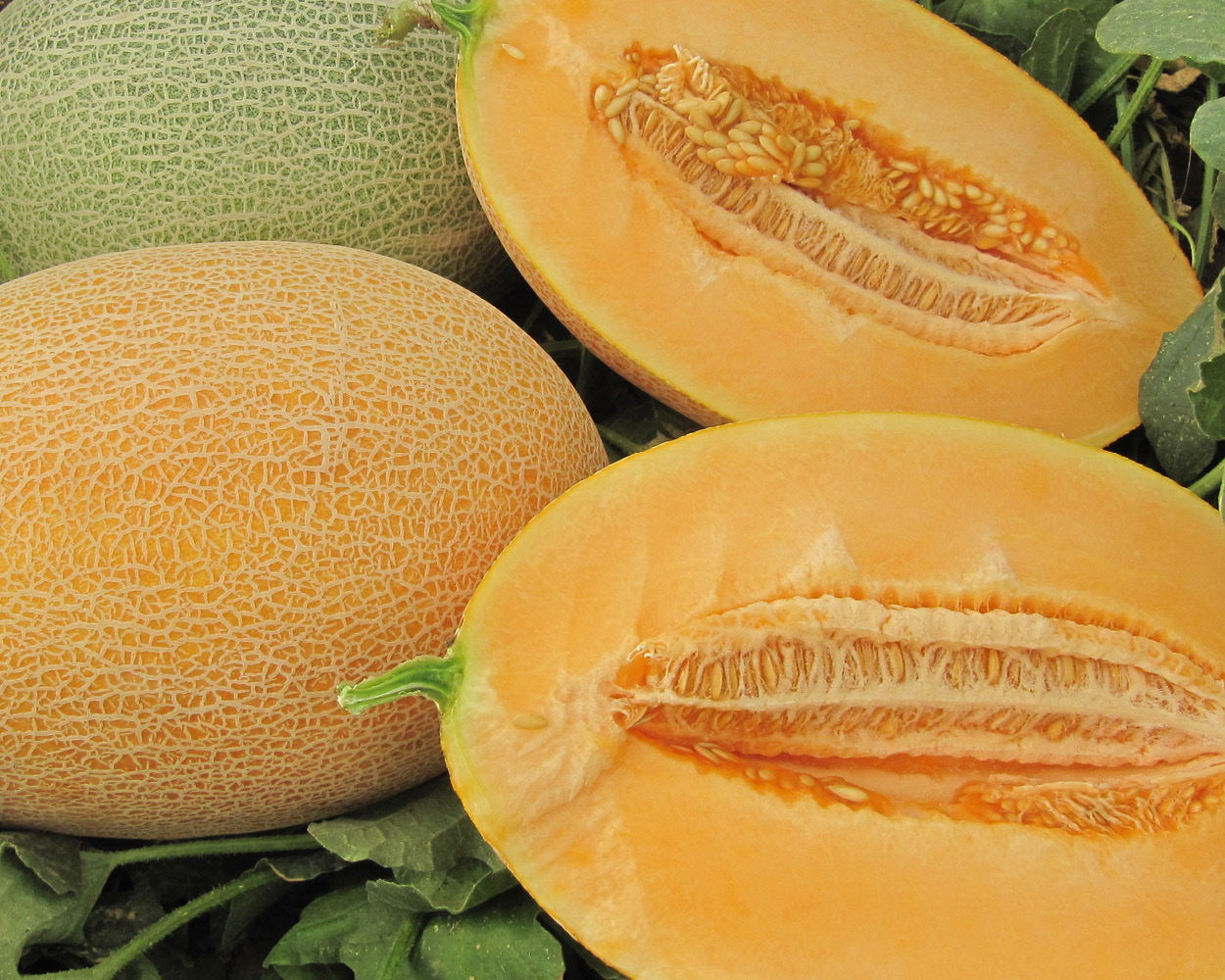

This year we grew seven melon varieties, all proudly Israeli-developed. Each variety was planted at a different time, according to its ideal moment in the season, and to diversify the delicious sweetness in your Chubeza box throughout the summer.
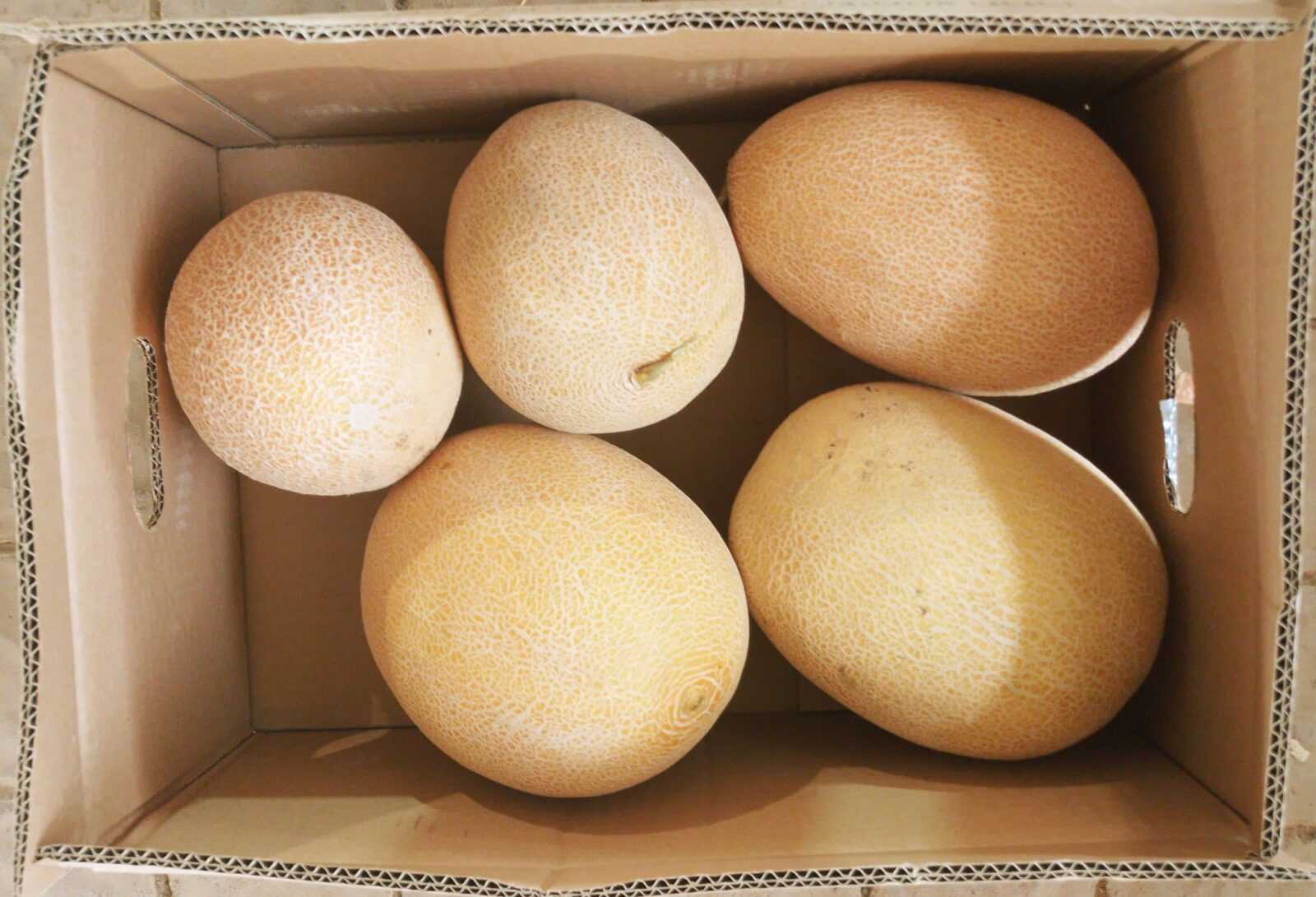
Three of our melons are of the “pineapple (Ananas) melon” variety: long, elliptical, and juicy with a very prominent hometown heritage, developed from the local baladi melon that has grown in Israel for many years. Local farmers simply called it shamam (melon in Arabic) or sometimes by the name of its cousin Batichi Asfar (yellow watermelon).
Of these pineapple melons, the first is Jasper, with pale creamy flesh; the second is Hudson, with orange flesh; and the third is Ruby, which is actually round with orange flesh.
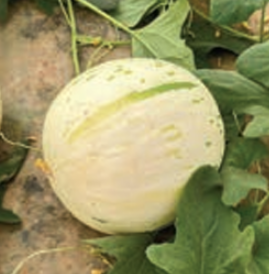

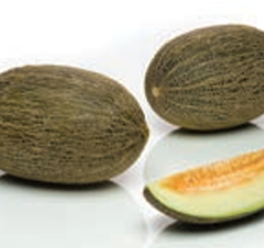
You can greet the next pair with ¡Hola! These are our Spanish melons – boasting smooth or lightly striped tough skin, with a special coolness and crunch. They are also called Canary melon, piel de sapo (“toad skin”), or Santa Claus melon (because their thick rind makes them so durable that they can last even until Christmas. I haven’t tested this claim – we polish them off long beforehand).
This year, the two Spanish varieties in Chubeza’s field are Valentin – dark green outside and pale-yellow inside, and the yellow Emoji, which you already know and love from last year.
The third variety, very similar to them, is the “Dino” – because someone thought it looked like a big dinosaur egg – originating in Korea and Japan. It’s coined Yummy, and true to its name, this melon is tasty, sweet, refreshing, and joyful.
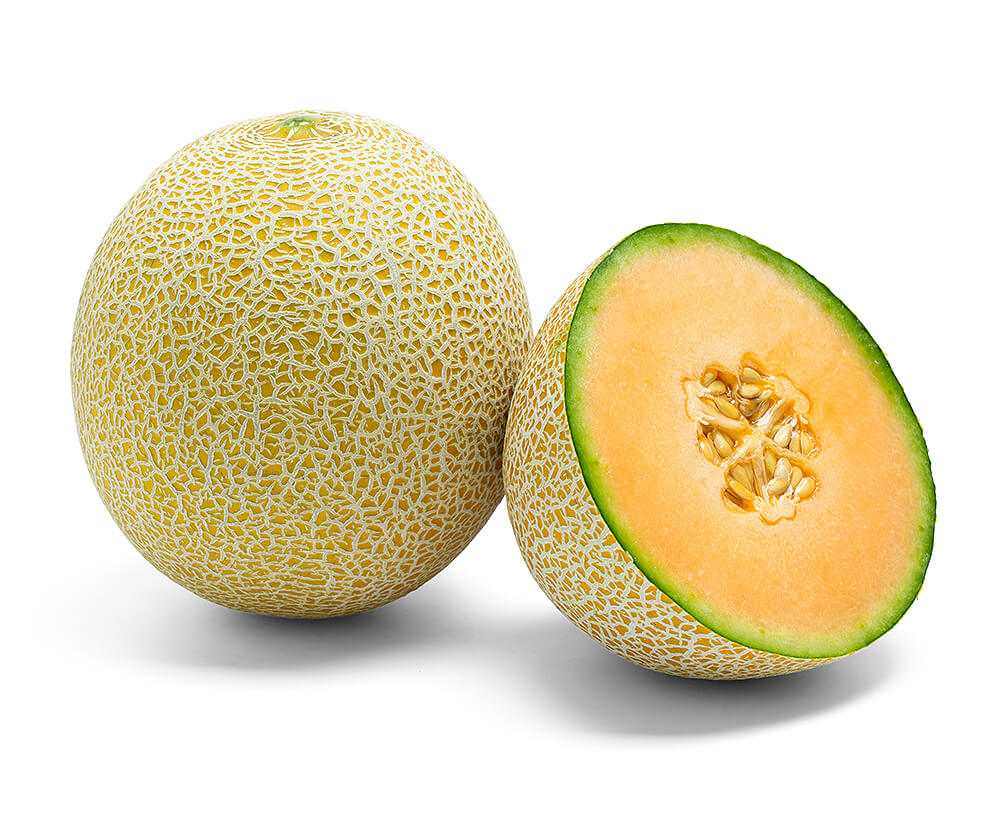
And the seventh variety, familiar and beloved, is Justin – a round melon with a yellow netted rind and sweet orange flesh. It was developed in Israel by farmers in Ein Yahav together with Origene Seeds about eight years ago. This melon was named in tribute to singer Justin Timberlake, a melon lover, who visited Israel at that time and among his food requests was melon salad (this is true!).
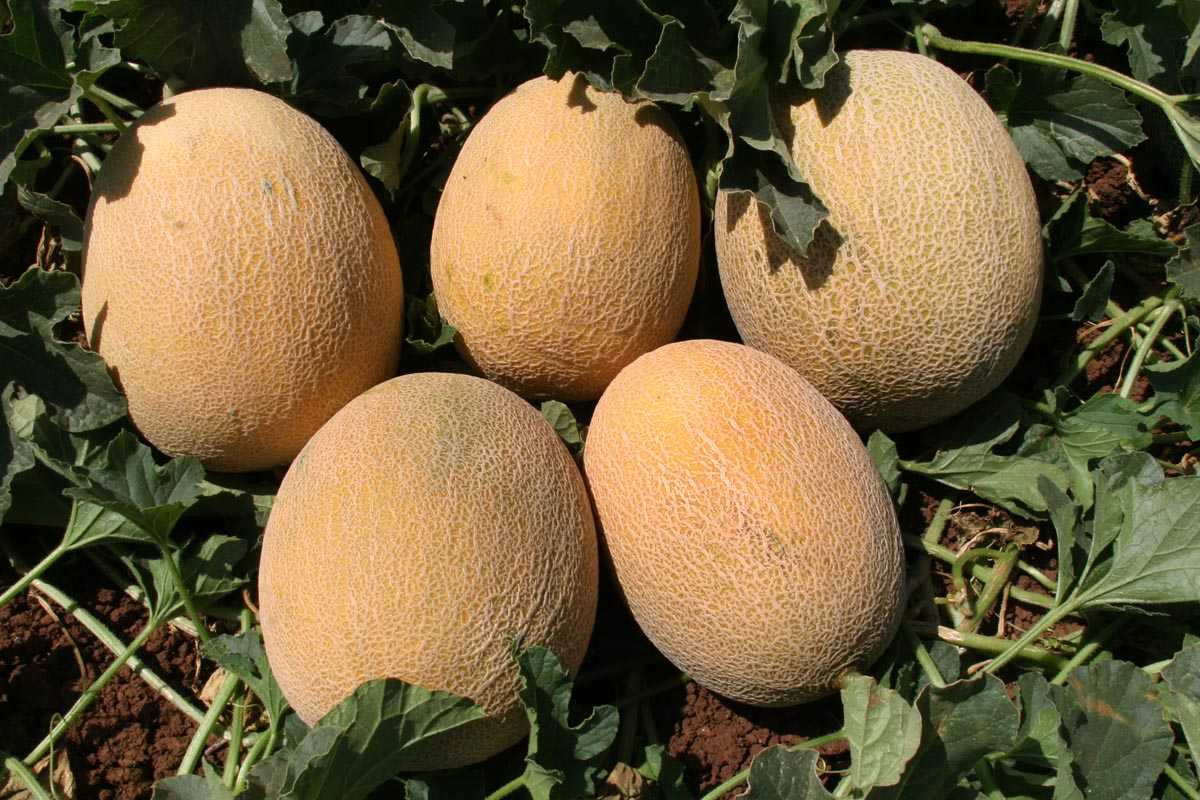
Yet unfortunately, we aren’t the only ones who crave the sweetness of these juicy fruits. Every year we wage a stubborn battle with the crows who thrive on pecking and nibbling at our sweet melons. Which is why we protect the fruit with a double defense as they ripen. From below, we cover them with black bird netting meant to prevent the gluttonous birds from beating us to reach the prize. And from above, our fearless weapon is…. a Bird Scarecrow! This is a kite shaped like a big vulture, mounted on a flexible 6-meter telescopic pole. Our kite soars with even the gentlest breeze, mimicking the flight of a raptor and scaring off those ravenous crows (even fools us sometimes…). Don't take our word for it. Take a look and see for yourselves. Here it is!
Melon history begins in Africa, where many wild varieties still grow. It is unknown when, where and how melons were domesticated, but somehow the gatherers of an ancient era selected and saved the seeds of the sweetest wild melons. Melons were already abundant in Egypt over 4000 years ago, and a millennium later reached Turkey, Iran, Afghanistan, India, south-central Russia, China and Japan via trade routes. Ancient art depicts melons, including in a 2,400-year-old Egyptian burial painting. In the over 2000-year-old Gilgamesh Epic, Gilgamesh is mentioned eating aromatic melons. The fruit likely arrived in Europe during the Greek and Roman empires. The Moors brought melons from North Africa to Spain during their rule there. Here in Israel, melon is noted in the Mishnah under the name melafefon (cucumber)… Melons back then were much smaller than today’s varieties, around the size of an orange.
Different cultures feast on melons in different ways: in the Far East, melons are cooked, though these are different varieties than the sweet melons we know. In the Middle East, Central and South America and China, dried melon seeds are eaten as a snack. In Mexico, a refreshing melon cooler called agua fresca (“fresh water”) is a popular summer drink. In Japan, they make a different drink called midori, a very sweet, heavy melon liqueur produced by soaking melons in alcohol for about a month (!). Even in our familiar way of eating fresh melon, some like it with salt and pepper, powdered ginger or lemon juice.
Medieval alchemists claimed that melon encourages blood circulation and soothes slow and/or irritable temperaments. It was said to ease the pain of kidney stones and cleanse the skin. In Chinese medicine, melon is considered a cooling food that affects the heart and stomach, spurs urination, eases constipation, helps fight liver diseases, relieves a cough, reduces body temperature, and quenches thirst. It is recommended to eat a melon separately, as its own little meal.
From a nutritional viewpoint, melon is rich in Vitamin C (half a melon contains 117 mg, almost twice the recommended daily intake), and Vitamin A and beta carotene, both antioxidants that help protect cells from harmful free radicals. What’s more, half a melon contains over 800 mg of potassium (almost double the amount of a banana), which helps lower blood pressure and ease muscle pain.
May the melon’s sweetness ease us through the heavy heat and soothe all aches and worries! B’sorot tovot!
Alon, Bat-Ami, Dror, Einat and the entire Chubeza team