The Weekly Newsletter of Chubeza Farm
THANK YOU!!
BERRY GOOD NEWS:
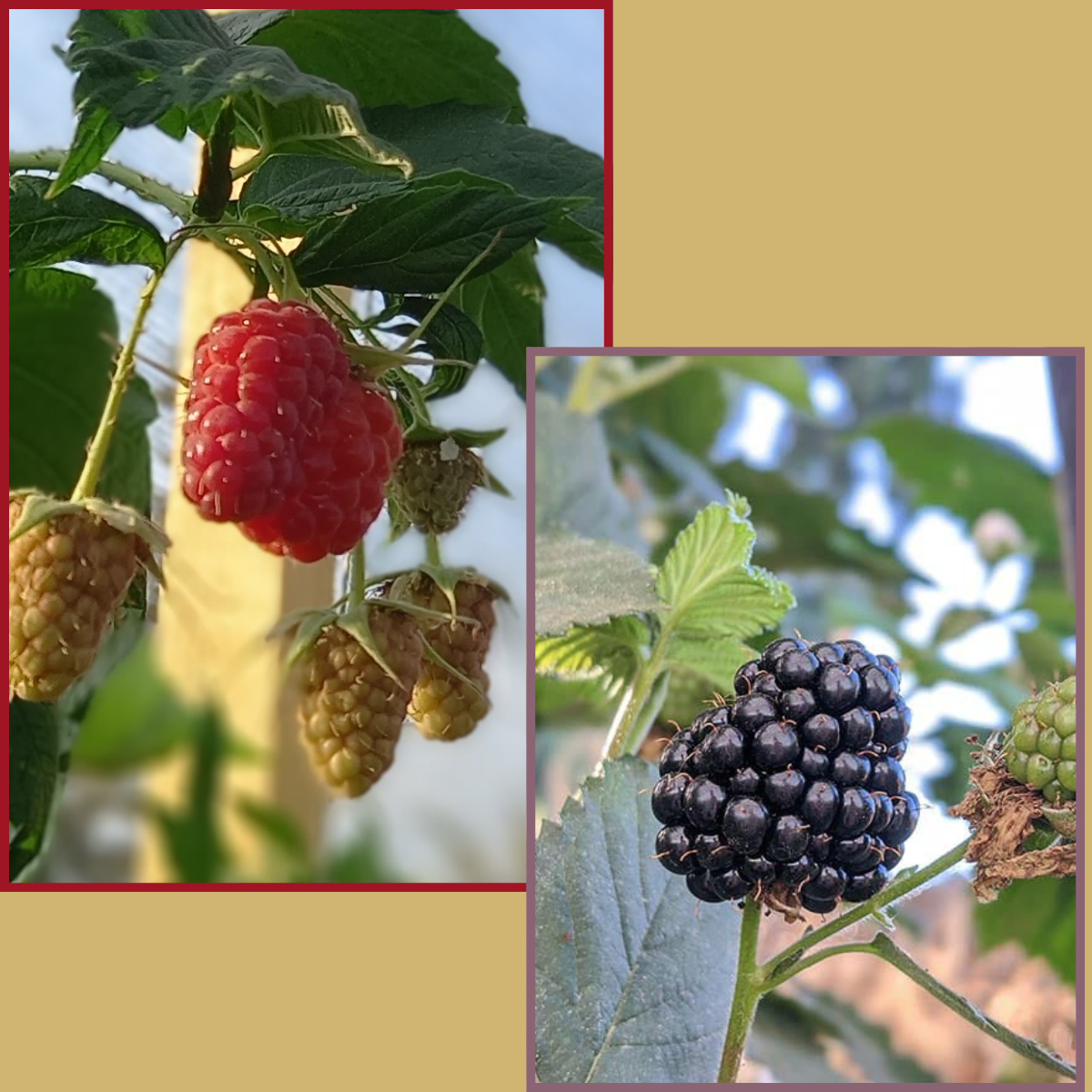
FRESH, DELICIOUS RASPBERRIES (PETEL) AND BLACKBERRIES ARE HERE!
The raspberry & blackberry season has arrived at last, and the Chelkat HaSadeh Farm, headed by Tamir Deutch of Tekoa, has opened for business! This year’s bumper crop of delectable red and black berries is extraordinary!
ORDER THESE BERRIES TODAY VIA THE CHUBEZA ORDER SYSTEM!
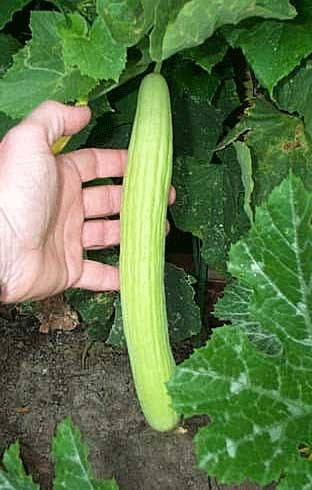
Over these past weeks, we began harvesting our first beds of fakus, aka “Arabic cucumber.” If they haven’t yet reached your Chubeza boxes, never fear! The fakus yield will soon increase!
For years, their arrival spurred such messages to us like, “This week I received two portions of zucchini (or cucumbers) in my box!” So – if you’re still unfamiliar with the wonderful fakus, here’s an easy way to tell a fakus from a zucchini: check its stem (the part that was attached to the plant). If it’s wide and star-shaped like a zucchini, well… it’s a zucchini. If it’s thin and willowy like a cucumber, then say hi to our friend the fakus.

In the scorching Sinai desert, the Israelites craved the Egyptian fare, reminiscing, “We remember the … cucumbers and the melons…” (Numbers 11:5). The “cucumber” they longed for was probably the fresh fakus. And to be honest, I totally understand them. Fakus is surely worth pining away for. Thus, every summer, we descendants of those Egyptian exiles are proud to bring to you the vegetable hankered for by our great-great-great-great-great-great-greeeaaaaaat-grandparents….
Emperor Tiberius Julius Caesar Augustus was known for his fondness for cucumbers. However…Tiberius was probably not munching on the cucumber we all know and love, i.e., the Cucumis Sativus, but rather on the long, light-skinned fakus. Tiberius would eat fakus every day of the year, necessitating the Roman farmers to evidently develop artificial methods to grow the vegetable year-round.
According to Pliny the Elder’s encyclopedia Historia Naturalis, “Indeed, he [Tiberius] was never without them [fakus], for he had raised beds on frames mounted on wheels, by means of which the plants were moved and exposed [in summer] to the full heat of the sun, while, in winter, they were drawn indoors and placed under the protection of frames glazed with mirror-stone.”
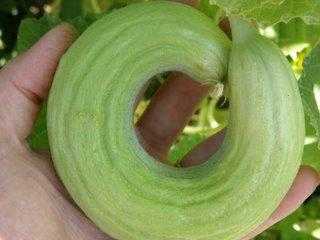
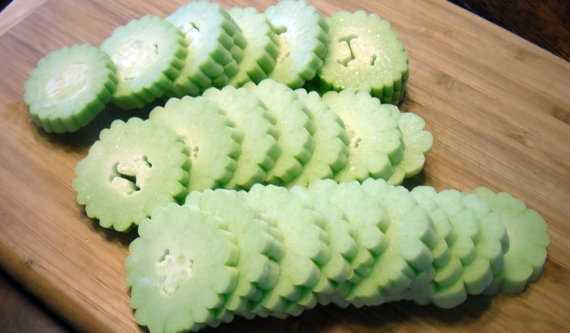
And in the spirit of confusion and surprises for today: The fakus is neither a zucchini nor a cucumber. Botanically speaking, it is actually…a melon! Cucumis melo var. flexuosus melon, to be exact. (The fakus is also coined the “snake melon,” on account of its looks.) Still, it resembles a cucumber because we do not let the fakus mature like our melons. Instead, we pick it in its crunchy sweet youth, like cucumbers (which is a good thing, really, because the fakus would mature into a rather unimpressive melon…).
Melons and cucumbers belong to the same extended family, but they are two different entities indeed. When you look at the leaves of the plants, the difference is obvious: fakus and melon leaves are rounder and less serrated than cucumber leaves. The flavor and appearance of the fakus are very similar to the cucumber, but not really: the fakus sports fine fuzz and is sweeter and crunchier than the cucumber. However, like the cucumber, it is harvested young, before its seeds mature, which is why it is not as soft as a melon. Different fakus varieties grown round the world include light green, striped, long and curved, or short like a cucumber.
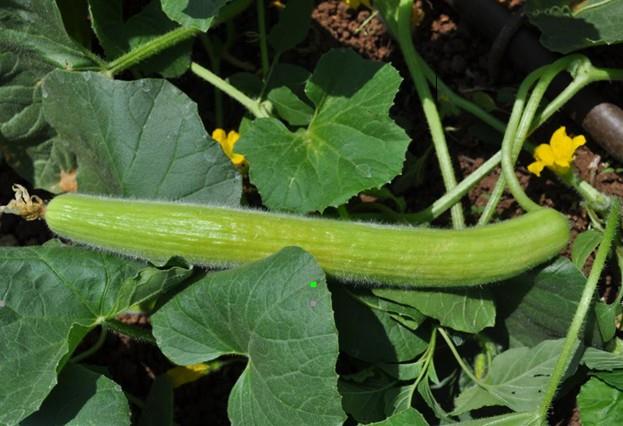

The fakus (like the cucumber) sometimes tends to be bitter. Various attempts to overcome this bitterness have proven that we must carefully choose the plants whose seeds are to be saved for next year, making certain that they are non-bitter plants. After many long years of Chubeza’s careful seed selection, we hope you will not encounter a bitter fakus. But to be on the safe side, when you slice one into a salad, first nibble from the “tush” – the end that was attached to the plant, because the bitterness starts there. If you like what you taste, slice away! If it’s bitter, take a bite further down. Usually, the bitterness is only in the tip…
The fakus is lauded by chefs as part of the trend to return to local, homegrown “baladi” food of the past, and the Internet abounds with nice, interesting fakus recipes. It is indeed an ancient veggie, eaten with gusto in the Middle East long before the arrival of the garden cucumber. Several years ago, we were visited by Dr. Moshe Ra’anan, author of numerous articles dealing with plants and animals in Jewish sources. He photographed our charming fakus varieties and wrote a few words about them (in Hebrew). I learned from him that during the Mishnaic period there was actually a verb “to fakus” (“לפקס”), referring to one of the ripening stages of the fakus – the stage at which the fuzz is shed from the fruit, or the stage when the flower blooming at the tip dries and falls from the fruit.
Either way, when the fakus is fakused, you can rinse, slice, sprinkle with salt if desired and joyfully bite into it. Or can also pickle it, just like a cucumber, for delectable pickles, and even cook or fry it like a zucchini. (Despite the fact, as noted, that it is…a melon, after all!)
Confused? No problem! Just enjoy the fakus. Bon Appetite! As one of the vegetables that grows only in spring, the amazing fakus is only with us for a short time, so go for it!!!
May this be a calm week filled with good news!
Alon, Bat-Ami, Dror, Einat and the entire Chubeza team