The Weekly Newsletter of Chubeza Farm
THANK YOU!!
As we hope for rain (which keeps eluding us) by indulging in something sweet and comforting, this week Chubeza is proud to launch a special sale on the excellent halvah from "Al-Yasmine." As many of you know and love, Al-Yasmine is produced in the village of Abu Ghosh, on the road to Jerusalem, where Chef Kamel Al-Salmon hand-grinds fine Ethiopian sesame using a traditional millstone to produce a range of tahini varieties that make truly heavenly halvah. Al-Yasmine halvah is rich in fine tahini, with an irresistible texture and a taste that keeps you coming back for more. It's hard to resist cutting another thin slice, and another, and another... We now have the last packages in stock, with a short shelf life (about a month). So, you win! Get this extraordinary halvah at the special price of 21 NIS. Hurry, before we run out...
Add Al-Yasmine halvah to your box via our order system.

After several warm weeks and not-really-so-cold ones, we eagerly await rainy and stormy days. It's not that we don't love wonderful winter sun, but the field desperately needs rain and low winter temperatures before we farmers can enjoy basking in the sun. One vegetable that particularly loves cold and rain is spinach. Throughout the year, Chubeza grows several spinach varieties in our field, but only one is real spinach, botanically speaking. The other two -- New Zealand spinach and Indian Malabar spinach -- are actually plants disguised as spinach!
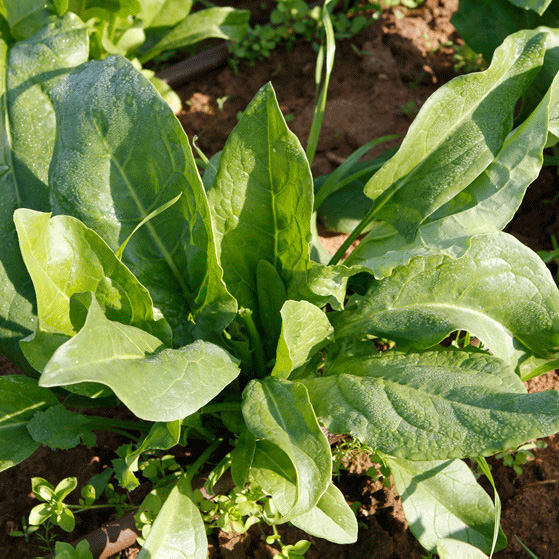


I’ve opted to write about them because here in our Middle Eastern country, we are used to warmer rather than colder seasons. Thus we know and love the New Zealand spinach and Malabar spinach which handle heat well, unlike the winter spinach that requires cold weather. Come winter, as Chubeza’s boxes fill with spinach greens, we’re always deluged with "what is this?" queries. When we respond “spinach,” the baffled response is usually, "But isn’t spinach a summer vegetable?" So, it’s high time to meet the beautiful, tasty, healthy winter spinach varieties. Here’s their portraits:
Spinach, a member of the beet family, originates from Central Asia – Afghanistan, Northern India, Uzbekistan, or Southwestern Asia and perhaps Persia. For many years, it has been grown in the Middle East, Central Asia, and China. A 7th-century Chinese source called spinach a "Persian herb." It migrated to Syria and Saudi Arabia, and from there to North Africa. In the 11th century, North African Moors brought spinach to Spain and introduced it to the Europeans. As a common plant in Israel, it is mentioned in the Mishnah and the Talmud as a healthy vegetable used for cooking and in soups.
Spinach provides us an excellent opportunity to reflect on the power of culture, colorful stories and folk traditions vs the power of exact (?) science. Like many vegetables, spinach began its culinary journey as a medicinal herb, used to treat constipation and digestive issues.
In Tractate Berachot, Rabbi Chisda notes: "A spinach dish is good for the heart, beneficial for the eyes, and especially for the intestines." I’m always amazed at how folk medicine hits the mark without having the scientific tools to indeed examine the medicinal plants it recommends. Years of experience, together with knowledge passed down from generation to generation and perhaps a pinch of intuition or spiritual abilities, all came together years ago to provide good health advice. I’m sure that Rabbi Chisda never entered a chemistry lab or studied biology or botany, yet he still hit the mark. Spinach is one of the richest sources of an antioxidant called lutein, which contributes to eye health and may also help reduce the risk of arteriosclerosis, heart disease, and cancer. It’s high levels of oxalate are probably responsible for the ability of spinach to help regulate bowel movements. (More to come on the health and nutritional virtues of spinach.)
My next thought about spinach was of its good friend, Popeye the Sailor Man. When Popeye gets into trouble, he wolfs down spinach straight from the can, gaining immediate, incredible strength. The funny thing is, Popeye is the result of... a typo. In a study from 1870, a decimal point was misplaced, erroneously attributing to spinach a tenfold iron content. But here comes the power of stories, myths, and the one-eyed sailorman. If you do a short survey among your friends asking which vegetables are richest in iron, spinach will probably be right there on the list.
The story of spinach and iron is more complex. Spinach is indeed rich in iron (not tenfold, but still…) and also calcium, yet our ability to absorb these nutrients from spinach is very low due to the oxalic acid in spinach that binds them together, preventing their absorption in the body.
Yet spinach boasts other advantages. Beyond the lutein we mentioned, spinach is rich in Vitamins K, A, C, beta-carotene, and folic acid. It is rich in chlorophyll, which helps protect against carcinogens (lung cancer, for example). It contains quercetin, an antioxidant and anti-inflammatory, and a specific enzyme that helps lower blood pressure. Spinach juice is among the best vegetable juices to prevent the formation of cancer cells. And – it’s a mood-lifter, just because it's really yummy!
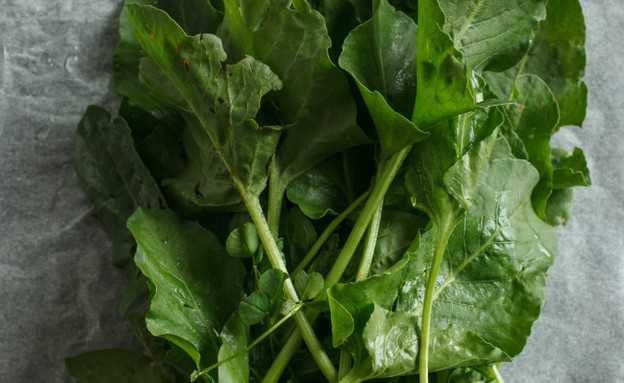
The "authentic" spinach varieties are divided into two groups: those with prickly seeds, considered more resistant to cold, and those with smooth seeds, which better handle warmer temperatures. The hybrid varieties available today are suitable for various climates. Another classification of spinach types is by leaf shape: varieties with crinkled and curly leaves, varieties with flat, smooth leaves, and the varieties in-between-smooth- and-crinkled. In Israel, wild spinach also grows, sometimes called Sabanagh. Wild spinach grows from central Israel northward, in winter and spring. Its leaves are softer and milder, and its taste is more refined. You can find it fresh in shuks in the north, while restaurants in the Galilee use this wild spinach delight to star in special dishes made from local ingredients.


In contrast to those "real" spinaches, New Zealand spinach and Indian Malabar spinach, which star in Chubeza boxes throughout the year, are not members of the beet family. The New Zealand representative, known scientifically as Tetragonia tetragonioides, belongs to the Aizoaceae family, characterized by succulent, sprawling plants that thrive along sand dunes and beaches, but also manage well in desert areas. It has been growing in Australia and New Zealand for countless years, where the indigenous Maori and Aboriginal natives gathered it for food. When Europeans reached the continent, they were taught which plants were edible, enabling them to survive. They coined the indigenous plants and animals used for sustenance "bush tuckers," including the wonder-plant tetragonia. New Zealand spinach also migrated our way over the last century and can be found growing wild on the Mediterranean shores, especially in the Sharon area (from Hadera to Tel Aviv).
The botanical name of Indian or Malabar spinach is Basella alba. It is a succulent tropical climbing plant originating in India, Southeast Asia, and New Guinea. Today, Malabar spinach is widely found in China and the tropical regions of Africa, Asia, and America. The common denominator of all these Malabar growing areas is heat and humidity. And that’s how it reached our tiny, hot, humid country - to fill the gap left in the greens section over the hot summer. Malabar is a beautiful climbing plant, growing rapidly to a whopping 10-meter height. And it needs so little to be happy: just heat and humidity. That’s why it just loves being in the Ayalon Valley over the summer... Malabar sports heart-shaped round leaves that are succulent and shiny. You can feel the succulence in its bite, with a pleasant and slightly tangy, very slightly slimy taste reminiscent of purslane.
Although they are not genetically related to spinach, New Zealand spinach and Malabar spinach were given their names due to their being a spinach substitute. Their big advantage: unlike real spinach which needs cool temperatures to avoid extreme heat that challenges its germination and leads to early flowering (hence called “winter spinach”), New Zealand spinach and Malabar spinach are heat-resistant. On the other hand, they are sensitive to cold, and frost will devastate and kill them. The different and complementary characteristics of the three spinach varieties, and their adaptation to various climates and seasons, allow Chubeza to send you spinach (real or in disguise) almost year-round, and savor the textures, flavors, and varied assortment of uses for each.
We hope the weather brings storms and rain on the horizon, and that the storms remain only climatic. We continue to hope for good news. May we speedily see days of peace, the war’s end, and the return home of all the hostages!
Alon, Bat-Ami, Dror, Einat and the entire Chubeza team