The Weekly Newsletter of Chubeza Farm
THANK YOU!!
The day that okra appears in your boxes is a clear sign that summer has arrived in full force. Okra is a summer tale of a plant born in Africa that migrated north to the Arabian lands and the Middle East before reaching the American Deep South aboard slave ships. In every locale, it thrived in the scorching heat.
The Okra Story is also a tale of family warmth – of memories from our mothers’ and grandmothers’ (and lately our fathers’ and grandfathers’) kitchen, of delicious dishes whose magic far exceeds their actual ingredients. Here too, warmth is a key component.
In my case, okra is a family tale. My father, a full-fledged Yekke (Jew of German origin), is crazy about okra and passed this penchant on to his children. I, in turn, introduced the love of okra to my daughters. Today, the lucky one who discovers the first okra delivery of the season immediately proclaims: “There’s okra!! Summer’s here!" When they were younger, they loved discovering the little “stars" that appear when slicing okra pods horizontally. Now they focus on the flavor as well. Today, even an extra-large skillet of sauteed okra with lemon and garlic lasts only moments in our home.
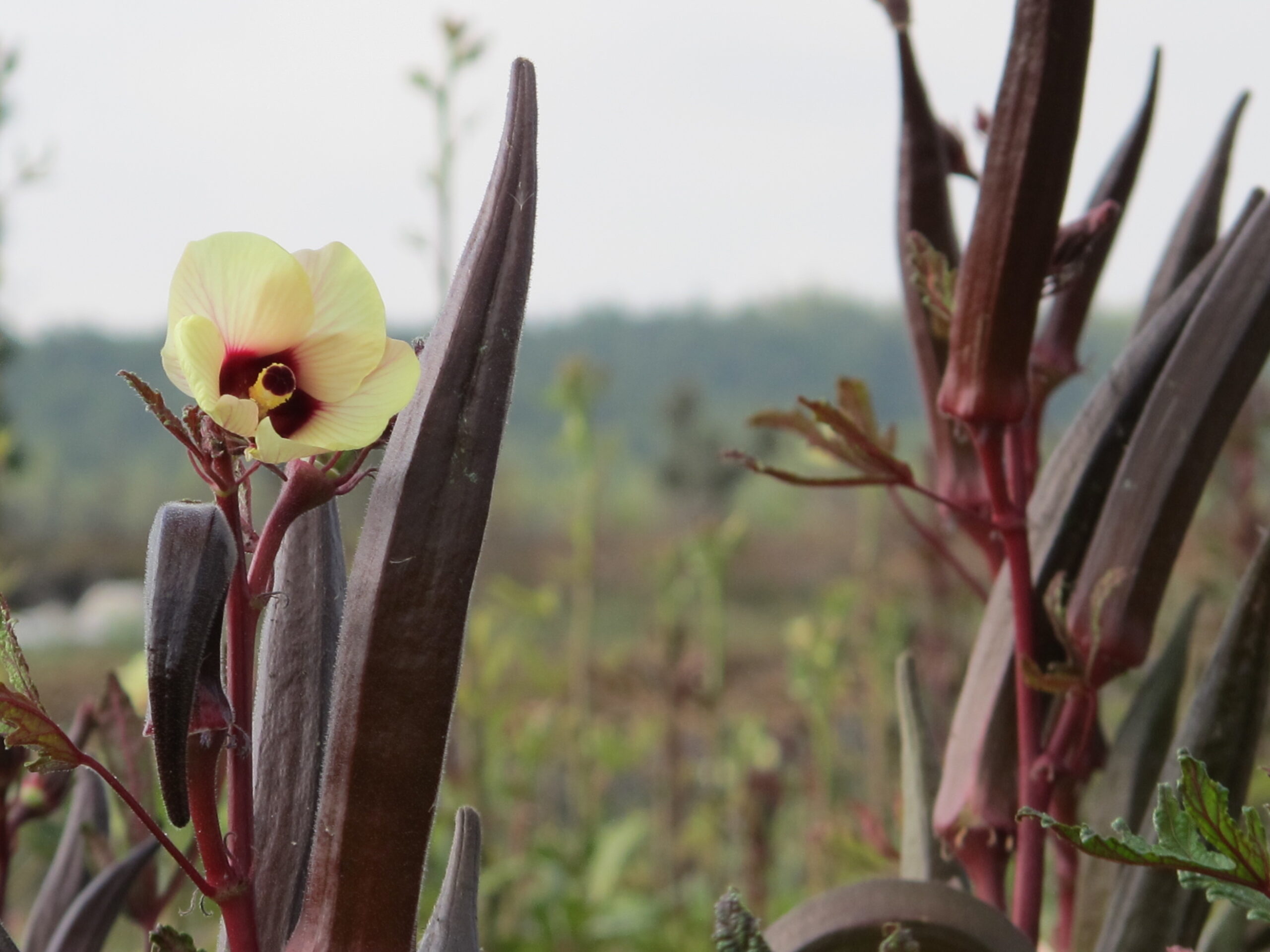
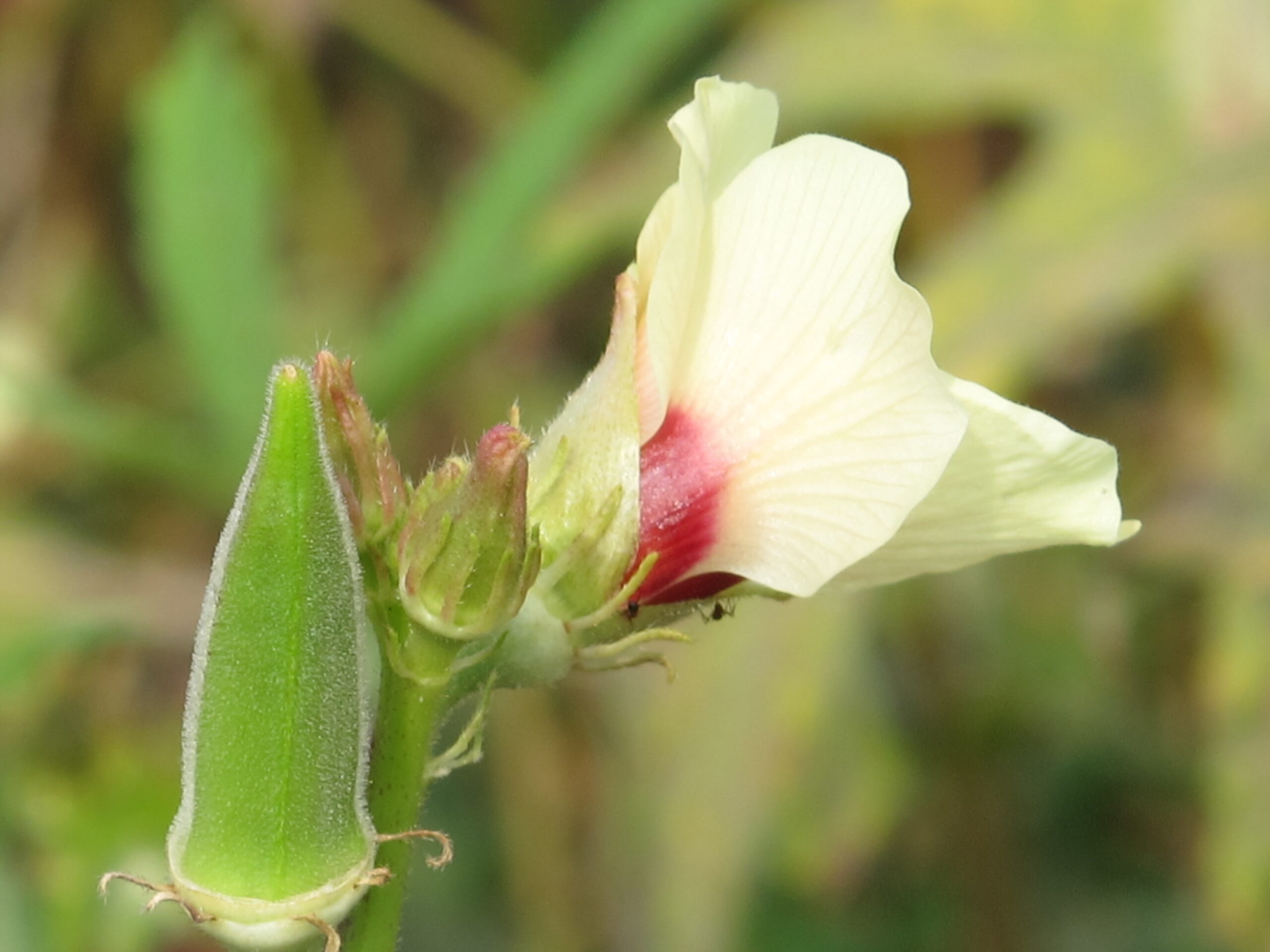
Okra likes to prance around using her fancy name “Lady Fingers,” and indeed, she should be handled with care. Before cooking, the okra’s tip must be gently trimmed, without damaging the pod. In olden days, when a groom’s family wanted to test a bride for a match, they handed her a knife, a pile of okra, and put her to work. If she sliced it properly, this indicated she was gentle and skilled.
But to the harvesters, okra does not put on her Dainty Lady show. Okra bushes’ branches and leaves contain etheric oil that causes a terrible itch on contact, which is why okra is picked wearing long sleeves and gloves. This crop is harvested frequently, and over time. We pick okra every two days to avoid facing a lady who missed her date with the manicurist and let her nails grow out of control… Harvesting okra is a time-consuming task, as we carry out our search for the pods among the dense, tangled foliage and pick them one by one. Very personal treatment.


But although she is royalty, okra is also one of the only crops which does not force us to kneel before it. The bushes grow rapidly, reaching an impressive height of 3 meters! At a certain point, the okra towers above us and we bend its flexible branches downward to reach its pods. Another joy of harvesting okra is the beauty of its flowers. Okra belongs to the mallow family (along with chubeza, cotton, hibiscus and hollyhock). Not many of its relatives are edible, but they are all ravishing beauties. Our okra boasts large, lush yellowish flowers, with a deep purple center.
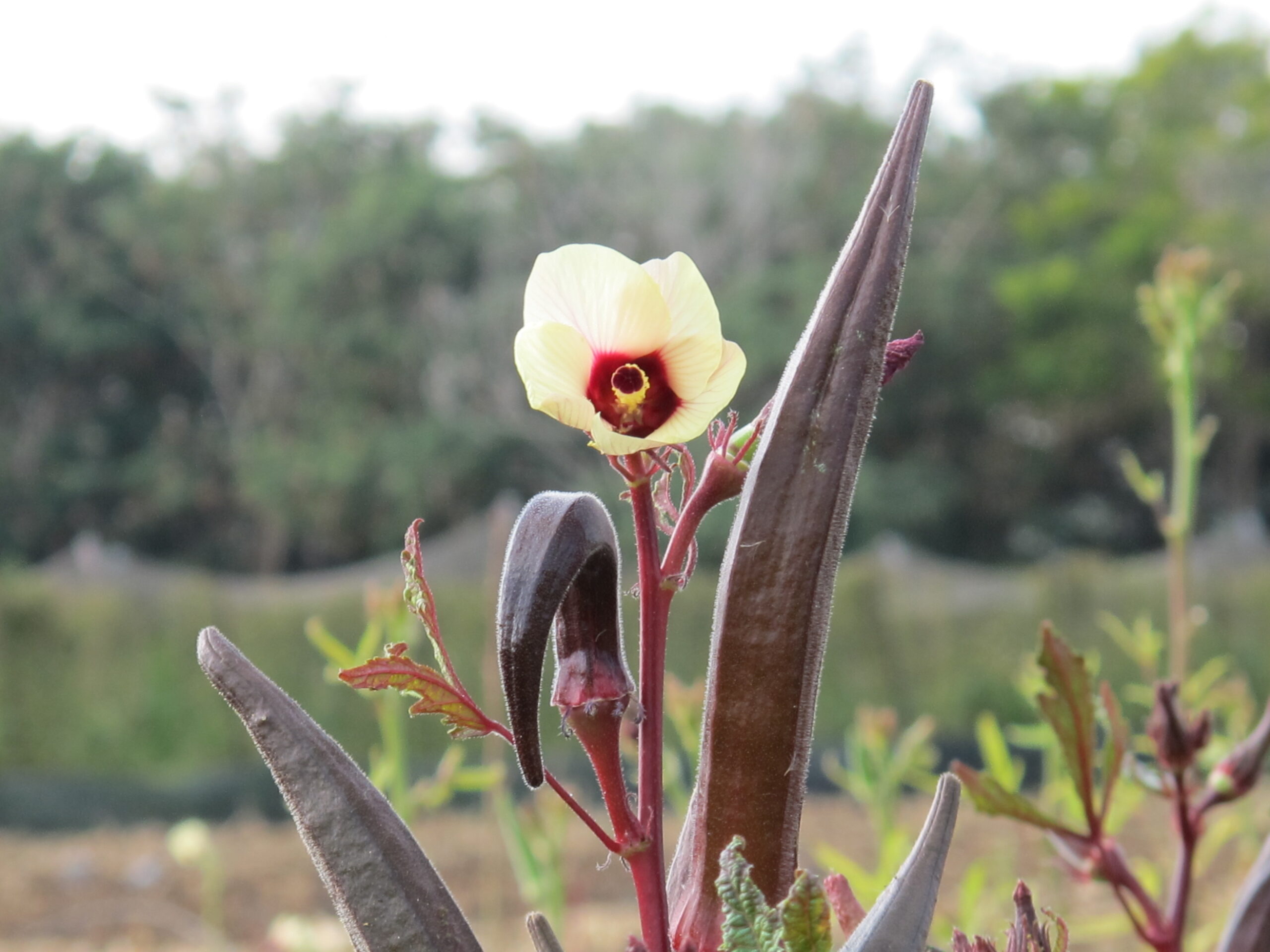
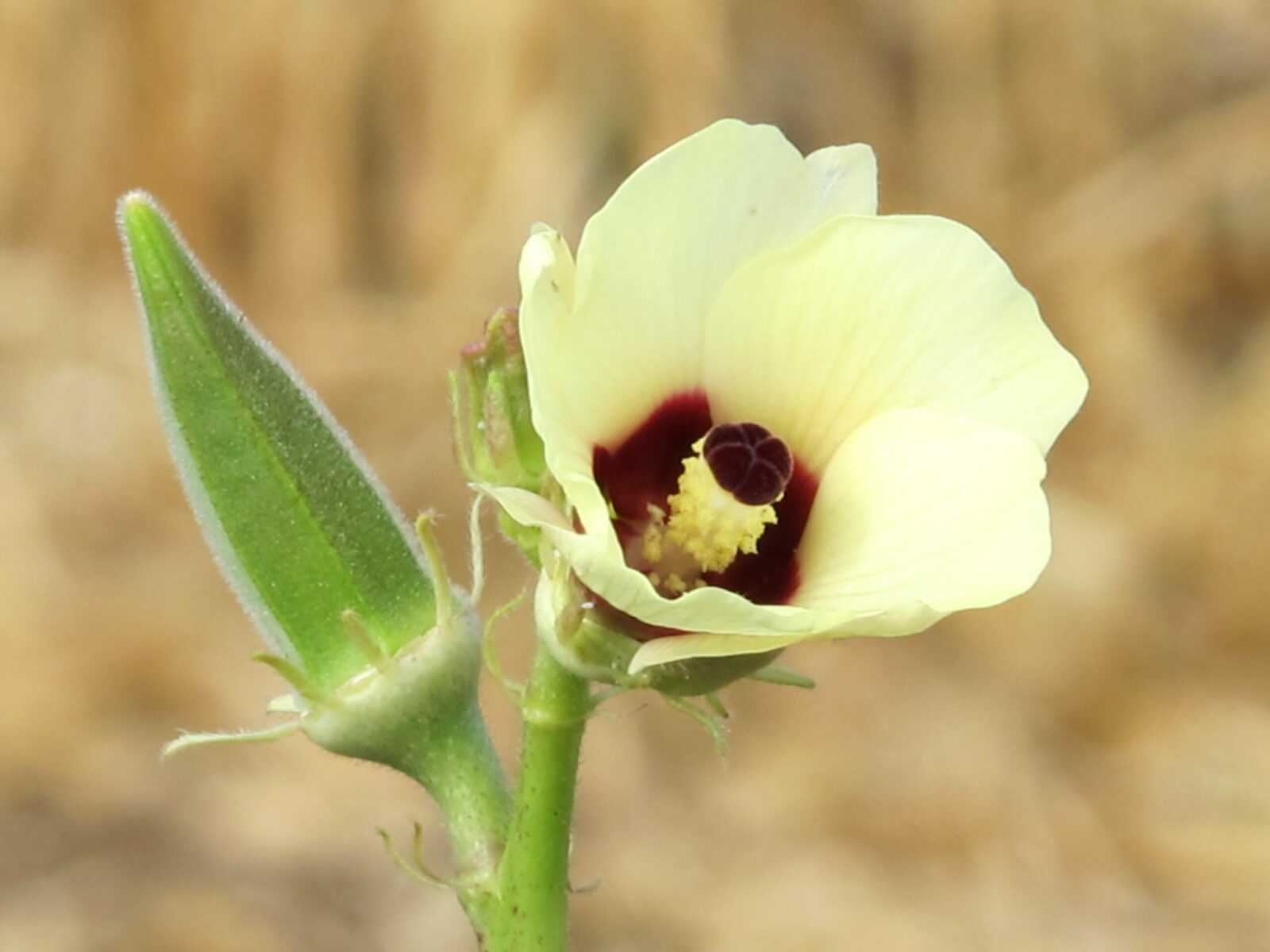
Okra began its cultural journey over 1,000 years ago in tropical Africa, in the Ethiopia-Eritrea-Sudan region where it still grows wild. From there it crossed the Red Sea to Saudi Arabia and took off to North Africa, the Middle East and India. The precise path of the okra’s journey is unclear, with very mysterious periods within okra history, but it did become a favorite food in all those countries. Okra likely reached Europe, compliments of the Muslim Moors of Spain, in the 12th century. It made its debut in the new American continent via two sources: African slaves hauled to work in the colonies carried okra to Brazil and South America to work in colonial plantations, while simultaneously French settlers, who now knew it from Europe, brought okra to Louisiana (home of gumbo). Over recent decades, okra became a vaunted vegetable in the Japanese and broader Asian kitchen. Thus, you don’t have to be Egyptian or Greek to love and devour this vegetable.
The local indigenous Israeli okra is small-podded. Traditional wisdom advises steering clear of a pod larger than your pinky, as this is a sign of an okra which is over-mature and fibrous. To the contrary, the green and red okra varieties that Chubeza grows are Thai okra: longer, larger and slightly less slimy. Don’t be put off by the size – they’re simply a different cousin, but no less amazing than other family members.
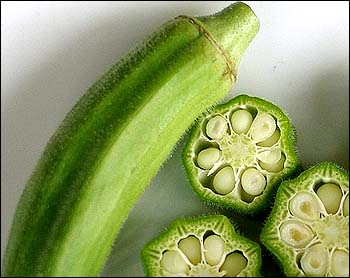
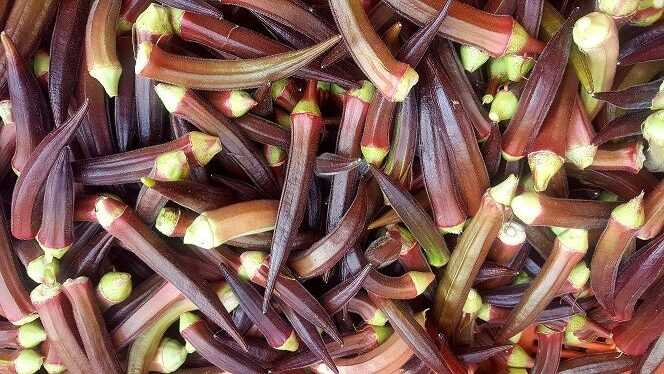
Okra is rich in vitamins K, A and C, plus folic acid, calcium, magnesium and potassium. Its dietary fiber aids in preventing constipation and stabilizes blood sugar levels by slowing the process of sugar absorption in the digestive system. These fibers also bind cholesterol and stomach acids containing toxins that bypass the liver’s filtration system and expel them from the body. Its dietary fibers also nourish the gut’s beneficial bacteria. As it matures, okra’s fibers become more rigid (as anyone who’s ever tried chewing a mature pod can attest). Yet they hold untapped potential: these tough pods can be used as raw material for the rope and paper industry.
But okra’s assets lie not only in the pod fibers. Its tiny seeds inside hold treasures: the oil extracted from them is healthy and unsaturated, with properties similar to the celebrated olive oil. These seeds also contain rich plant protein, like soybeans, and are high in tryptophan and amino acids - a valuable combination for the vegetarian diet. Ground okra seeds were used in the past (and in some places, in the present) as a caffeine-free coffee substitute, similar to the chicory root and date pits).
But despite its beauty, there are those who are repulsed by the modest okra. The reason generally cited is its “texture,” or in other words: “that slime that oozes out when it’s cooked.”
But never fear! Use okra effectively to thicken stews and soups (sometimes okra pods are dried and ground to use as a gelatin-like thickening agent). Okra is even touted to heal wounds and soothe burns, like aloe vera gel.
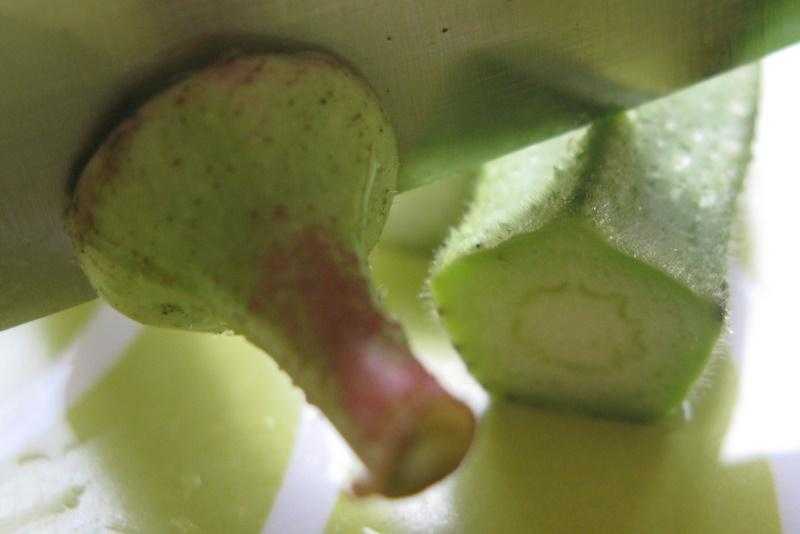
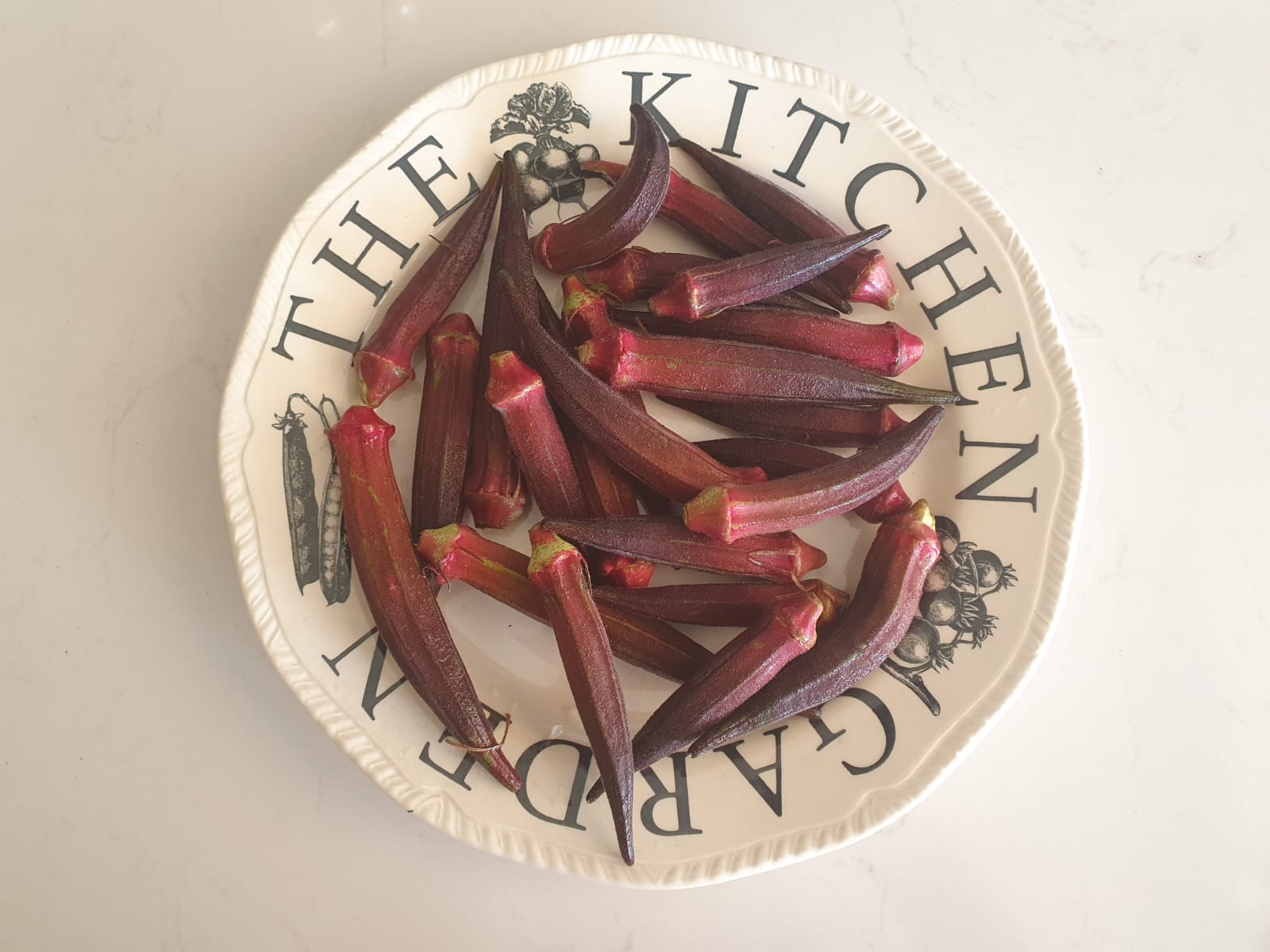
But if you still wish to reduce the okra’s slime level in cooking, here are several tips:
- Leave the pod intact (trim the stem, but do not open the pod).
- Prepare quickly and easily by stir-frying or frying, not by lengthy cooking in liquids.
- Combine with acidic ingredients: tomatoes, lemon juice or vinegar.
May the coming days surprise us with good news at last! May this summer soon bring the hostages to the warmth of their homes and family!
Alon, Bat-Ami, Dror, Einat and the entire Chubeza team