The Weekly Newsletter of Chubeza Farm
THANK YOU!!
A woman once lived in a huge watermelon
With a lamp, chair and stools that set her a’kvellin’
She carved out a window, a living room too
Built a wardrobe and hung up a painting in blue
Bought a cat to catch mice – but at break of dawn
Woke up to discover the season was gone
(Nurit Zarchi, Translated [loosely] by Aliza Raz)
Illustration: Yossi Abulafia
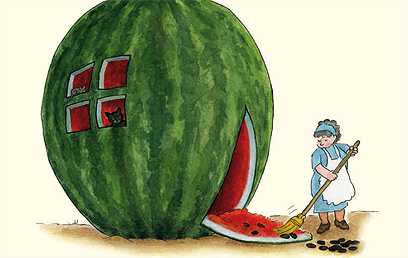
I have a sneaking suspicion that this lady actually resided in a watermelon in Chubeza’s field, though it’s hard to imagine her fitting all of her belongings into our small-sized melon models. Yet, the feeling of What? The watermelon season is already over?! is all too familiar to us. Chubeza’s watermelon season is really short – approximately a month – so before it ends, it’s time to share some fascinating facts about the wonderful watermelon. This week’s Newsletter is green and red all over!


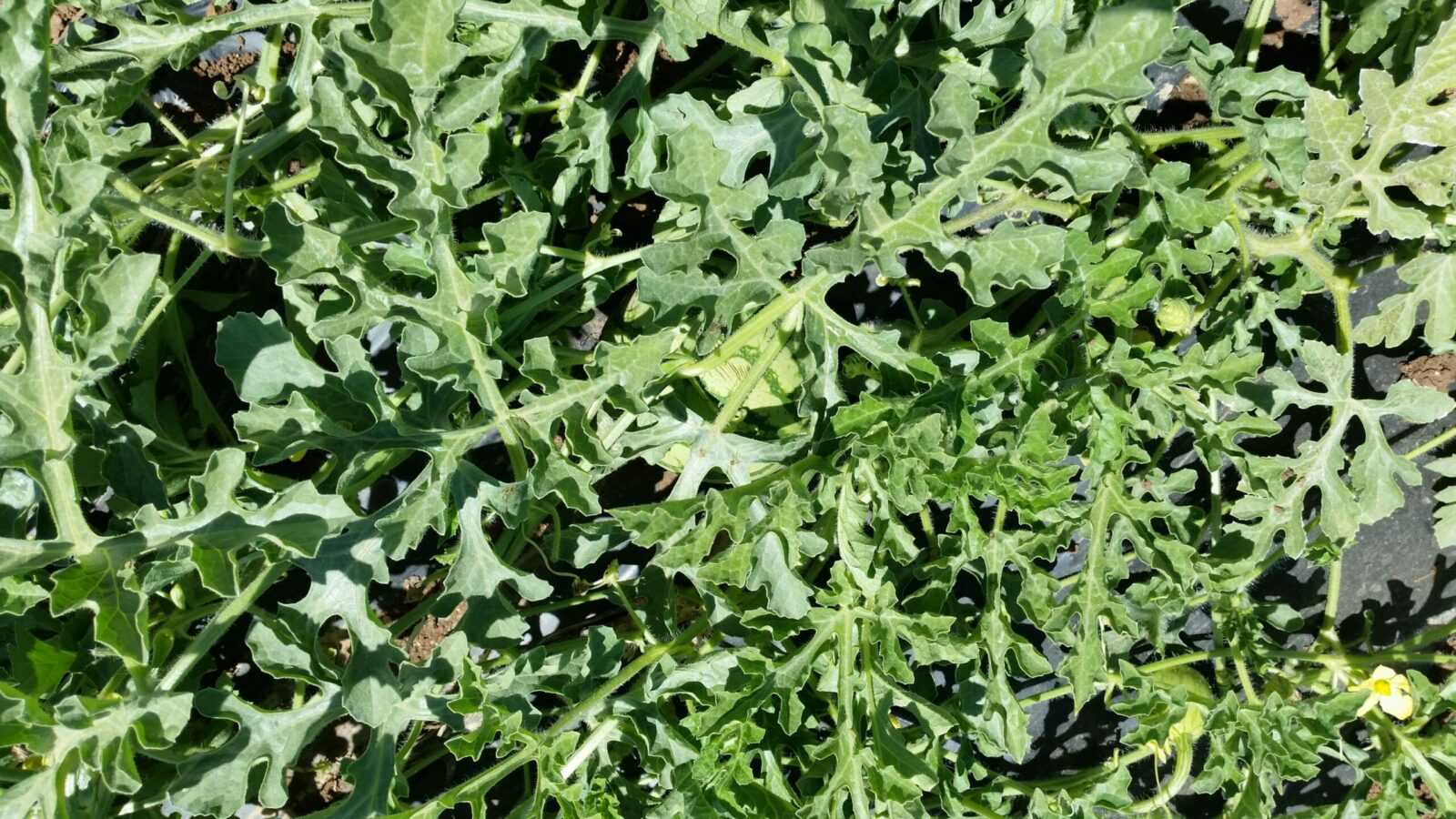
These last few weeks, we’ve been hit hard by scorching heat. Yet the watermelon remains unfazed. It just loves the heat, a throwback to its origins in the southern part of Africa, the Kalahari Desert. In that blazing desert, the watermelon, boasting over-90% water content, was a vital source of hydration for both humans and wildlife. The challenge of choosing a good watermelon is an ancient story. Even in its wild form, the sweet watermelon is identical on the outside to a bitter watermelon, necessitating the thirsty passerby to poke a hole in the rind to test its taste.
From southern Africa, the watermelon spread northward across the African continent, and was cultivated in Egypt over 4,000 years ago. Ancient Egyptians decorated tomb and cave walls with watermelon paintings, and they would leave watermelon near the dead to nourish them on their journey to the Next World. The Hebrews knew it from Egypt, reminiscing, “We remember the fish, which we did eat in Egypt freely; the squash, and the watermelons…”
From North Africa, the watermelon reached the Middle East where it grew well in the Land of Israel and was even mentioned in various Mishna discussions. It arrived in China in the 10th century, and today China is the world champion watermelon grower, followed closely by Turkey and Iran. In the 13th century, the Moors brought it with them to Europe, along with other plants they met in Africa and Asia. The watermelon arrived in America with the African slaves and the European settlers.

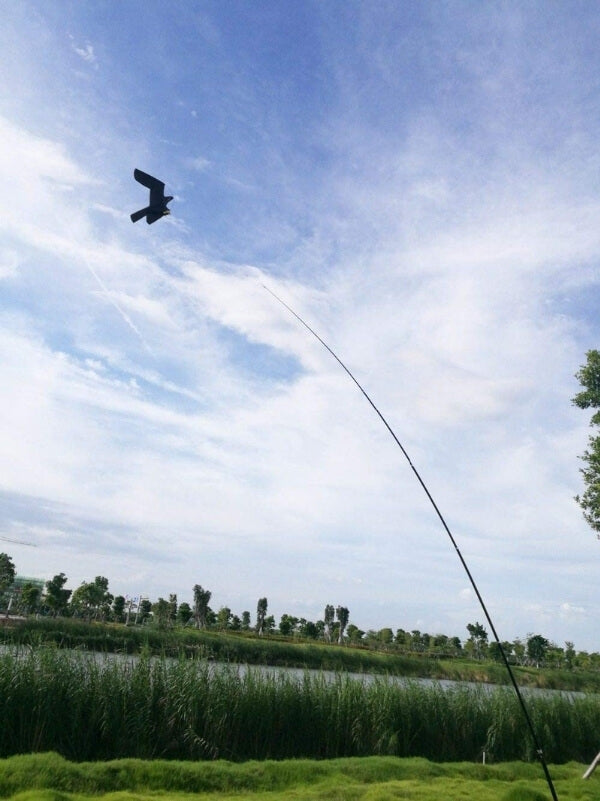
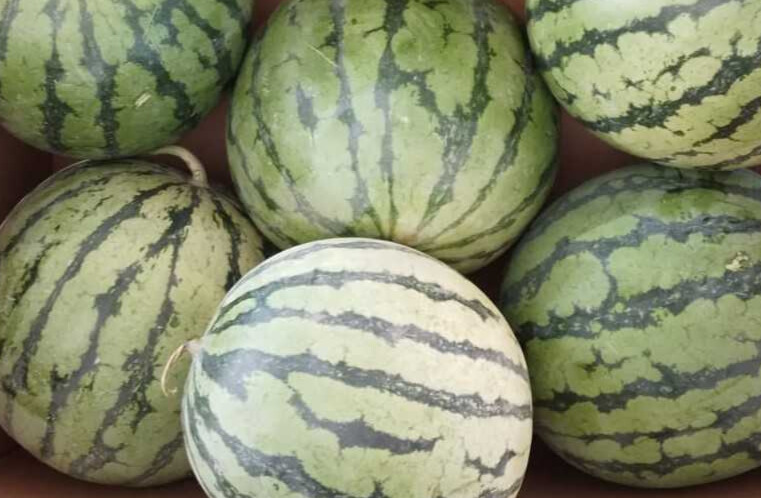
We humans beings are not alone in adoring the watermelon, but are joined by wild animals and, of course, birds. Particularly, the bold, sweet-toothed, hard-beaked crows. We protect our fruits with a passion by covering the bed with a bird net preventing the crows from feasting on this red, juicy delight, and place a “bird scarecrow” above them – a kite in the shape of a tough bird of prey, mounted on a six-meter-high flexible telescopic pole. When there’s a breeze, the kite takes off, flying randomly as he perfectly mimics the flight pattern of a predicator – thus scaring off the ravenous crows. Otherwise, we find them like the one in the picture:
Watermelon is a healing fruit. Its high water content cleanses the body, making watermelon juice a remedy for those suffering from bladder and liver deficiencies. It is also beneficial for cleansing the kidneys. Watermelon even helps detoxify the body of cigarette smoke – highly recommended for active and passive smokers alike.
Traditional Yemenite folk cures use watermelon seeds to rid bad breath and stains from the teeth and mouth. Soak well-crushed watermelon seeds in water, then strain the liquid for a super mouthwash. In Iraqi medicine, watermelon rind is used to treat fungal skin infections. Libyan Jews rub their skin with watermelon rind to lighten blemishes. Watermelon contains vitamin A in the form of carotenoid, vitamin C, and vitamins B1 and B2. It is low in sodium and rich in potassium.
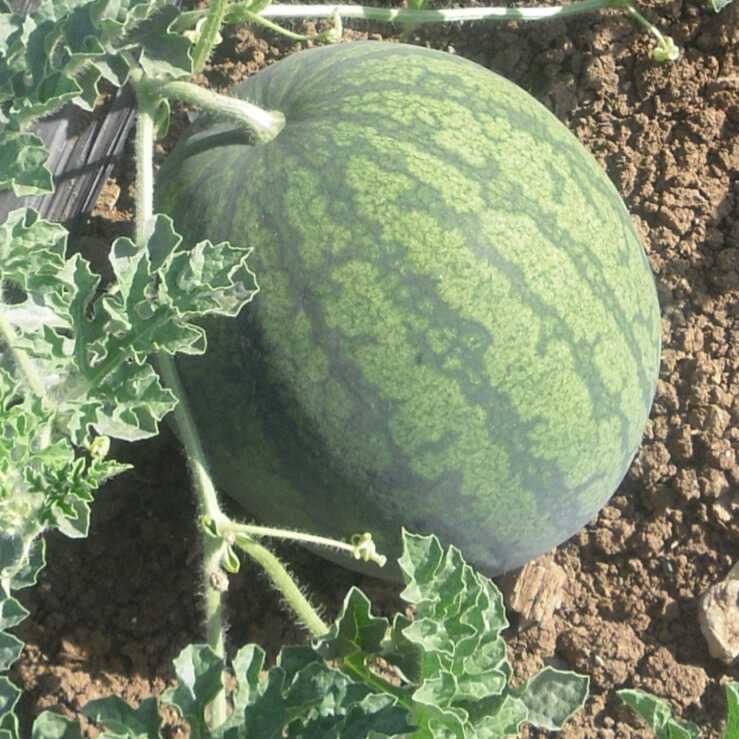
So… how do do you pick a ripe, sweet watermelon?
– At Chubeza, we harvest the watermelon at its ripest, when the tendril near the stem dries up. At the watermelon stand, look for a drier and slightly shrivelled stem, indicating that the watermelon wasn’t picked too early.
– The part that touches the ground changes its color, so you should look for a yellow (not white) spot on one of the watermelon sides.
– And the most mysterious clue of all: if you thump the fruit, you will hear a dull echo reverberating back to you.
Check out this live demonstration
Wishing us all a week of good news. We continue to hope, pray and long for the end of the war and the safe return of all the hostages home!
Alon, Bat-Ami, Dror, Einat and the entire Summer Chubeza team