The Weekly Newsletter of Chubeza Farm
A CHANCE, EVEN IN EARLY DARKNESS
Chubeza’s field has already completely transformed to its winter mode. A walk between the winter beds gives us a final chance to bid farewell to the last lingering summer beds, soon to make way for new rows of baby sprouts, young seedlings, and green, robust mature winter crops taking command in the field. Yet—right in the middle of our field, you’ll see a jungle-like patch of tall, tangled plants. Their vibrant green has faded, their yellow blossoms have wilted, and most of their leaves have lengthened and turned to brown. BUT, beneath the surface, life is vigorously teeming, thickening, filling up, maturing...
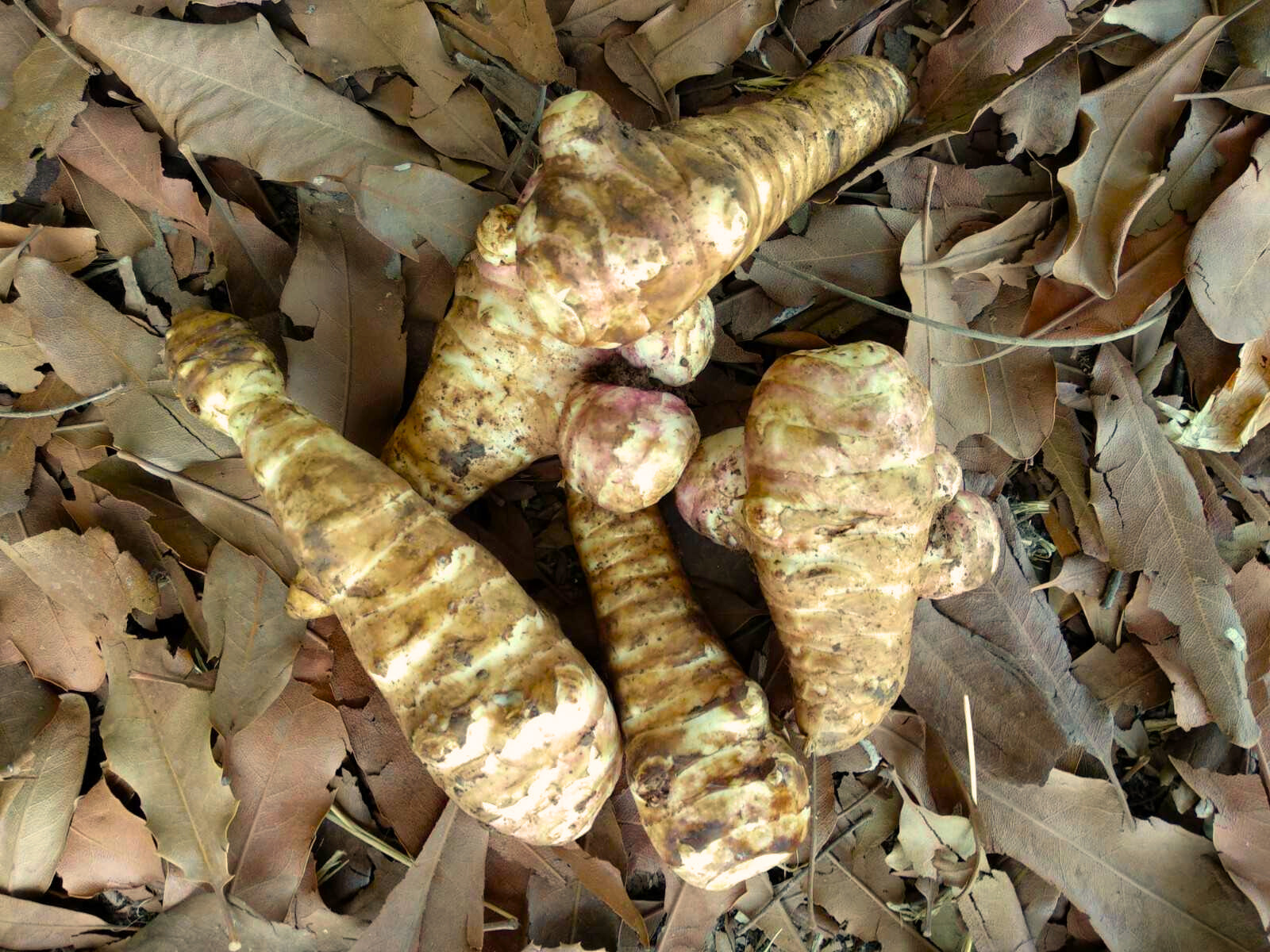
Welcome to the sunroot, aka Cassava (cane) potato, or better yet, the confusing moniker Jerusalem Artichoke.
Let’s begin with a clarification: It may look like ginger, but this is definitely not ginger!
We waited for these tasty tubers for over six months, till the bushes dried up and wilted. Only then could we chop those down and begin extracting the secret treasures buried beneath – delectable, satiating bulbs that enhance every soup, quiche, antipasti or salad. And you don’t need a lot — just a touch adds a phenomenal seasoning to any dish.
In America, they’re commonly known as “sunchokes,” but actually the title “sunroot” is an accurate description, for the Jerusalem artichoke is in fact a variety of sunflower which develops an edible root tuber. The origins of this tasty tuber are in North America, along the East Coast from Georgia to Nova Scotia, where it grew wild and in the vegetable gardens of Native Americans for years on end. This tuber thrived in the American summer sun and the rich, fertile earth, yielding farmers and gleaners its sweet, energy-rich roots.
The Europeans, who came to explore and conquer, tasted the sunroot and loved it. First to describe the bulb was French explorer Samuel de Champlain, who noticed it in a Cape Cod vegetable garden in 1602. He sent the tasty sunroots to France, from where they meandered to England, Germany and Italy in the 17th century. The Italians coined it girasole, Italian for “sunflower.” Somehow that name was distorted to “Jerusalem,” and it stuck. The “artichoke” part came from the fact that it somewhat resembles the artichoke in taste. (Chefs have always been known for their vivid imagination and great creativity...)


Like any sunflower, the sunroot adores warmth and thrives during the summer. For Chubeza, this is already a timeworn routine to accompany its growth from spring through summer and into autumn. I say “accompany” because from the moment we placed the tubers in the earth until we plunged the pitchfork into the soil to lift them out, we really didn’t do much (aside from watering and a bit of early weeding). We are ever amazed at its beautiful vigor, at its ability to joyfully grow wild in every direction, daring the weeds to even think of coming close. In Chubeza’s field, the Jerusalem artichoke is free of pests (though moles and gophers can pose problems), which is why we can just step aside and wait patiently for those Jerusalem artichokes to grow.
Here they are running wild, blooming, growing. The Jerusalem artichoke in Chubeza:
And yes, much patience has been required. The plant took its sweet time for at least seven months, growing, blooming, wilting and clandestinely swelling up her precious roots below. Only now, in early October when the foliage had dried up, did we sink the pitchfork in to test the situation, just to discover that we needed more patience. So, we waited. (True confession: we did pull up a plant or two and munched the tasty tubers for lunch...) Finally, several weeks later, we started harvesting these very yummy, distinctive bulbs, in the hope they’ll accompany us till February. Welcome!
Though they grow underground like potatoes (even though they’re more stubborn and robust than the spud) and contain a similar caloric count, the Jerusalem artichoke is low in carbs. Instead of starch, they contain inulin, a water-soluble fructose carbohydrate (which is how it stores its energy in the root tuber). Inulin helps lower blood sugar levels, thus is recommended for diabetics (contrary to potatoes!). Inulin nourishes the friendly gut bacteria and helps reduce the threat of various diseases. These amazing tubers are also an excellent source of thiamine (B1), iron, niacin (B3) and potassium. Traditional Chinese medicine classifies the Jerusalem artichoke as a warming vegetable that strengthens the digestive system. A great winter vegetable!
Tips:
- Jerusalem artichokes must be refrigerated, preferably in a sealed
plastic bag or sealed plastic container, to prevent them from softening.
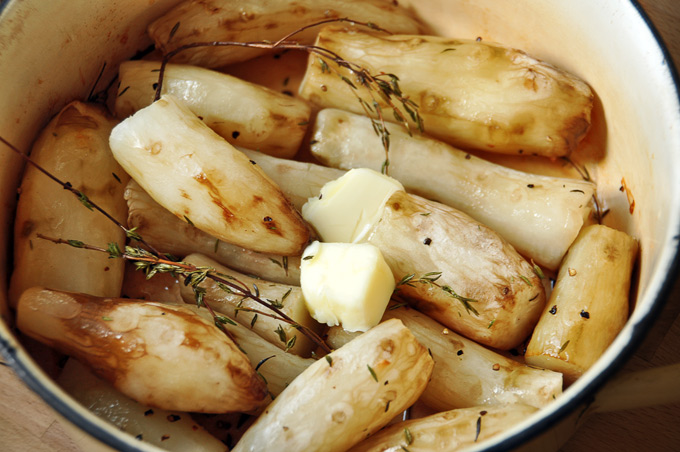
- They are usually eaten peeled – a somewhat tedious task. But you don’t really have to. You can just scrape the skin and cook or bake them unpeeled, or briefly steam the bulbs and then slip off the softened skin.
- The Jerusalem artichoke tends to turn dark pretty quickly after being peeled. To prevent browning, we recommend soaking them in water with a bit of lemon juice.
- And what about the (Veggie) Elephant in the Newsletter… thegas that makes this wonder bulb known in America as a “fartichoke”? The gas is created from breaking down inulin, the fructose carbohydrate. So, if they makes you gassy, start by consuming small quantities. Two additional gas-reducers: cook Jerusalem artichokes separately, drain, and then add to your dish; or cook/bake them seasoned with cumin, which aids digestion and reduces gas.
Enjoy adding the amazing Jerusalem artichoke to familiar, favorite recipes in your own creative way. It truly enhances the flavor of almost any dish. Bon appetite!
May this week bring good tidings, and a beautiful change of seasons!
Alon, Bat-Ami, Dror, Einat, and the entire Chubeza team