The Weekly Newsletter of Chubeza Farm
THANK YOU!!
These beautiful days after the rain bring fresh, rain-kissed veggies to your Chubeza boxes. The rain has indeed scattered its blessings over the soil and our crops. The leaves have had an invigorating shower, the roots basked in a pampering mud bath, and the plump veggies are joyfully filling out. Today’s height of winter is precisely when the amazing fresh green fava bean arrives and joins its sweet cousin, the pea. For those not yet acquainted with the fava, he is a distinguished son of the famous legume family, a green, plump, elongated pod, complete with a soft, cottony inner lining. The fava bean’s annual visit to Chubeza brings the special moment to share the story of this extraordinary vegetable.
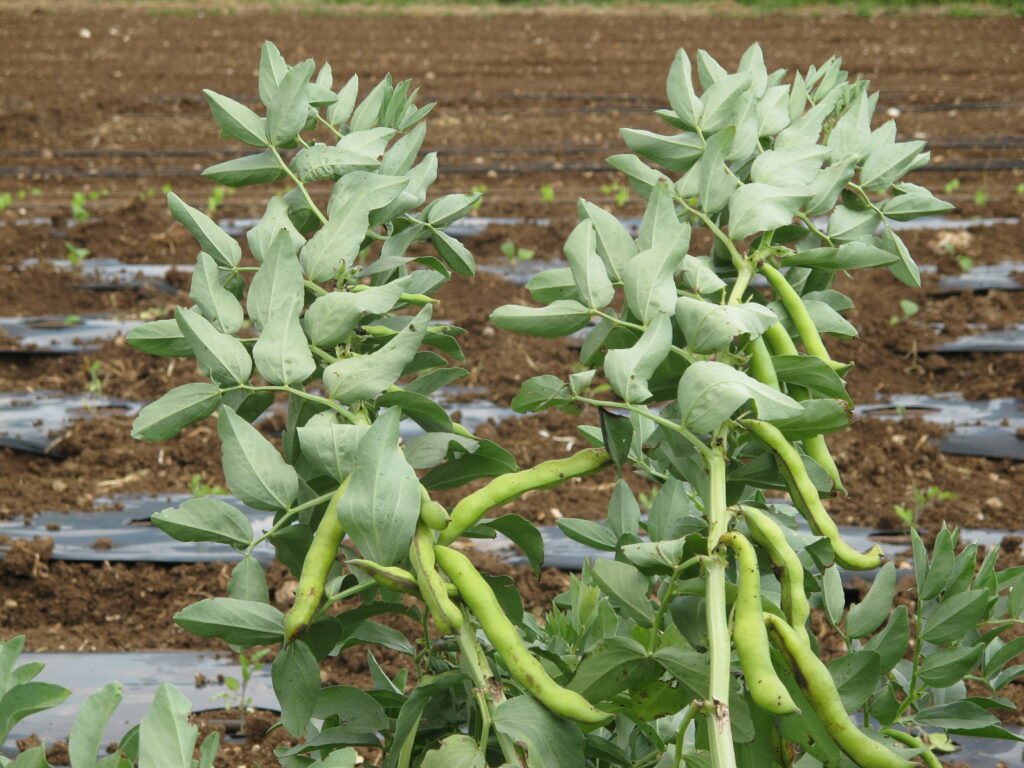
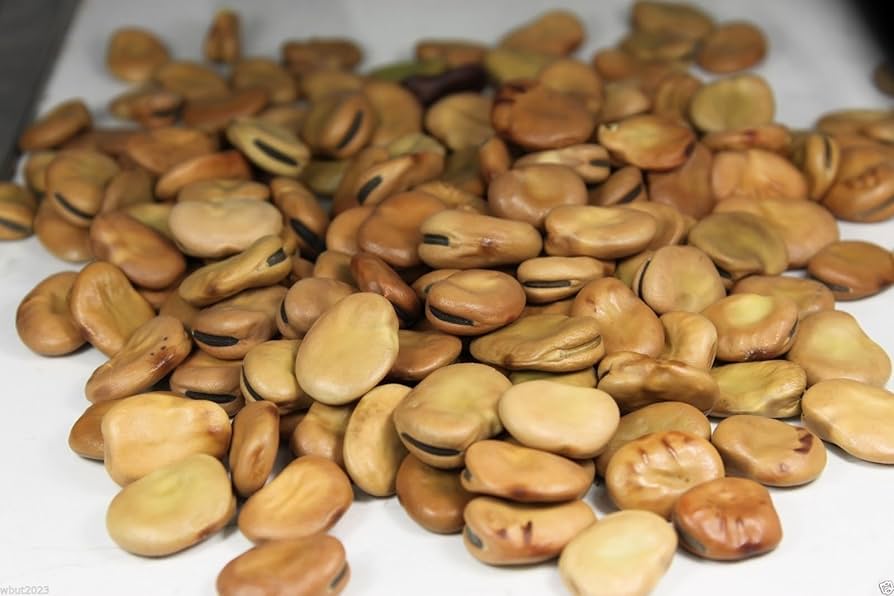
Green and dried fava beans have been eaten by Middle Easterners, North Africans, and Southern Europeans for thousands of years. Remains of fava beans have been found at archaeological sites in the Mediterranean countries, the most ancient dating back to 6500 BCE in our very own Nazareth! Fava served as an important mainstay for all classes of society. Rich in protein, complex carbohydrates, and dietary fibers, fava contains impressive amounts of iron, folic acid, potassium, magnesium, and zinc.
In our part of the world, there are two “traditional” varieties of fava – the large Cypriot fava and the small Egyptian fava, the size of a pea pod. During Chubeza’s early years, we grew both varieties, but later we met a “medium” variety with medium-sized pods, which we have happily been growing ever since.
In Egypt, falafel is made not from chickpeas, but from fava beans! Egyptian fava is also called ful hamam for a fascinating reason: in medieval Egypt, preparing fava beans was the exclusive expertise of those who lived in the area surrounding “the Princess Baths,” the public bathhouses in complex of the the Mohammed Ali Pasha fountain in Cairo. By day, the water in the great tubs was heated by bonfires. By night, when the embers still glowed, the large tubs were filled with fava beans, as the huge cauldrons were left to cook slowly overnight on the heat of the coals to provide breakfast for the residents of Cairo.
The fava’s tale began last autumn. There is something beautiful about it, transporting us back to the constraints of seasons and time, to slower, more deliberate rhythms of life. We seed the fava at the end of autumn from mid-September to December in four rounds, about once a month. We try to plant it deep in the ground just before the first rains, when the skies above darken, heralding the approach of blessed rains. We certainly want to avoid the need for irrigation, but if we seed too early, we’ll lose our crop to the field animals just then stocking up on food for the winter. The raindrops that strike the soil cover the fava beans, greeting with fanfare their old friends, those big seeds they knew and loved last year.
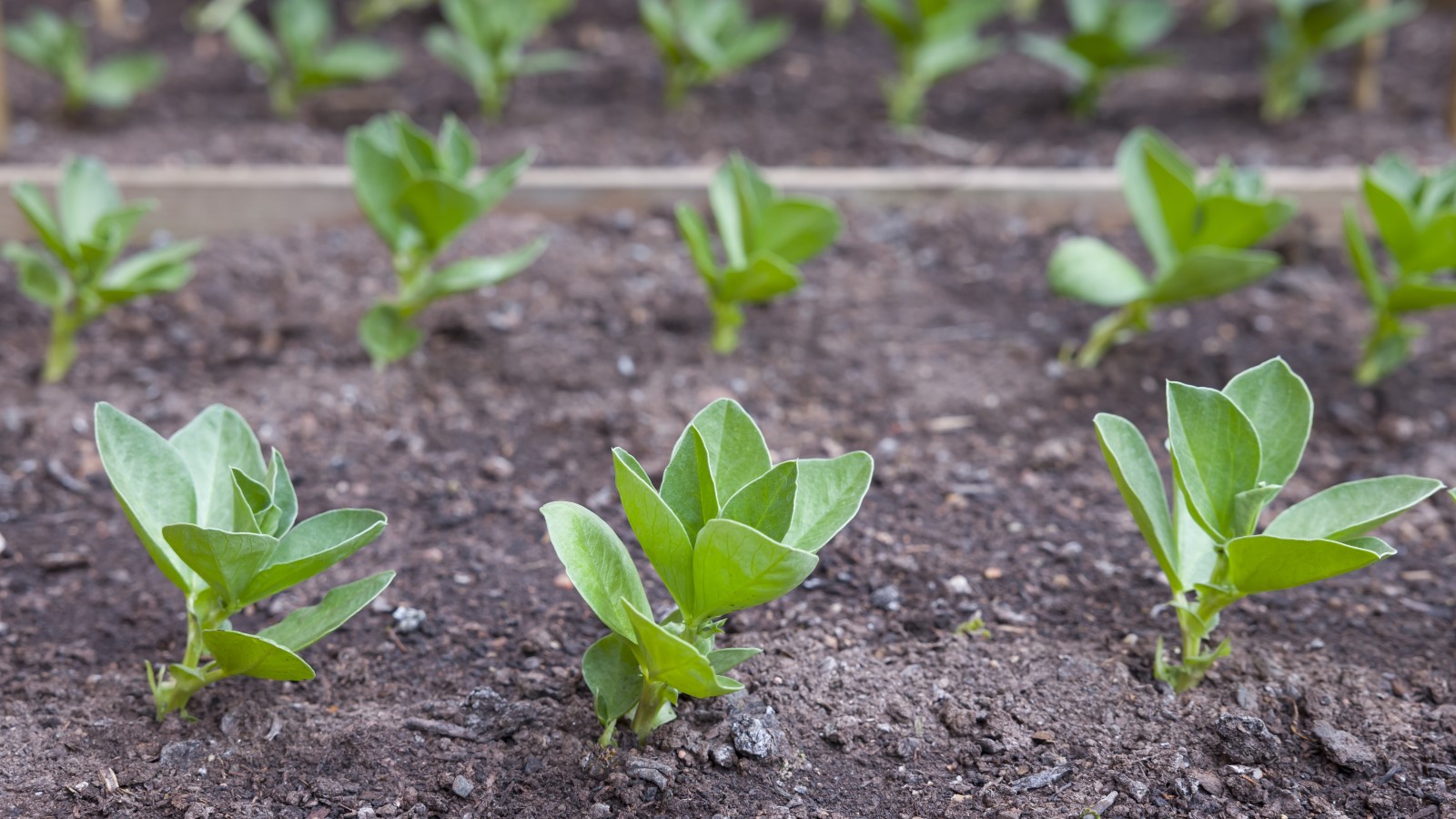
This reunion of old friends speedily results in the appearance of strong, green fava sprouts, which courageously poke through the soil and continue growing, even as the winter grows colder and rainier and the rest of the world retreats indoors. The fava’s growth is slow and deliberate. This bean takes its time, growing moderately and steadily during the winter, inching a little taller every week. Favas grip the soil, protecting it from erosion and the ravages of pounding rains. Its dense growth prevents weeds from sprouting. The fava needs no fertilizer, for like its legume relatives, it can fix nitrogen for do-it-yourself fertilization, enriching the earth in which it grows.
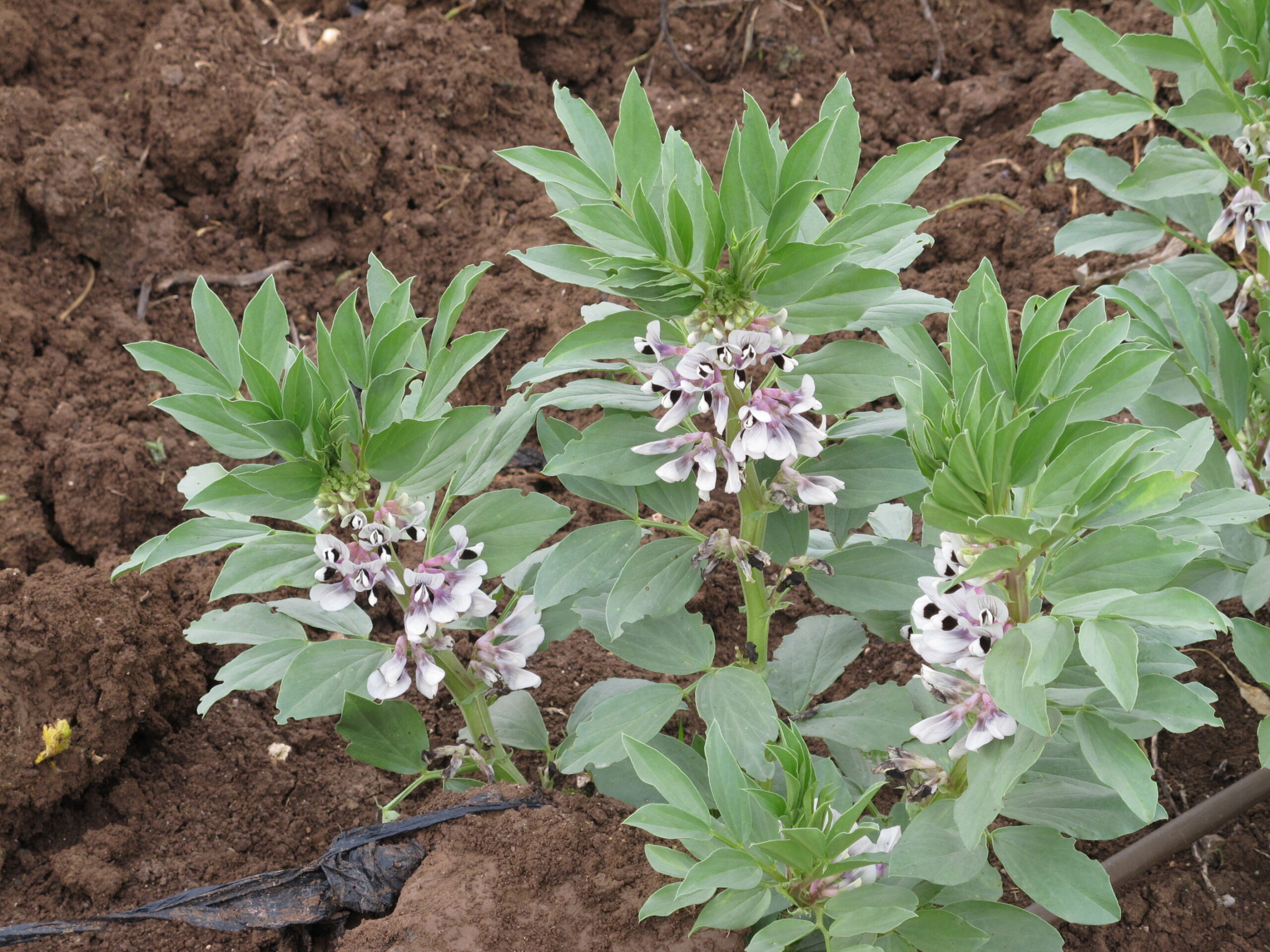
After months of rain, wind and cold, the fava feels something stirring inside. Its faultless plant instinct senses the seasons changing, the days growing longer, the changing light, the sun’s locale, and then it knows – it’s show time! The fava debuts with beautiful fabacaea butterfly-like flowers. They are both delicate and strong, like the fava itself. In gala pastel lilac shades and with quiet confidence, they conquer the field beds to proclaim, we’re all clean and dressed up and something wonderful is about to happen! Even at the flowering stage, the fava takes its time. Why hurry when you can look around, smell the fava, and enjoy life!
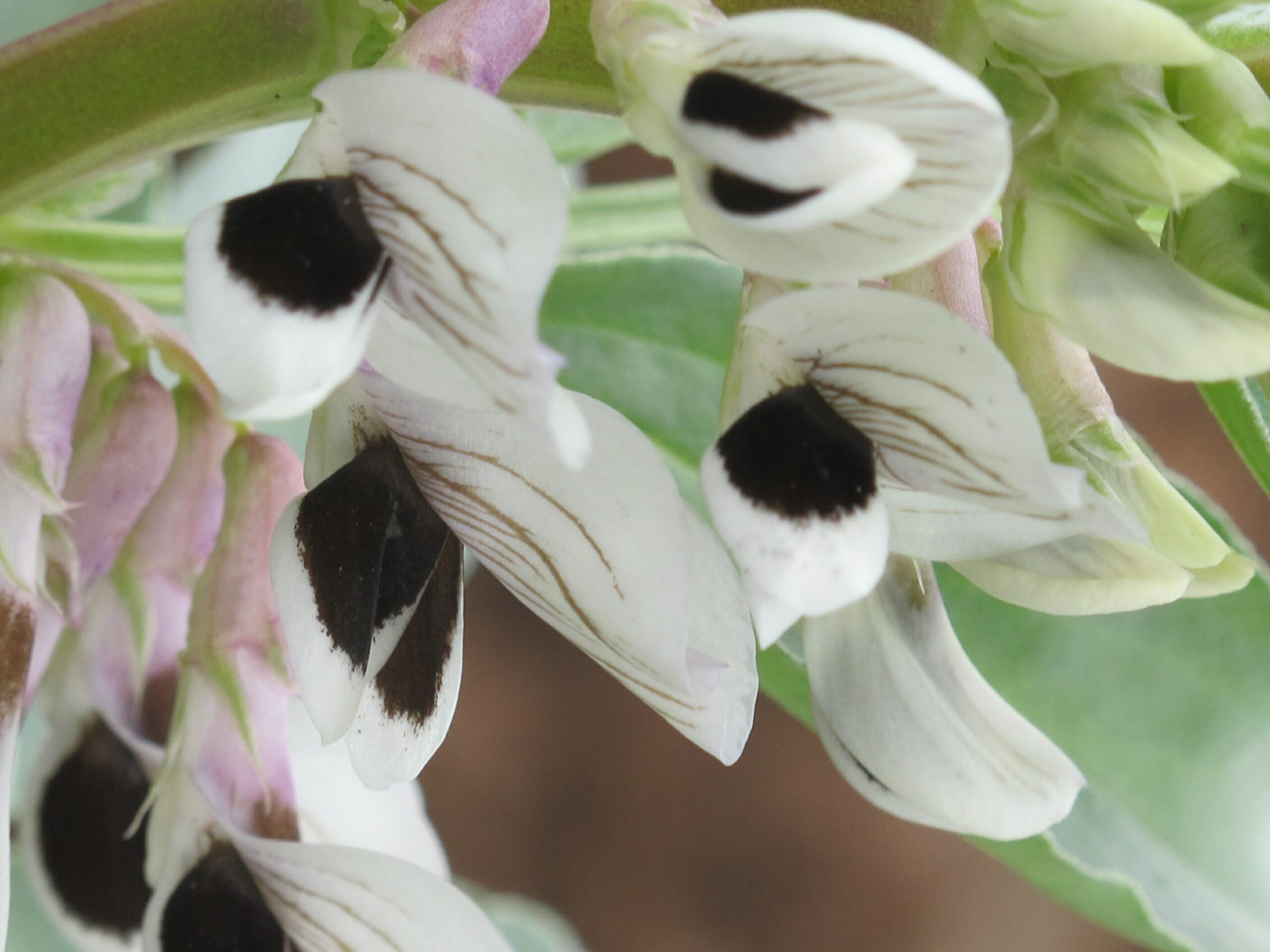
The fava bed continues to look as though it paused at the flowering stage, while on the surface nothing else seems to have changed. But slowly, almost imperceptibly, a small green boat will appear inside the flower, thickening and fattening up until it becomes a seed-carrying pod. We pick them before they fully ripen, when they’re still green, fresh, sweet and juicy. And that’s when we know spring is here. Right here, in our field, and on your plate.
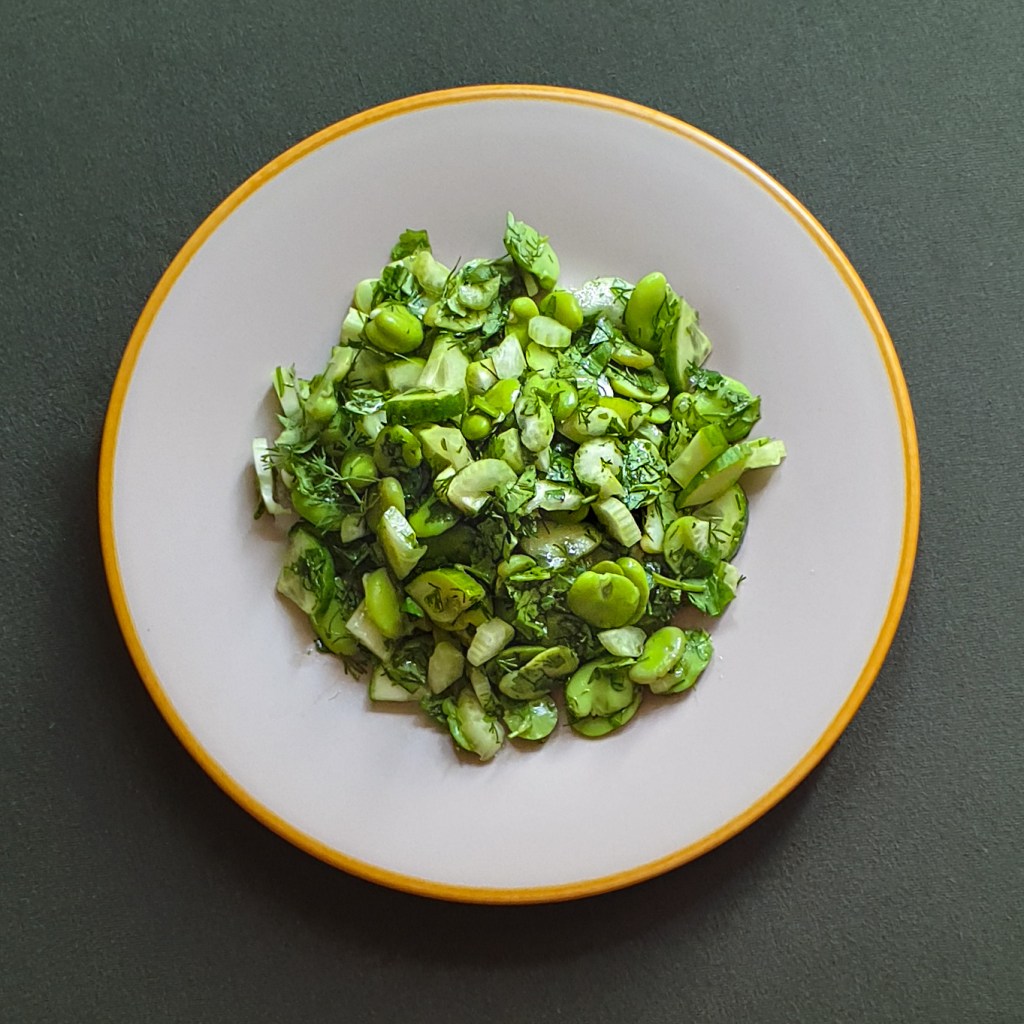
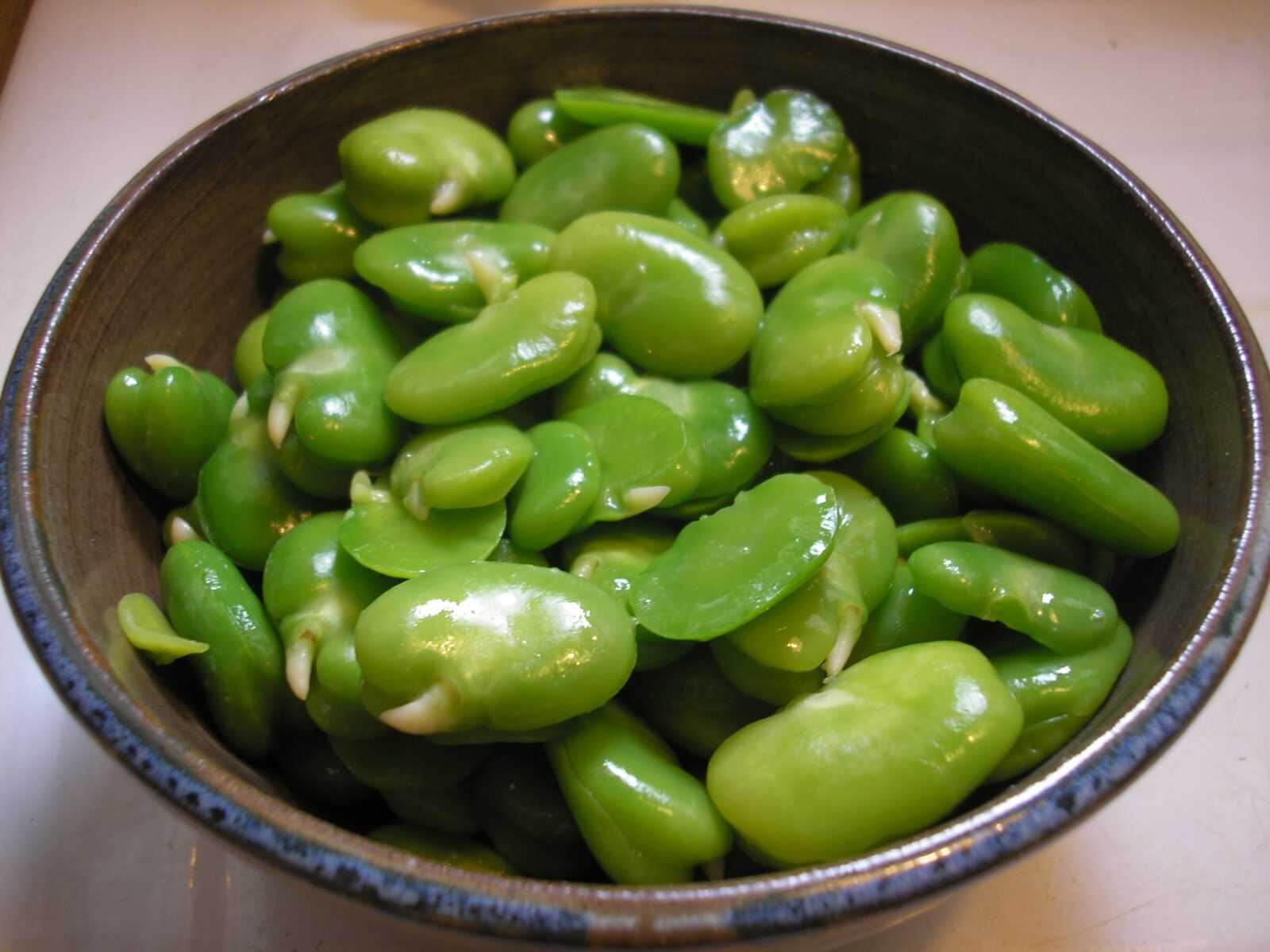
There are countless ways to prepare fresh fav. Despite the recommendation to peel the fava bean (and even double peel), you can certainly cook and even eat fava beans in the pod!
Some simple serving suggestions:
– Cook fava in unsalted water (like blanching peas–the salt hardens the skin).
– Steam fava beans in water and a touch of olive oil, or sauté onion and garlic, add the fava, boiling water, and lemon juice. Cook for around 15 minutes till the liquid is absorbed.
– Fava may also be baked slowly in the oven at low heat, together with garlic and such fresh herbs as rosemary, thyme or za’atar in a pan lightly sprayed with olive oil. When the fava beans are very soft, mash them together with the garlic cloves and herbs and spread on bread. Look for more delicious fava bean dishes in our recipe section.
Yet, I must admit that as great as these fava dishes sound, I rarely get around to making them. Because in our house, we devour fava beans fresh and raw like peas, joyfully munched straight from the pods.
And yet Pythagoras cautioned, “Avoid fava beans!”
What did this renowned 6th century BCE Greek philosopher have against one of the most popular vegetables of his time? Pythagoras aficionados and commentators have offered various explanations for this sharp warning. Perhaps it was because fava beans are hard to digest? But compared to other legumes (like beans), fava contains fewer sugars, thus it’s kinder to the stomach.
Another possibility is that Pythagoras rejected fava beans due to the ancient belief that the souls of the dead can wander into the fava’s pods, making it a popular dish for funeral meals.
Perhaps the fava’s correlation to danger of death is related to the hazardous fava allergy, known as favism (from the Latin Vicia faba). This severe allergy is linked to a genetic deficiency in the G6PD enzyme, common in people of Middle Eastern or Mediterranean descent. (In Israel, it is most common among, but not restricted to, Iraqi Jews). Among the some 20% of humans lacking this enzyme, eating fava beans can cause severe anemia and even death.
On the other hand, fava beans apparently contain chemical components similar to quinine medications used to treat malaria, a once severe and prevalent disease in Greece and southern Italy. When the fava-induced mild anemia remains moderate, it was found to be anti-malarial by lowering oxygen levels in red blood cells, thus slowing the spread of the disease.
Another reason for fava to enter our natural medicine cabinet is to treat Parkinson’s Disease. Fava naturally contains the L-Dopa amino acid, which becomes the neurotransmitter dopamine upon reaching the brain. This acts to improve the condition of Parkinson sufferers, a disease resulting from dopamine deficiency. Even a 250-gram serving of cooked fava has proven to significantly boost dopamine levels in the blood, improving the patient’s condition. The largest concentration of L-Dopa is found in fresh green fava beans, particularly in their pods, while dry fava beans contain far less. Research is still in the early stages, thus those considering fava for treating Parkinson’s should consult with their physician.
Like the quiet, persistent growth of the green fava bean, may the quiet processes continue, speedily bringing the return of Ran Gvili home, and healing, recovery and growth for all!
Alon, Bat‑Ami, Dror, Einat, and the entire Chubeza team