The Weekly Newsletter of Chubeza Farm
THANK YOU!!
BYE-BYE, BLUEBERRIES!
The wonderful blueberry season at “Kaima” Farm in Beit Zayit has ended. We bid a sad farewell to those delectable berries that have delighted our taste buds and our hearts over the past few months.
But---delicious raspberries are still available from the Chelkat HaSadeh Farm in Tekoa! Plus, of course, the refreshing, very distinctive array of other additional products you can add to your Chubeza boxes.
Check out our entire line of what’s available today via the Chubeza Order System.

Each year, summer brings a rich array of tempting varieties of Chubeza’s squash and pumpkins. This ensemble comes in green, yellow, orange or beige, dotted and striped, smooth and coarse, round, oval, pear-shaped, pointy, sharp, flat, petite, large, and even extra-large. What a field day for the lovely, colorful curcurbitas (Latin for the squash family), all so beautiful and tasty!
This year we’ve grown five different squash varieties, from the giant Tripolitanian pumpkin which can neatly transport a shoeless princess, through the middle-sized Napolitano pumpkin, the sleek butternut squash, the oh-so-orange Amoro squash, all the way to the compact, fits-in-the-palm-of-your-hand green acorn squash. This broad range spans varieties that differ on the outside and within, varying in colors from yellowish green to salmon to deep orange, and in taste – soft or nutty or sweet varieties…
They’ve begun to trickle into your boxes over the past few weeks: first the butternut squash, a pair of green acorn squash, and the orange-hued Amoro squash, or a sumptuous wedge of Napolitano pumpkin. We’ve also begun harvesting the big mama – the immense Tripolitanian pumpkin that’ll remain with us all the way to winter. In the upcoming weeks, prepare to receive small pumpkins in abundance – almost weekly!
If these quantities seem overwhelming, fear not! We remind you that you needn’t use them right away. We’d rather send these pumpkins to you now, because here, crowded by the hundreds, they struggle to breathe. But on your kitchen counter or in a wicker basket in the living room, they’ll keep beautifully while enhancing your décor with a flair. If you keep them dry and ventilated, they’re good for another month or even two! If they start growing a fine web, just wipe it gently with a dry cloth to prevent rotting.
The bigger and smaller family members, zucchini and squash belong to the same botanical family and even to the same species. The differentiation between squash and pumpkins is artificial, depending on when and how we harvest them. All varieties are planted (in an open field, in their natural season) from the end of winter/beginning of springtime, and they all grow from spring to the end of the summer.
Zucchini are picked early, before they fully ripen, when their skin is soft and their seeds are undeveloped, sometimes as early as 40 days after seeding. Since we pick the fruits off the plant before it had time to produce fertilized seeds, the plant makes dogged additional attempts, yielding more and more seed-bearing fruit in order to fulfill the aim of all plant-life (and animal-life): to spread its genes. Thus, we gain a long harvest season from a plant that just keeps on yielding. But young zucchinis don’t store well, which is why they were traditionally eaten only in spring, summer and early fall. Today, squash is even grown in wintertime in greenhouses, so it’s not really seasonal.
Pumpkins (large and small), on the other hand, are harvested fully mature, when their shell is thick and hard and their seeds are quite large and hard (and crackable for snacking). Since we wait till the ripening is complete, they are harvested some three to five months from seeding day. Our giant Tripolitanian pumpkin may need half a year!
Thanks to their hard shell, pumpkins store wonderfully - even for months on end – making pumpkins a winter staple, especially in the pumpkin’s ancestral home of North America where food can’t be grown during the cold. These beauties, called “winter squash,” kept well in silos, bringing summery sweetness to the cold wintery days.
Here's a parade of Chubeza’s glamorous squash

The acorn squash originates in Mexico and the U.S., where Native Americans domesticated the early species. The dark green type which we grow was introduced in 1913 and enthusiastically received, thanks to its sweet, nutty taste, small size, and thin shell, a source of relief for those battling the huge, hard pumpkins. In the U.S., and especially for those dining alone, it makes a great serving-for-one as well as an ideal stuffed vegetable.
The acorn squash’s sweet, nutty taste gave it the brilliant name “acorn squash.” Its sweetness enables the acorn squash to pair well with the savory – olive oil, salt, pepper and herbs – as well as sweet flavors, with a gentle brush of honey or date honey. The ridges lining the fruit make it somewhat difficult to peel, but the good news is that there’s no need! It’s great to eat right in its shell. And if you still need to eat this squash shell-less, remove the shell right after baking or cooking when it’s a cinch to slip off.
The acorn squash contains more vitamin C and calcium than other squash varieties, and less vitamin A. If you treat it kindly, it will keep for several months, decorating your tabletop, but its flavor will ebb. So let it adorn your countertops for a week or two and then whisk it straight to the oven and onto your plates!
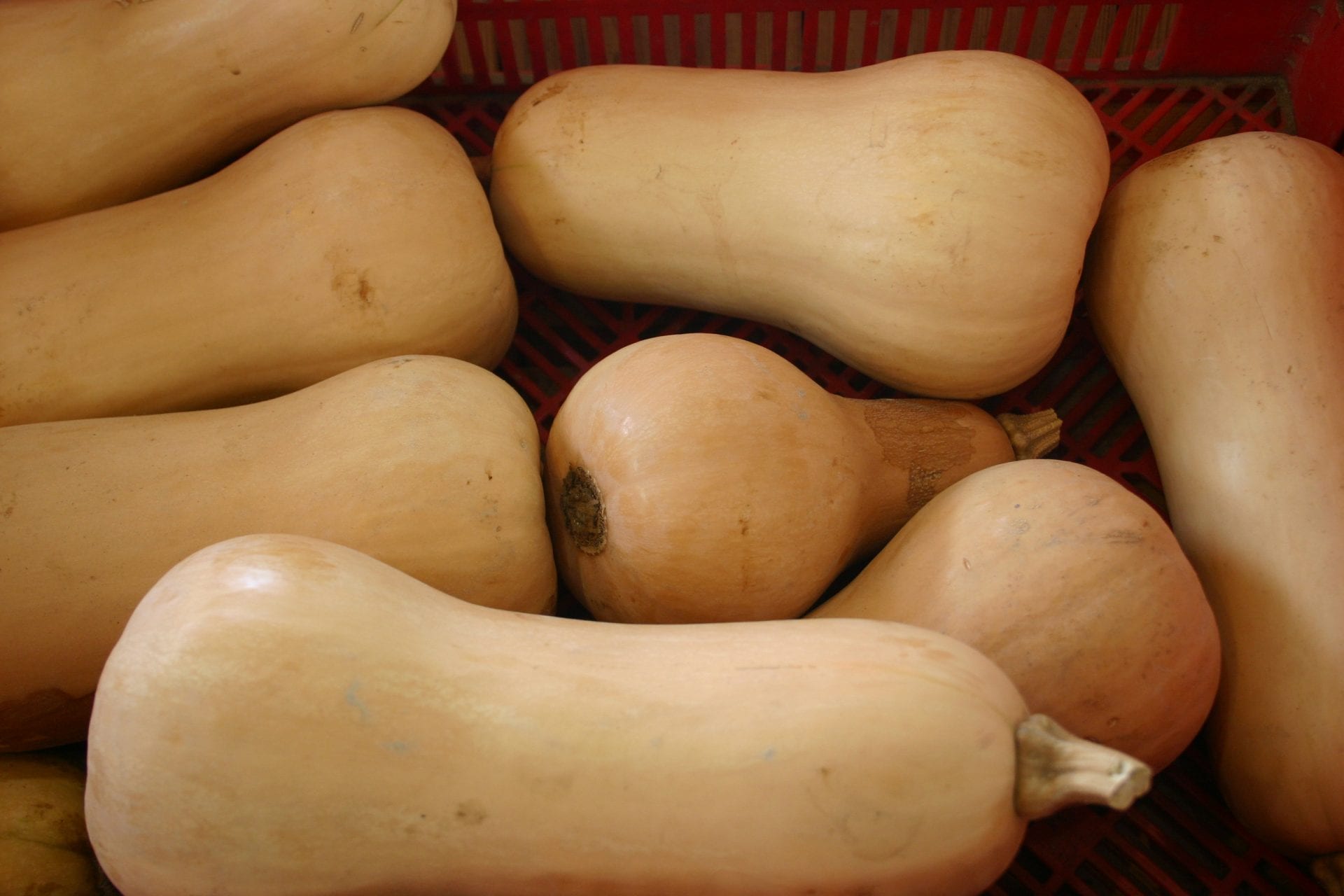
The butternut squash was most likely developed in the 1940s by an amateur gardener (not a farmer or scientist) named Charles A. Leggett while experimenting in species cultivation in a small quarter-acre garden near his house in Stow, Massachusetts. Eventually, Leggett took the fruit of his experiment to the nearby Waltham Field Station to show them what he’d developed. They loved it! He named his baby “butternut” because he thought it was smooth as butter and yummy as a nut. It arrived in Israel in the 1980s, where it received the cutesy name “dalorit.”
The butternut squash tends to be fond of hot, humid tropical weather. More than her sisters, the butternut just can’t take cold weather, which may be why it is the most popular of Israeli squash varieties. The first species of this type were chubby (with seed-filled bellies) and very long, sometimes curved necks. Over the years, other variations were developed, some with chubby and shorter necks to provide a uniform, thick-shelled vegetable as demanded by the market. Like zucchini, butternuts can also be picked at an earlier stage, and they’re very tasty when young (some say even yummier than regular squash). They’re fun to grow in a home garden, where you can pick some to be used as summer squash and allow others to ripen till they become the genuine butternut.
The butternut’s smooth rind makes it easy to peel with just a simple vegetable peeler. It tastes sweet, and its pulp becomes soft after cooking, although there are those who claim that baking improves it. The butternut is very rich in vitamin A, and under good conditions can be kept for six months (but how could you resist?).
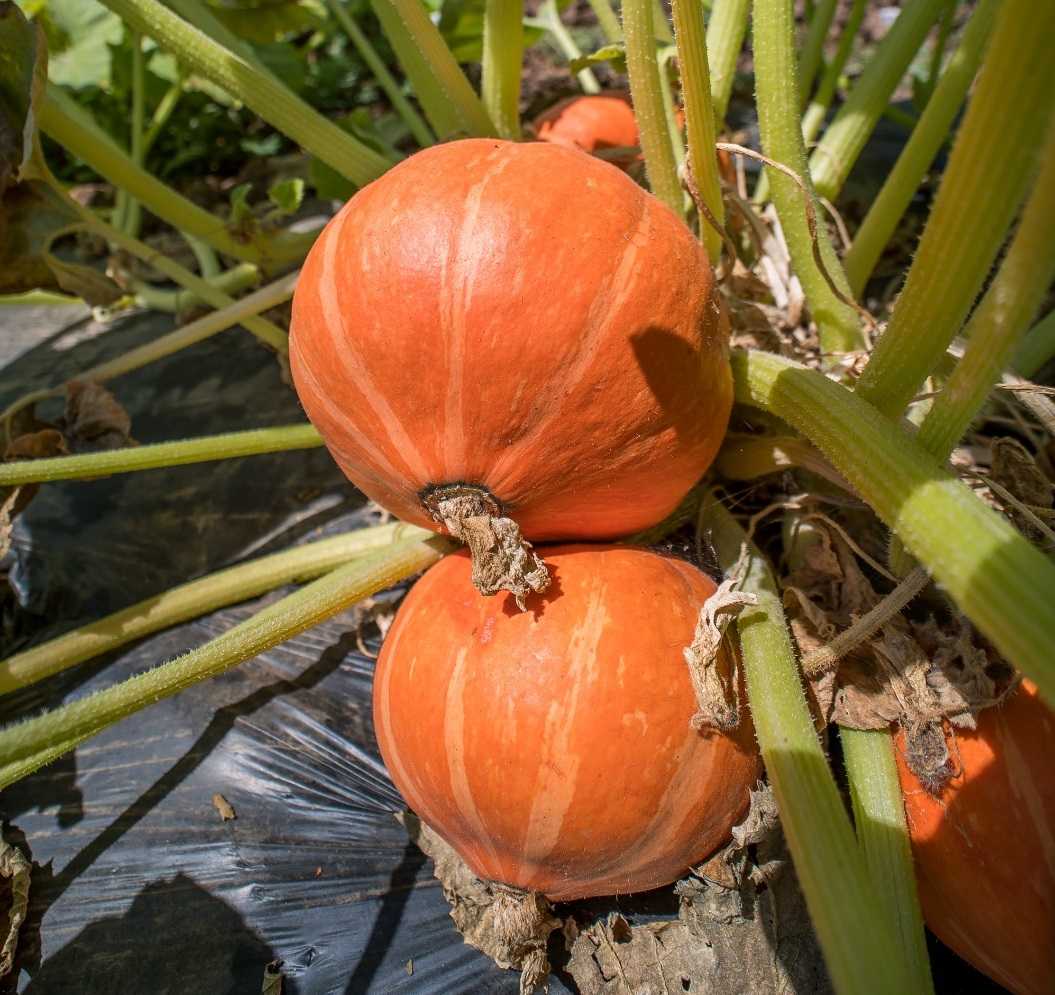
A love-struck guy or gal must have named the Amoro squash. This orange, round and flat squash boasts a “cute little rump.” She belongs to the prominent Kabocha or Japanese pumpkin group (which some call Hokkaido). Their defining characteristics: all have thick, bumpy skin, are very hard to peel, and have relatively dry flesh.
“Kabocha” is Japanese for squash. The origin of the name comes from the squash’s journey from Mesoamérica to Japan. After the Spanish and Portuguese reached America and discovered the new fruits and vegetables of the land, they began distributing them at upcoming stops on their sailing itinerary. The squash apparently arrived in Japan in the mid-16th century via Portuguese sailors who brought it from Cambodia. It was named Cambodia abóbora, which was eventually shortened to become kabocha. And thus, every squash in Japan is a kabocha, which is also the name of this particular group of squash.
The kabocha’s orange flesh testifies to its wealth of beta carotene (vitamin A), which supplies a generous quantity of iron, vitamin C and potassium. It is similar in taste to the acorn squash, but hard to carve, which is why it should be softened first by steaming or light baking (first perforate holes in the rind to allow the steam to escape). Then it can be easily cut and seeded for you to prepare as you wish.
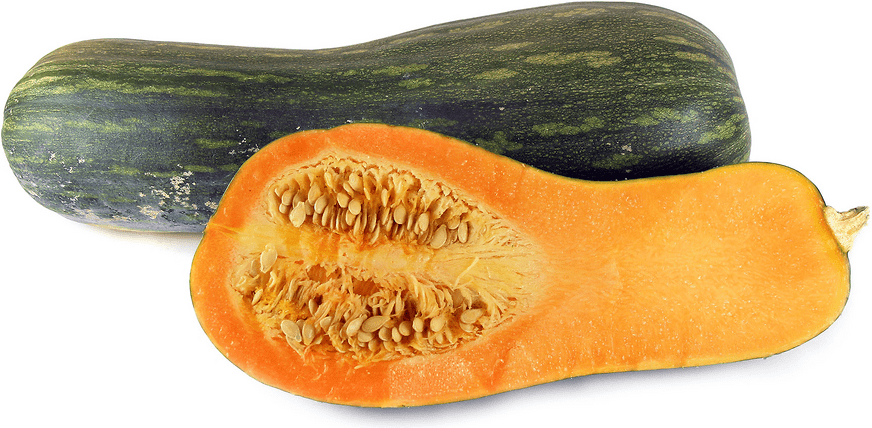
What's green on the outside, orange on the inside, cylinder-shaped and very long with pumpkin seeds? Meet the Napolitano squash! Chubeza has been lovingly growing it for some years now. It’s sweet and tasty and can be cut into thick slices, sort of like a loaf of bread…
This is a good old vintage squash which has never ceased to please throughout its many years. Napolitano even appeared in the illustrated Vegetable Garden by Vilmorin dating back to 1856, which describes the popular vegetables of the era. Despite the passage of years, the Napolitano has not lost its vitality and is widely grown in Europe and Israel. It's Italian in origin, as you’ve certainly guessed (thus can also be used as a threatening gangster weapon, should the need arise).
The Napolitano’s shape resembles a huge butternut squash – with a wide bottom and narrow “bottleneck,” but sometimes it can reach one meter in length! Napolitano weighs between 7-15 kg, sporting a texture similar to the butternut: smooth and more condensed than a regular pumpkin, with a gentle sweetness. Its inside also resembles the butternut, filled with fiber and seeds. If your slice originated in the seed section, use those bonus seeds well, but if you received a piece of “neck,” this is seed-free. Both are great!
Napolitano is well-loved in southern Italy where it is cooked along with hot peppers, eggplant, tomato, pears and plums in a seasonal soup called Giambotta, or sauteed and served with various sauces. The seeds are great for noshing, roasted and salted.
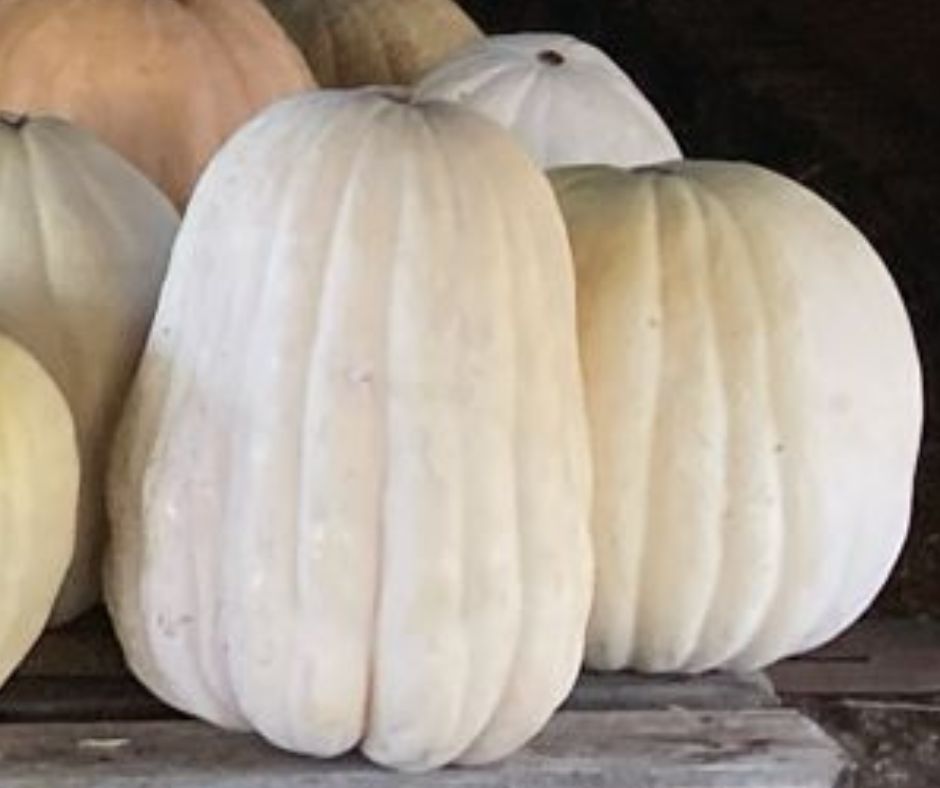
The Tripolitanian pumpkin also comes in your Chubeza box as a chunk of pumpkin.
I can’t imagine why the image of the apple is what we’ve been led to believe was the “forbidden fruit” from the Garden of Eden. I’m convinced that all facts point to the pumpkin as originating straight from Eden. Firstly, the pumpkin plant can easily look like something out of the jungle: a thick stem that shoots roots wherever it touches the ground, giant leaves that protect the fruit, and large, luscious yellow flowers. Secondly, the pumpkin is bursting with the yellow-orange pigment lutein, the primary antioxidant in the eye, so it’s no wonder that it opened Adam and Eve’s eyes… And finally – since it was a pumpkin, giant-sized and mighty as pumpkins tend to be, it’s no wonder that Eve couldn’t finish it on her own and invited Adam to the meal…
The Tripolitanian pumpkin is Israel’s most common variety – a giant pumpkin, creamy on the outside and orange on the inside. Our large and mighty Tripolitan pumpkin is sown in extremely wide spaces, about two to three meters apart (alternating rows), to allow enough growing space, as each pumpkin plant can reach up to some 9 meters in length. At Chubeza, we sow Tripolitanian pumpkins in March, sometimes even at the end of February, and patiently wait four to five months until it ripens and changes color to light cream.
The pumpkins (some truly massive and sprawling) are gathered from the field to be stored royally in a special shed we built for them, where they enjoy covered ground, shaded by nets, so we can place them side by side and afford them living space even after the harvest, contributing to their vital ventilation and shelf life.
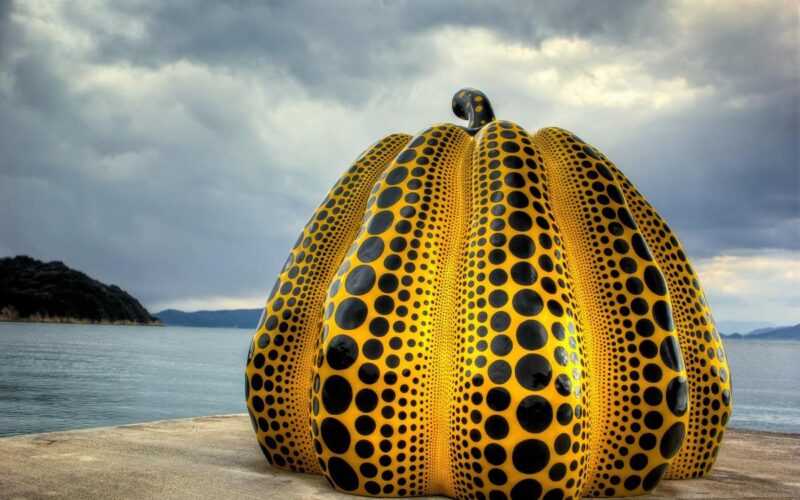
The pumpkins’ vibrant kaleidoscope of colors and shapes are just one example of Nature’s masterpieces. Sometimes human artists take this one step further. So, for dessert – here’s a lovely, wild and beautiful pumpkin sculpture by pumpkin-loving Japanese artist Yayoi Kusama
May this week bring good news – an end to the war and the return of all hostages. Wishing you peaceful, fun times, hydration, shade, and just enough sun!
Alon, Bat-Ami, Dror, Einat, and the entire Chubeza team