The Weekly Newsletter of Chubeza Farm
THANK YOU!!
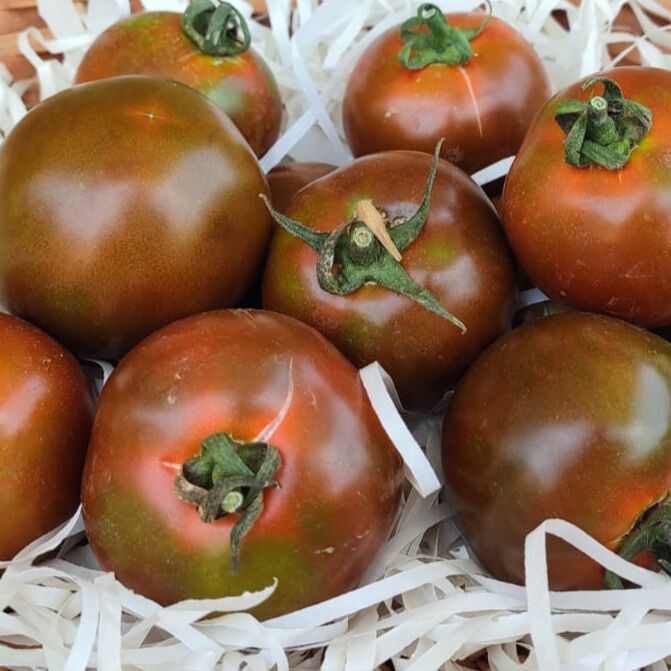
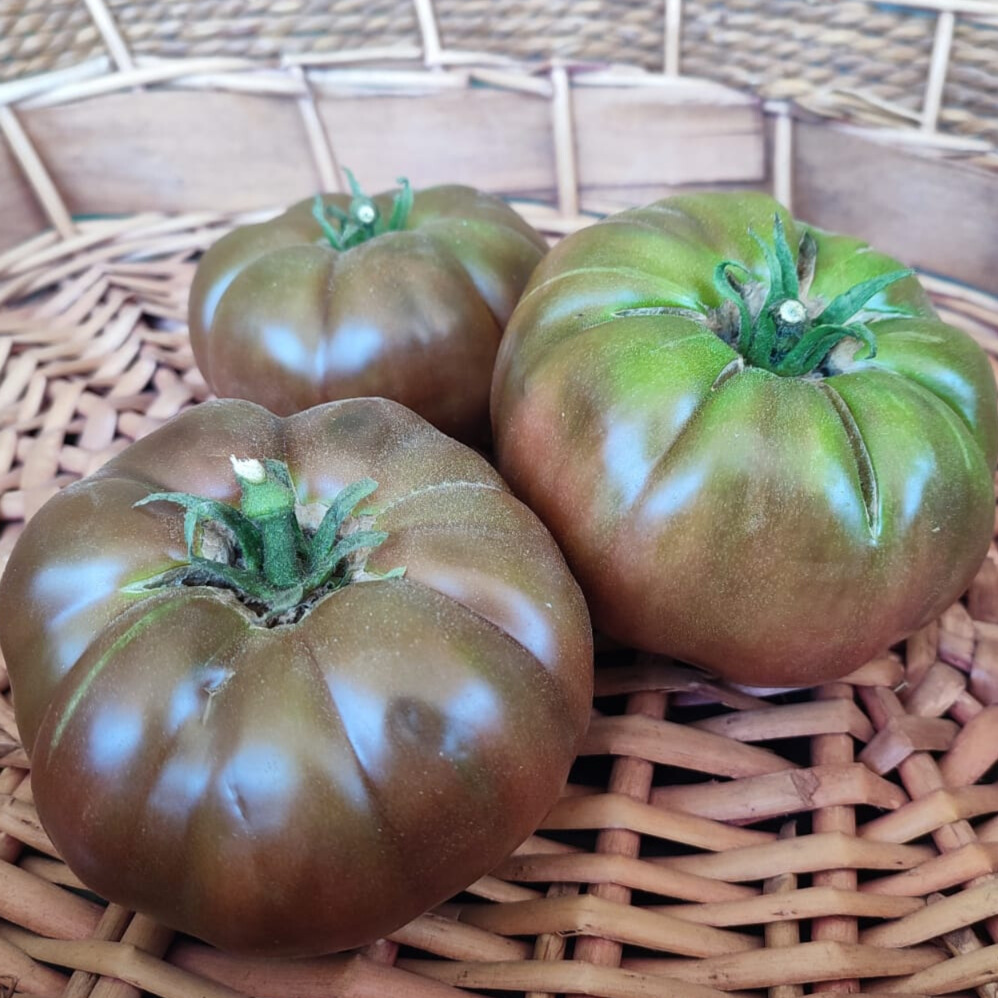
This week, we proudly welcome the distinctive lycopene tomato to Chubeza’s new, expanding Specialty Tomato selection. This lovely, super- healthy Kumato type hybrid tomato was developed in Spain by crossbreeding various varieties, including one wild species. The lycopene is medium-sized, round, firm, and shiny, with striking green/red/brown hues. Brimming with anthocyanins, potassium, magnesium, and vitamins A and C, it is absolutely delicious: sweet, with just the right blend of tartness. Try it today!!
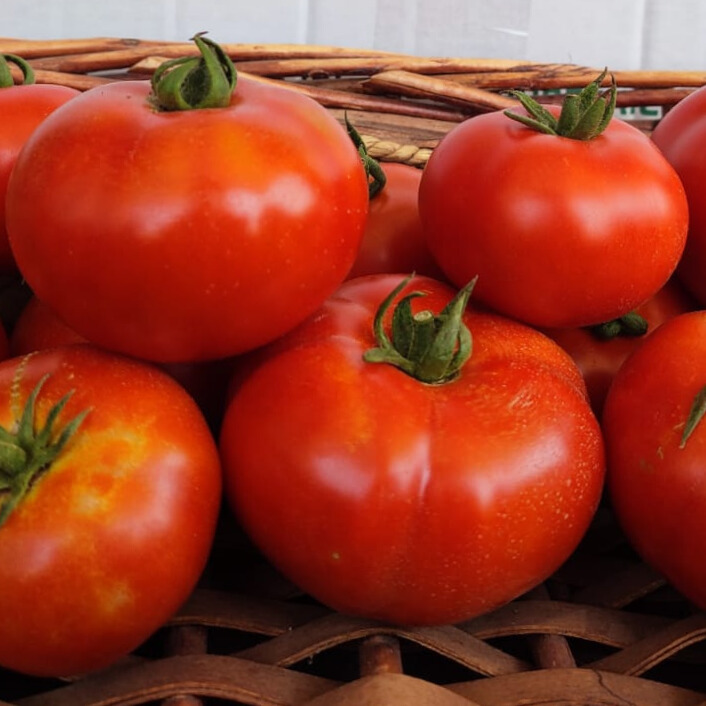
The lycopene joins its distinctive tomato siblings, the “Maggie” and “Oxheart” varieties, at Chubeza. Due to limited supply, these specialty tomatoes aren’t included in our standard weekly boxes but can be ordered separately via Chubeza’s Order System under “Fruits & Vegetables.”
And now, it’s time to welcome Chubeza’s summer royalty — his royal highness King Corn! Each year he accompanies us from June to December, joins us as we bid the school year farewell, dives with us into the pool over the summer, and goes back to school with us in fall. This year, King Corn eagerly started ripening even earlier than usual at the beginning of June and will stand faithfully at our side into July’s unbearable heat. Then it’s time for him to take a break in August-September (more about that later), then return to breathe freely with us come October, and make certain the weather has regained its sanity. Only then will he retire for the season in December. Now that’s what I call a king!

Corn is one of the earliest crops the Americans learned to cultivate and grow. Some 7,000 years ago, Central American foragers noticed a spontaneous mutation among the wild grass called teosinte, with a longer cob filled with seeds larger than in your average ancient weed. Something sparked their intuition, and they tasted it – to their great delight! They also discovered that seeds which fell to the ground germinated to become a mature plant that yielded more cobs. After some time, they learned that if they saved and seeded the choice seeds, the next crop would be even better! Thus, in the process of selecting the optimal plants to grow and harvest from year to year, the “domesticated corn” developed sporting large, juicy kernels securely attached to the cob. Today, corn is one of the few plants which cannot reproduce without human aid – its kernels must be removed manually for planting.
To your left is the ancient corn, and to your right is today’s corn:

At the next stage, American farmers discovered that if they grow corn, beans and squash together, they could make a decent basic diet out of the three. The threesome also grew well as a team: the corn acted as a supporting pole for the climbing beans, while the squash leaves protected the soil as mulch, preventing weeds and sealing in the moisture.
This trio, known as “The Three Sisters,” is an excellent example of the plant guild/community: a group of plants which gain added value when grown together. Their secret to success is their positive reciprocal relationships: each plant contributes to its neighbors, and gains from its neighbors in return. Mirroring human communities, a good plant guild is a more independent entity, stronger, healthier and easier to maintain than growing plants lacking mutual relationships. This agricultural development proved so time-efficient that it gave the growers enough spare moments to build houses, weave rugs and baskets, develop astronomy and math, culture and art.
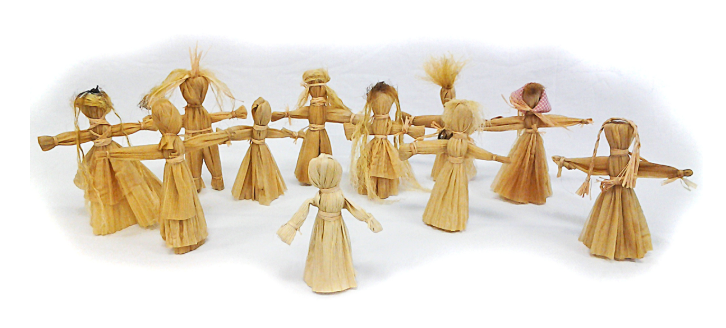
Native Americans used corn in a variety of ways. They ate it fresh or cooked, dried the cob and ground it into flour, crushed the fresh kernels to make Polenta, a moist corn porridge, adorned their homes with colorful corn ribbons, popped the kernels for popcorn, fed the cobs to livestock, and more. Each part of the corn plant gave its gifts. The tall corn stalks’ stature enabled trellising beanstalks, the corn stem poles were used for building, fishing and more, and the corn silk to treat kidney ailments and to weave mats, baskets, crafted masks, moccasins and corncob dolls:
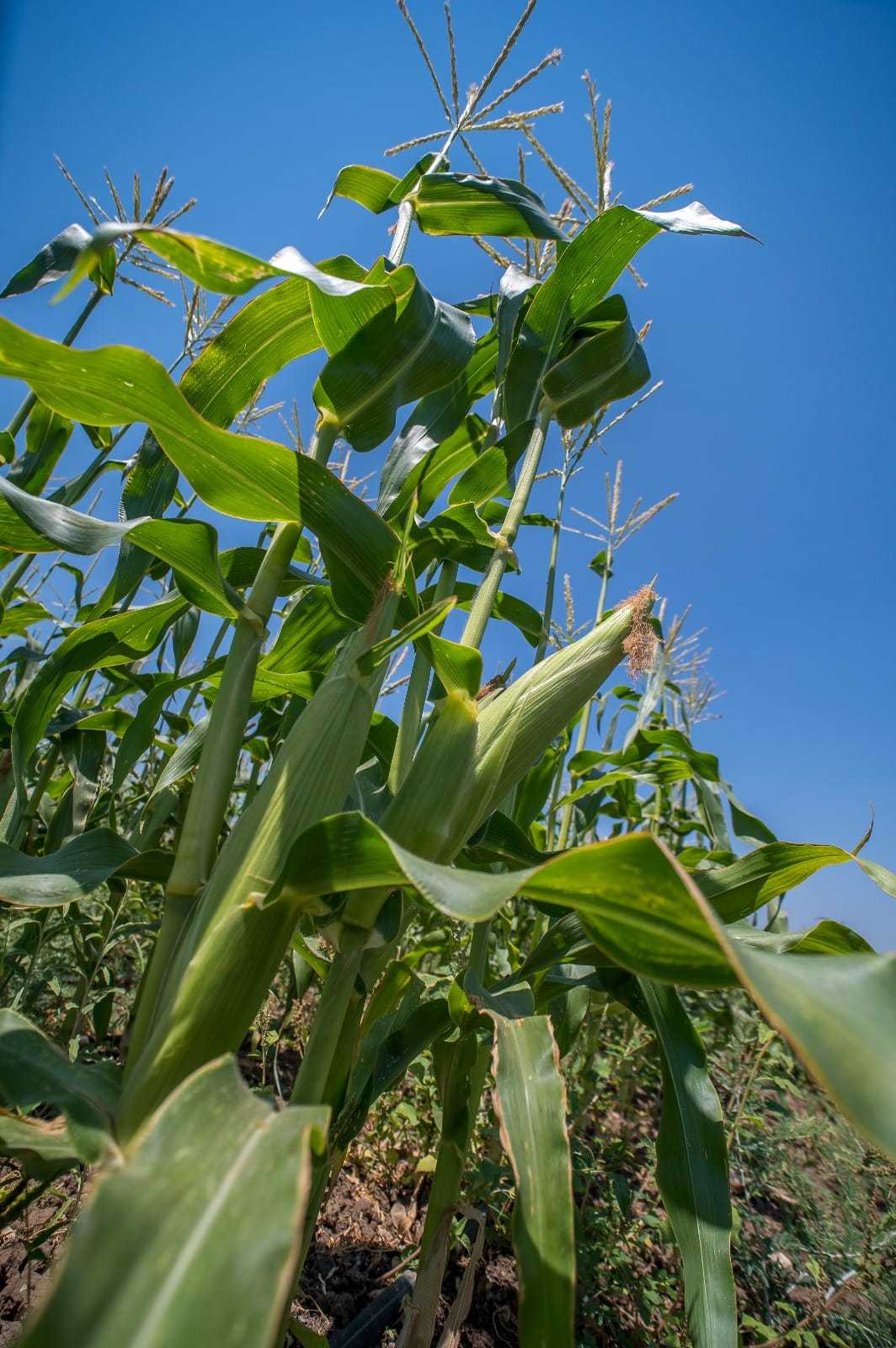
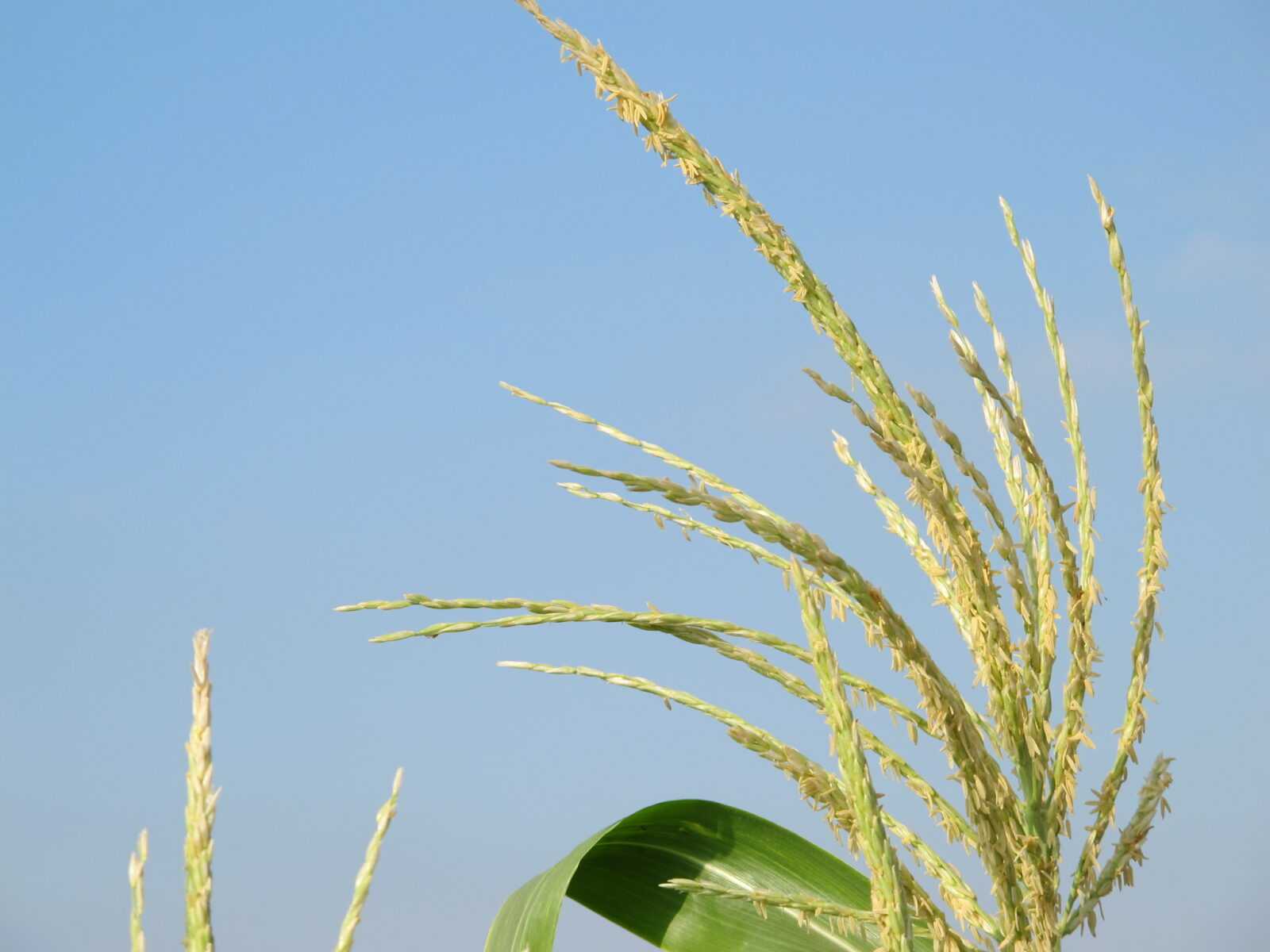
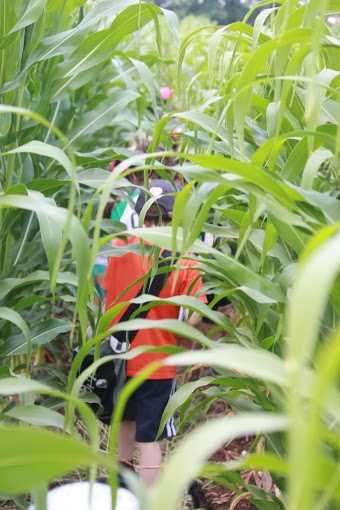
But over time, many changes occurred in the cultivation and usage of corn - once so substantial in the lives of the early inhabitants of America - transforming it into an industrialized product, engineered and empty.
Today, too, we are dependent upon corn in every realm, especially food: Almost every processed food contains corn, but corn of a very limited genetically-engineered variety that appears in its processed, worn, squeezed and abused form, totally bereft of nutritional value, and of course, a product which demands an excessive, unnecessary energy expenditure. We use cornstarch for thickening and gluing, and corn syrup for sweetening. Leavening agents, emulsifiers, food coloring, and citric acid are all derived from corn, as is most animal fodder in the meat industry. Corn also serves as a basis for plastic and oil production.
(For a deeper dive, I highly recommend Michael Pollan’s book The Omnivore’s Dilemma about food systems and corn’s role within them.)
And yet, simple, delicious corn still holds a place of honor in our world. There’s nothing like the sheer joy of biting into a fresh ear of corn….
Next week, tune in for the continuation of the Chubeza Corn Story. Until then, may the sweet ears of corn sweeten your own days in these challenging times.
Hoping for better days to come of peace and growth, an end to the war and the return of the hostages to their homes.
The entire Chubeza team