The Weekly Newsletter of Chubeza Farm
THANK YOU!!
A NEW TREAT TO ENJOY!
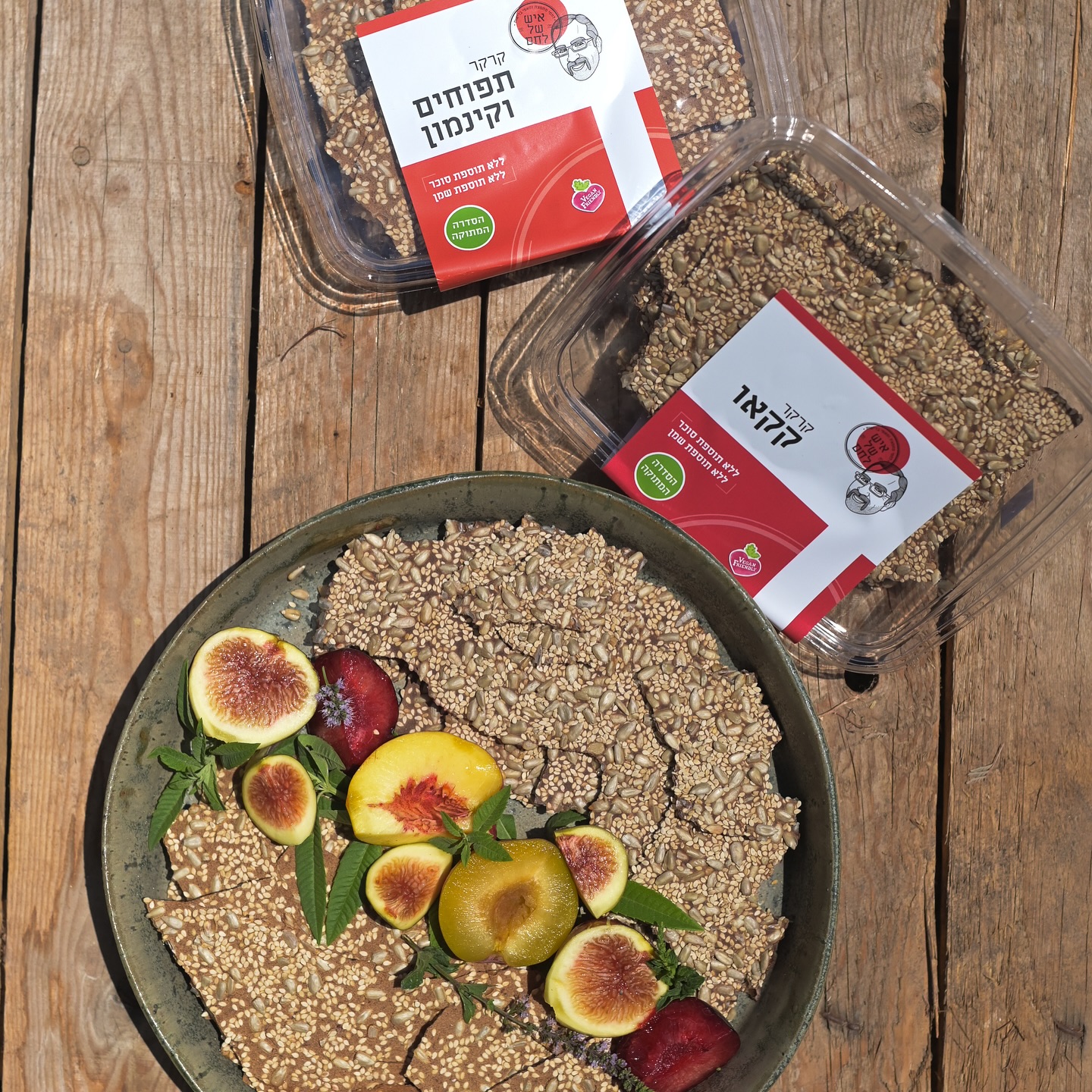
This time, it’s delectable, sweet crackers from Ido's extraordinary bakery “Ish Shel Lechem” (not to be confused with Eyal of the “Ishlechem” Bakery).
Ido bakes high-quality salty crackers - from spelt and rye flour – as well as yummy gluten-free crackers, skillfully made from teff, buckwheat, and chickpea flour.
In addition to the salty selection, Ido bakes delicious almond cookies. This week we are delighted to introduce his sweet crackers. They may look and bite just like crackers, but their very special seasoning gives each morsel a delicate, unique sweet taste. These sweet treats, naturally sweetened and sugar-free, come in two flavors: Apple & Cinnamon or Cocoa. A perfect treat for gluten-avoiders and for all. Order today via the Chubeza Order System!
Last week, shivering in the cold, we wrote about the looming hazards of frost damage in the field. Sunday night passed peacefully, but the following night the frost came with a vengeance, wreaking damage on several crops in the field. The cucumbers and tomatoes, carefully covered with shade nets over the greenhouse roofs, were perfectly comfy inside their growth structures and safely survived the low temperatures. But alas, the poor potatoes that had just begun to sprout, and the tender young pumpkin seedlings suffered severe frost burns and significant damage, despite being covered with protective plastic tunnels. We can't blame the crops, of course. The frost came later than usual this year, so the spring crops, unaccustomed to encountering such frigid temperatures, had no chance to meet the vicious frost unscathed. We fervently hope that the potatoes will sprout again, we’ll supplement the pumpkin plantings with new seedlings, and we hope to avoid encountering another cruel blight this season.
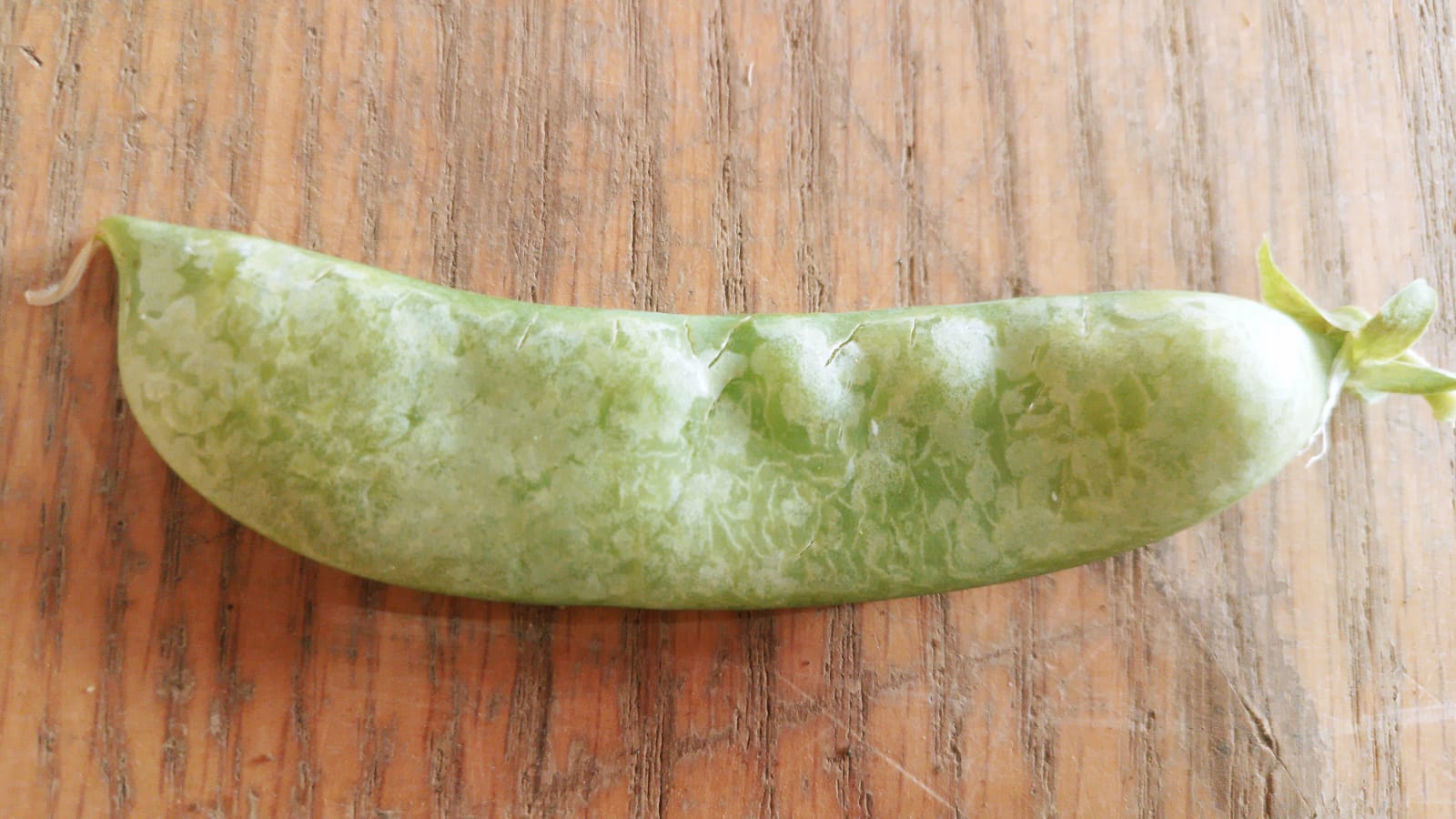
An additional crop afflicted by the cold is our beloved pea. Although coined a "snow pea," it has nothing to do with snow... The snow pea is actually quite sensitive to extreme cold, particularly the harmful frosts. Last week’s frost laced our peas with thin silver stripes that turned their skin rough and bumpy. Fortunately, the damage is external and superficial. The pea’s delectable taste remains better than ever, and she is still juicy and sweet. So, give this brave little veggie her due respect. The peas now arriving in your boxes triumphantly survived and overcame the frost!
Legend has it that one stormy night, a frozen, exhausted princess was lost and wandering. Suddenly, through the foggy mist she saw a warm light glowing from a friendly, inviting castle. As she reached this destination, the princess, who was only seeking a dry bed to rest upon, could not have guessed that this night would transform her into one of the most famous presenters of an incredible lentil: the tiny pea placed under a tall stack of soft mattresses…
Hans Christian Anderson really loved peas. So much so that he granted the pea extraterrestrial powers, both as a useful tool to distinguish a real princess from a fake (The Princess and the Pea) and even to make a sick little girl all better (Five Peas in a Pod).
The pea has been visiting your Chubeza boxes for several months, now becoming a “regular.” She brings sheer delight, so let’s get better acquainted with this wonderful treat:
Though she pretends to be a young’un, the pea is in fact one of the most ancient vegetables that human beings have cultivated. It is said to have originated in three centers: Central Asia (Northwest India to Afghanistan), the Near East (yes, also with us), and Ethiopia. After being domesticated, this green wonder was spread via travelers, traders, and conquerors to reach the Mediterranean countries and the Far East. Remnants of a primitive, almost 12,000-year-old pea (a wild pea, not the domesticated variety) were discovered in caves on the Burma-Thailand border. Traces of its granddaughters, only 8000 years old, were discovered in Northwestern Iraq, and remains of the great-granddaughters (5000 years old) were found in a lake in a Swiss village. The Greeks and Romans raised peas in the 6th century BC, but the vegetable only arrived in China much later, in the 7th century AD, coined Hu tou, “foreign legumes.”
The first varieties included peas which started out hard, thus were used dried or ground into flour. These were also darker and smaller peas than those we know today. In the Middle Ages, dried peas became a mainstay of the common folk of Europe, thanks to the vegetable’s ability to keep throughout the long winter months and to fill a hungry belly. Only in late-14th century Italy were the first fresh peas developed, followed by the tiny, diminutive French variety. Several centuries later, fresh peas became quite fashionable.
The problem with fresh peas is that immediately after being picked, their sugar begins to turn to starch, and the pea quickly loses its sweetness. That characteristic is especially problematic in today’s world, where so much time can pass till the vegetables reach your local grocery. For this reason, even today when peas are raised across the globe, only a few reach the shelves fresh. The vast majority of peas are industrial crops which are canned, frozen or dried. Canned peas take on a khaki-like hue because their verdant chlorophyll is destroyed in the heat process, where they also lose a significant portion of their nutritional value. When vegetables began being frozen in the 1920’s, this became the preferred method to store peas. The peas are fresh-frozen almost immediately at harvest, thus preserving their color and nutritional benefits.
Yummy, sweet fresh peas from the field can only be eaten in winter and springtime since the summer heat does not agree with pea. Now is the happy time to prepare your fingers for peeling and to sharpen those taste buds!
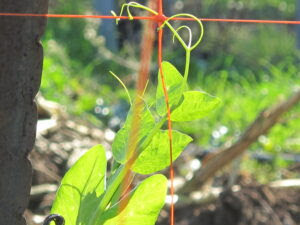
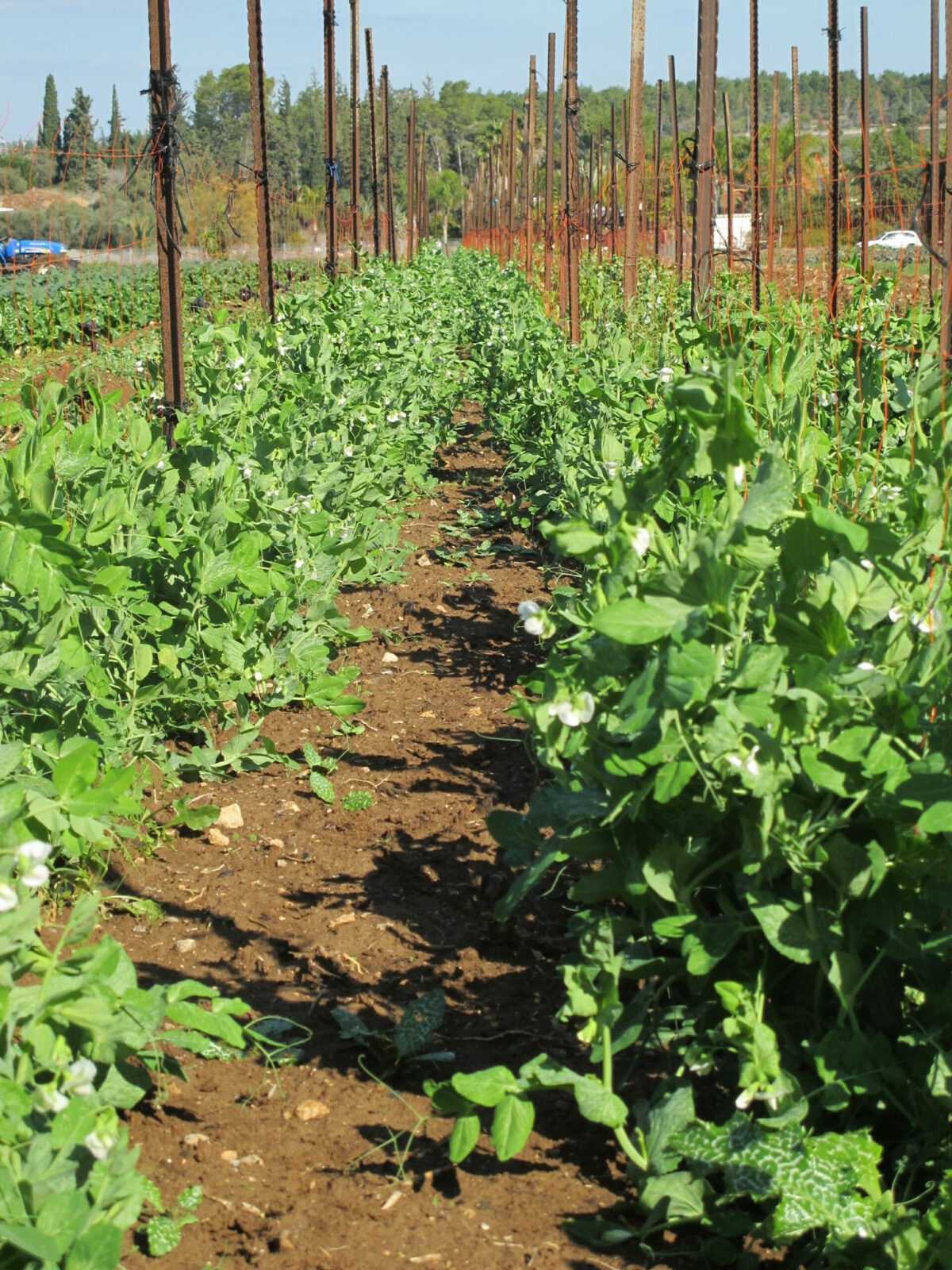
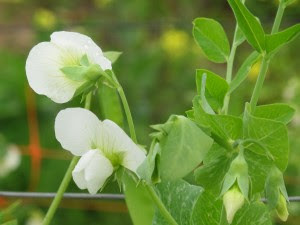
Chubeza’s snow peas are grown by trellising (on a vine). But unlike the tomato, eggplant and pepper, which require us to bolster their support, the pea plants only require stretching a net between the poles. They then do the rest, sending out their tendrils and cheerfully climbing independently. The delicate nature of the plant with its thin, silky stems and leaves makes it exceptionally light, thus easier to climb and hold onto. Climbing plants always seem to me to be more intelligent, the kind that can find the solution with their own “two feet.” Not enough light out here in the forest? Let’s climb up and find some more!” When the pea tendril, which develops from the leaf, meets a hard object (even a thin net like ours), it begins growing cells differently–-those close to the hard object get smaller; those farther away grow longer. This creates a twist and then a coiling of the tendril around the net, like a little spring. Such a dance (The Twist) can take from one to ten minutes. Amazing, don’t you think? Watch this wonder happen!
As for us, this climbing is a particular delight, knowing that soon we will be able to straighten our backs. We begin by harvesting the first rounds of snow pea pods from the lower part of the plant. Gradually, as it climbs higher, the peas ripen higher and higher, spurring us to stand tall as homo sapiens and pick those peas. Sheer joy!
May you enjoy a week of good news, a fine winter, and good health always. May all of the hostages return home very, very soon!
Alon, Bat-Ami, Dror, Einat, and the entire Chubeza team