The Weekly Newsletter of Chubeza Farm
THANK YOU!!
My Tree
Benjamin Tene
My tree is brother to the wind,
And to the sun so bright.
His crown of blossoms, gently pinned,
Above my garden’s light.
He listens to me silently.
Such a loyal friend is he.
All around me people jest:
"What kind of friend is that?"
He stands with scars upon his chest,
His years a mystery vast and flat.
Oh, let them laugh if they so wish,
And I will hug his trunk with bliss.
And whisper to him: dearest friend,
Please teach me, you of might,
To lift my head after a storm,
And bloom once more in light.
To thrive forever, strong and free -
Please teach me this, dear tree.
- Translated from the Hebrew by Aliza Raz-Melzer
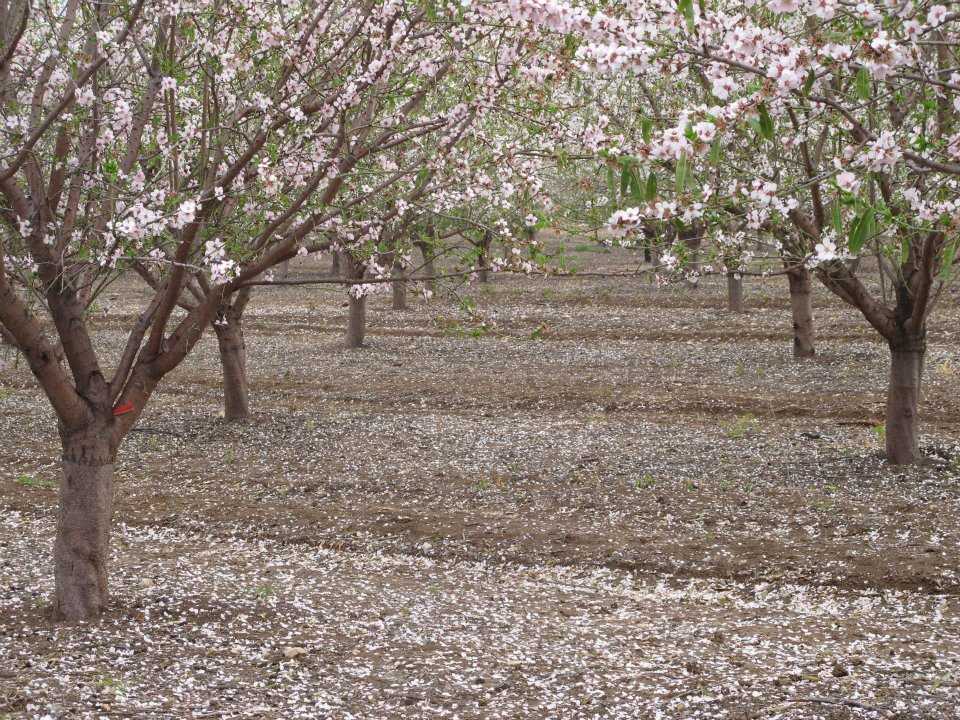
The Tu B’Shvat holiday has now come and gone, but the celebration of the renewal of trees and nature is far from just a one-day holiday. Over the coming weeks this beauty will continue to surround us, intensifying as spring approaches. Even in this year’s topsy-turvy winter, with warm, spring-like days in December and January, followed by rain, cold, and stormy weather for the second half of February (and beyond?), nature demands renewal. Almond trees (shkediot) and Judas trees (k’lil ha-choresh) are donning spectacular blooms, flowers are peeking from their bulbs to color groves and fields in vivid shades of pink, red and white, and jubilant winter weeds are bursting into a powerful, brilliant green in every patch of land.
Tu B’Shvat began in the Mishnaic era as an administrative date to determine the fiscal year (for tithes and donations) of tree fruits. Since a tithe is taken annually from the harvest, it was necessary to set the year’s exact starting date. Ultimately, the 15th of Shvat was the big winner.
The month of Shvat was selected by virtue of being the time when the new fruits begin to appear on the trees. Shvat’s name originates from the word shevet, meaning “branch.” When tree branches are whipped by the force of strong winds, bowing under the weight of heavy rain and snow, they bend, break and are sometimes struck by lightning. Yet, amidst this chaos, the steadfast branches also extend and grow, sprouting new young branches – soft, green shoots, swelling with budding points that sprout new leaves and flowers that will bear fruit.

And how is fruit born? Like a baby…
Every fruit develops from within a flower (usually following pollination). After pollination, the flower transforms: its petals, stamens and pistil wilt. The fertilized cells divide and grow into an embryo, into a seed. The embryo cells “differentiate” into tissues and organs of the seed (radicle and plumule, and at the center, endosperm – a tissue that stores food). The “fruit set” is the first stage of fruit formation, in which water and various nutrients reach the cells, which vigorously divide and grow. The ovary grows as its walls thicken and the peduncle surrounding it becomes juicy and grows as the seeds develop within. Usually, you can see the remnants of the dried flower’s sepal at the tip of the fruit. This stage is particularly sensitive to extreme temperature changes, strong winds and heavy rains, which threaten to cause fruit to fall from the branches.
When the fruit’s growth stage ends, the ripening begins, transforming the fruit’s size, shape, scent, color, taste, and texture. This fruit, the organ containing the seeds, envelopes them in a juicy layer and peel. The fruit is keenly vital to the plant’s continuity because it houses the plant’s “embryo,” protecting it and spurring the dissemination and acceptance of the seed into the ground.

The period of Tu B’Shvat is marked by a swing of contrasts – from Nature’s awakening bearing a sweet promise, to the fear and anxiety of whether this fragile, delicate promise hanging on the tiny flowers on the tree branches will somehow evolve. Particularly this year, precisely during these days of our hostages’ return home, we all veer between joy and hardship, relief and anxiety. Shocked and anguished by those returning injured and starved, yet amazed by the courage and mental fortitude of those who have returned, who survived, came home, and continue to battle for the return of all the hostages.
May we learn from the trees perseverance, survival, renewal, and renewed blooming –
to be able to lift our heads after a storm, and like the flowers, to endlessly blossom and bloom. Our hostages have been in captivity for over 500 days. We fervently hope, wish for and anticipate the return home of every hostage, soon, soon, soon.
Alon, Bat-Ami, Dror, Einat and the entire Chubeza team