The Weekly Newsletter of Chubeza Farm
THANK YOU!!
Last weekend, we experienced incredible joy as 11 additional hostages returned home after over 480 days in Hamas captivity: young women, Thai workers, and men including two grandfathers, Gadi Moses and Keith Siegel. As they hugged their children and grandchildren, my thoughts went to my own grandparents and the special love that bonds grandparents and their grandchildren.
When I was just a little girl, my Grandma Sarah, a woman who exuded love and care, would get nervous at the slightest sneeze or scratch. She would immediately pounce on us with a huge hug and a hot drink with something sweet alongside, murmuring all the while, "Just be healthy, little one."
"Grandparent words," I thought as a kid – or rather did not give any extra thought to, beyond attributing these words to (over) anxious grandparents like Grandma Sarah. But as I grew older, I discovered just how right she was and how much truth these words carry. Just be healthy!

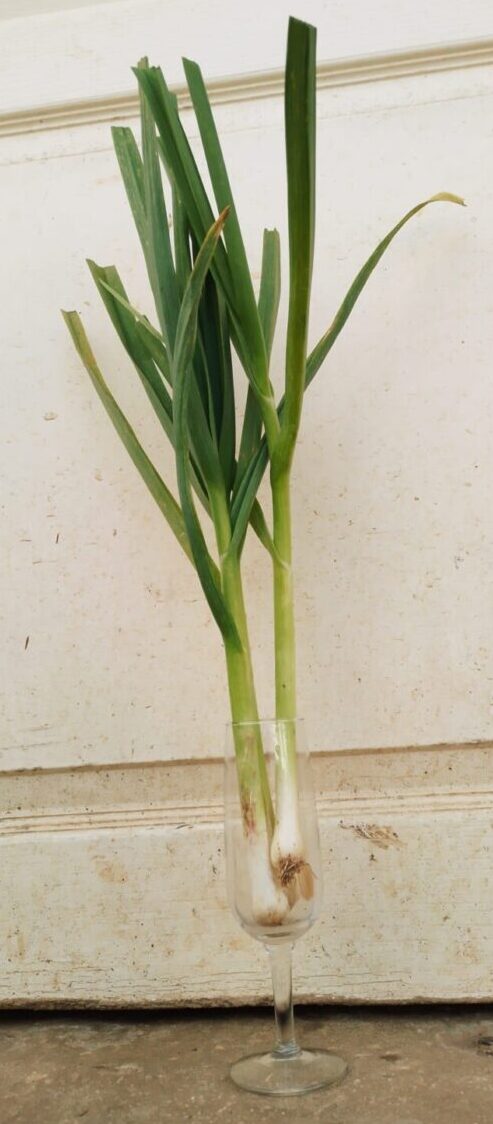
In recent winters plagued by severe flu outbreaks, Grandma's blessing is more relevant than ever. At Chubeza, we strive to keep you healthy via our vegetables. To prove just how serious we are, we are sending representatives of the healthiest and most healing family which particularly protect your respiratory organs and prevent common colds: meet Dr. Leek, Dr. Onion and Dr. Garlic. And there is no better time than now to introduce their special spring representative, smiling below:
At first glance, this fresh green garlic may resemble a great big scallion, but its garlic aroma is unmistakable… Its bulb is bigger than a scallion’s (but still not as big as a full-grown garlic bulb) and its greens are long and flat, not hollow like the scallion. Green garlic is one of the last truly seasonal vegetables: it turns up in Israeli markets at the end of February-beginning of March, just when winter is beginning to ebb and spring glimmers here and there between wintry clouds. It remains only a short few weeks, till April. Green garlic is a very special vegetable, a delicate, childish, innocent version of its pungent older brother, bringing to my mind – as a garlic lover – thoughts of the power of gentleness and calm, of childhood and maturity. We have been growing green garlic in Chubeza since our very first season, where it made a debut in our first spring boxes. It’s been with us for twenty-one springs ever since.
Garlic is first seeded in mid-September. We actually plant garlic cloves (and you can too!) by pushing these cloves into the earth. Even regular store-bought garlic can be used as a seed to spawn a new garlic bulb. Naturally, we use organic garlic cloves grown especially to serve as organic seeds, with the bigger and stronger cloves pre-selected for us, but also because the seeds are (supposed to be) free of pathogens (which is very hard to ensure, as you will soon read). The garlic shoots out roots, sprouts, and settles nicely within the cozy soil before winter. Then begins The Wait. Just like the onion, its garlic cousin from the Liliaceae family waits patiently for its cue – the first signs of the days growing longer after December 21– to begin to thicken and develop a bulb.
Despite garlic’s sterling reputation as an insect repellent (and rightfully so – insects really don’t like it), growing garlic in the field is not a simple task. The garlic, with its upright, straight leaves, needs our help in battling weeds, and garlic beds require constant weeding. It is also vulnerable to various fungi and other diseases which may strike. Over the past few warm winters, the struggle has become more and more daunting. Since fungi thrive on heat and moisture, in winter the high level of moisture in the soil and air make an ideal environment for fungi development. Particularly when the weather is warm and temperatures are not low enough to deter the fungi, the problem intensifies. Fungus damage includes rotting the garlic roots and yellowing and drying the leaves above.
In organic (as well as conventional) agriculture, it is advised to confront imminent threats to the garlic first and foremost by prevention: only plant garlic or other Liliaceaes in a plot where a similar vegetable has not grown for at least three years, sowing seeds from a reliable pathogen-free source. There are also those who advise sterilizing the earth before seeding. In organic farming, this means solar disinfection: spreading transparent plastic sheets over the ground, causing the earth to heat up to that temperature which kills the pathogens, while still allowing the survival of microorganisms within the soil. Above all, the most crucial requirement is to cultivate a strong, fertile earth.
As such, at Chubeza we rotate our garlic plots in the field, and buy seeds from a reliable source. Several years ago, we also carried out a solar sterilization for the first time in various beds in the field, where we then planted the garlic (though we subsequently decided not to continue with this method). Naturally, cultivating soil fertility is one of our ongoing tasks, and a strong, fertile earth proves itself ready and able.
The fungus usually strikes towards springtime, when temperatures rise. Thus, picking green garlic at this time is traditionally one of our ways to try to beat the system: once we detect signs of fungus-damage in a specific bed, we begin selective harvesting of garlic whose roots were affected but whose bulbs remain nice, round and unharmed. We then bundle them up for use as fresh garlic.
The garlic that remains fungus-free continues to grow in the bed, now enjoying a more spacious area in the soil to spread out. Once the garlic plants hit maturity, we harvest them and dry them in the sun (indirect sun, under a blanket of leaves).
Sadly, last year’s Chubeza’s entire garlic crop was attacked by a fierce virus. Probably the garlic cloves we had planted were contaminated by the Fusarium fungus. Thus, we were forced to harvest all the garlic as green garlic, due to the grave concern that the poor plants would not survive if we waited for them to grow to their full size. Last year, we harvested no dry garlic whatsoever. This year, so far (knock on wood, garlic, onion…anything!) our garlic crop looks good. We bought our seeds from another reliable, good source, and now see that the dry winter is having a positive effect on the garlic crop. We’ve reduced watering to a minimum to reduce soil moisture, while hoping for the best!
Whole garlic contains an inactive compound named alliin. When we cut into the garlic, thus damaging its cells, alliin turns into an active sulfur compound named Allicin, which is its antibiotic substance. Allicin is a disinfectant effective in fighting infections, parasites and inflammations. This is why garlic is beneficial in fighting the cough and common cold, inflammations, (respiratory, digestion, eye, ear, teeth…), intestinal infections and even particularly aggressive bacteria such as tuberculosis.
Green garlic helps reduce blood pressure, lower triglyceride levels, and reduce "bad" cholesterol while raising "good" cholesterol levels. Another advantage is the astute garlic’s ability to reduce blood clotting and assist in dissolving blood clots, thus reducing the risk of atherosclerosis, heart attacks and strokes. Other garlic substances aid in treating melanoma and preventing colon cancer. It may also help protect against diabetes damage, and prevents accumulation of body fat.
Green garlic is milder than dry garlic (which is more mature and becomes more concentrated, spicier and firmer in the drying process), and less fetid. Use green garlic as you would a scallion, including its little white bulb, and particularly its green leaves rising at least 6-15 centimeters from the succulent leaves growing at the fresh garlic’s base. Like leeks, green garlic stems can trap some dirt inside, so it’s best to rinse the stems well prior to use. The orange-brown speckles dotting the leaves are merely traces of the puccinia – a fungus that attacks garlic leaves. It is harmless to humans and there is absolutely no problem using the garlic leaves. If they are badly marred, they’re best used in cooking rather than fresh in a salad.
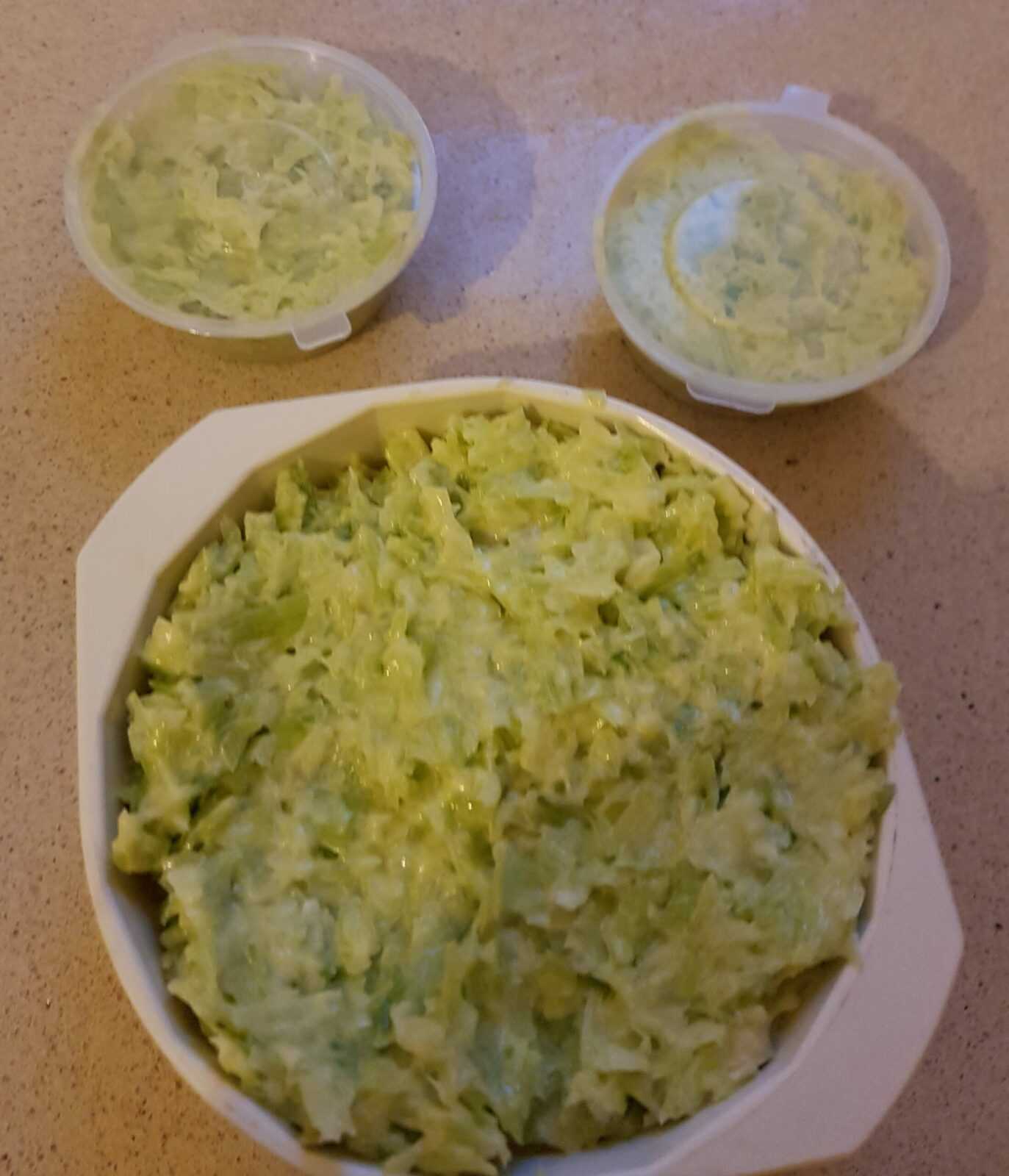
Add green garlic to salads, omelets, sauces, pastries and doughs. Make it into a spread, grill, blanch, sautéed in olive oil, or any other use you can imagine. Its mild taste makes it a super candidate for garlic soup. Check out our recipe section for a host of wonderful ways to use fresh green garlic.
Store fresh garlic greens in your refrigerator for three to four days. After you have used the stems, you may store the garlic bulbs in a ventilated basket in the kitchen, without refrigeration.
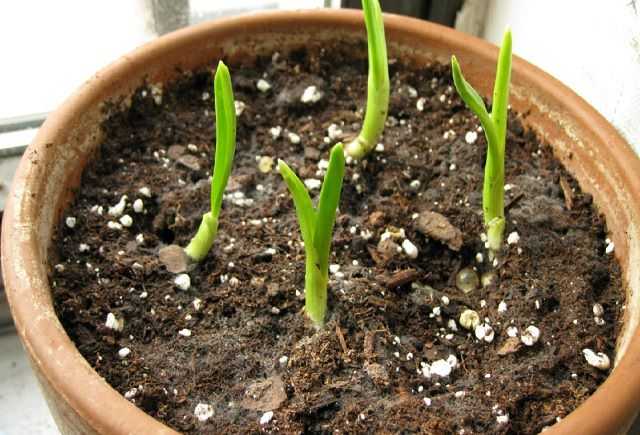
What’s really nice is that garlic can easily grow as a plant on your window: stick a garlic clove in the soil, water it and give it time. It will reward you by sprouting beautiful greens for you to chop and add to season any dish that is enhanced by yummy, mild garlic.
Wishing everyone good health, resilience, and a long, deep breath. May we continue to hear good news, with the speedy return home of every hostage and an end to the war.
Alon, Bat-Ami, Dror, Einat and the entire Chubeza team