The Weekly Newsletter of Chubeza Farm
THANK YOU!!
Believe it or not, the spring and summer “spinach” we eat in Israel is botanically not spinach at all – or even a close relative – and, it isn’t native to here. Yet despite being an immigrant, spinach is one of the few leafy greens that’s sturdy enough to survive the sweltering Israeli summer. It also claims many other names, all hinting at its origins: Sea Spinach, Cook’s Cabbage (for Captain Cook), Warrigal Greens (after an Australian wild dog), and Botany Bay Spinach (for Sydney, Australia’s well‑known bay). In Māori, the indigenous language of New Zealand, it’s called Kokihi, and in South Africa Duneweed. In Hebrew, its official name is Rabu’a Sero’a (“Creeping Squareleaf”). All of these names tell The Spinach Story, of a sprawling plant growing mainly along seashores, native to Australia and New Zealand where it has been a staple for generations by the indigenous peoples. Captain Cook was the one who introduced it to the European world. But before we make a spinach salad out of all this… let’s start at the beginning:
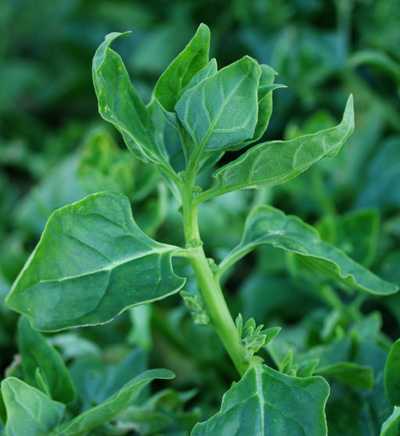
Its scientific name is Tetragonia, more precisely Tetragonia tetragonioides, a name hinting at the squared, jagged shape of its fruits (tetra – four, gonia – angle). This shape is preserved in its Hebrew name tered as well. Spinach belongs to the Aizoaceae family, known for fleshy plants that grow and thrive along coastal sands and dunes, as well as in desert regions. In Australia and New Zealand, spinach has been growing for countless years, where the local Aboriginal and Māori peoples gathered it to use for food. When Europeans made their way to the continent, the locals taught them which plants were edible, giving them a lifeline to survival. These local plants and animals earned the nickname Bush Tucker—essentially what Israelis call baladi. Among them was our friend, the tetragonia.

Captain Cook, who reached Australia’s eastern coast in 1770, was rightly concerned that his sailors, who were living solely on preserved food, would be stricken by scurvy, a disease caused by lack of vitamin C. Whenever he reached land, he set out to search for edible green leaves that would boost the nutrition in their diet. In Australia, the captain’s loyal botanist Sir Joseph Banks found tetragonia. The sturdy plant’s taste and nutritional value so greatly won their hearts and stomachs that the crew brought it home with them to England.
The Brits, who loved leafy greens, were delighted to adopt the exotic plant, making it a widely grown in English vegetable gardens by the early 19th century. Later it was abandoned in favor of hybrid and “advanced” plants, yet in recent years, thanks to the global baladi trend, spinach is back in the spotlight. Australian chefs deck their white aprons to set out and forage it in the wild or buy it from gourmet growers. In Asia, a great leafy greens-loving continent, spinach was also happily adopted. Today it’s grown in East Asia as a substitute for local greens in stir‑fry dishes.
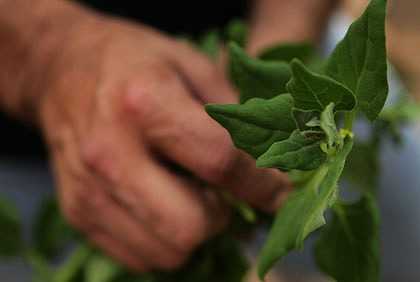
Although it is not genetically related to spinach at all, New Zealand spinach earned its name by being used as a spinach substitute. Its big advantage: unlike real spinach which needs cool temperatures, fails to germinate in extreme heat, and even bolts prematurely, New Zealand spinach is heat‑tolerant. On the other hand, it is sensitive to cold, and frost will devastate and kill it. These complementary traits make New Zealand spinach a successful summer substitute for regular spinach, which cannot be grown in hot weather.
In Israel we managed to complicate the story of substitutes even further, and there’s even a personal connection to our chubeza: During the siege of Jerusalem, residents were encouraged to plant vegetables on rooftops and use wastewater for irrigation. That’s when the idea arose to use chubeza – mallow. Schoolchildren were enlisted to help collect mallow leaves. The harvested leaves were sent to Tnuva, which packaged and marketed them as “New Zealand spinach”… A trip around the world: Jerusalem chubeza marketed as New Zealand tetragonia, meant to be a substitute for spinach (whose origin is in Iran)…

If you’d like to grow New Zealand spinach, along with countless gardeners around the world who have adopted it into their soil, here’s several important things to know: first, New Zealand spinach grows easily and enthusiastically, with little or no demands – it’s a good choice. As a matter of fact, it grows so vigorously that in parts of New Zealand and the United States it has become a bonified weed that farmers try to eradicate from their fields, though generally it’s quite friendly. Like many baladi plants, New Zealand spinach is strong and has few pests or diseases, which reinforces it as a good substitute for sensitive spinach. The seeds from New Zealand spinach germinate very slowly because of its tough seed coat (thanks to being at home in humid regions of the southern hemisphere, where the challenge was to prevent seeds from rotting too quickly before sprouting). The best way to help it germinate is to soak the seeds in cold water for 24 hours, or in hot water for 3 hours, before sowing.
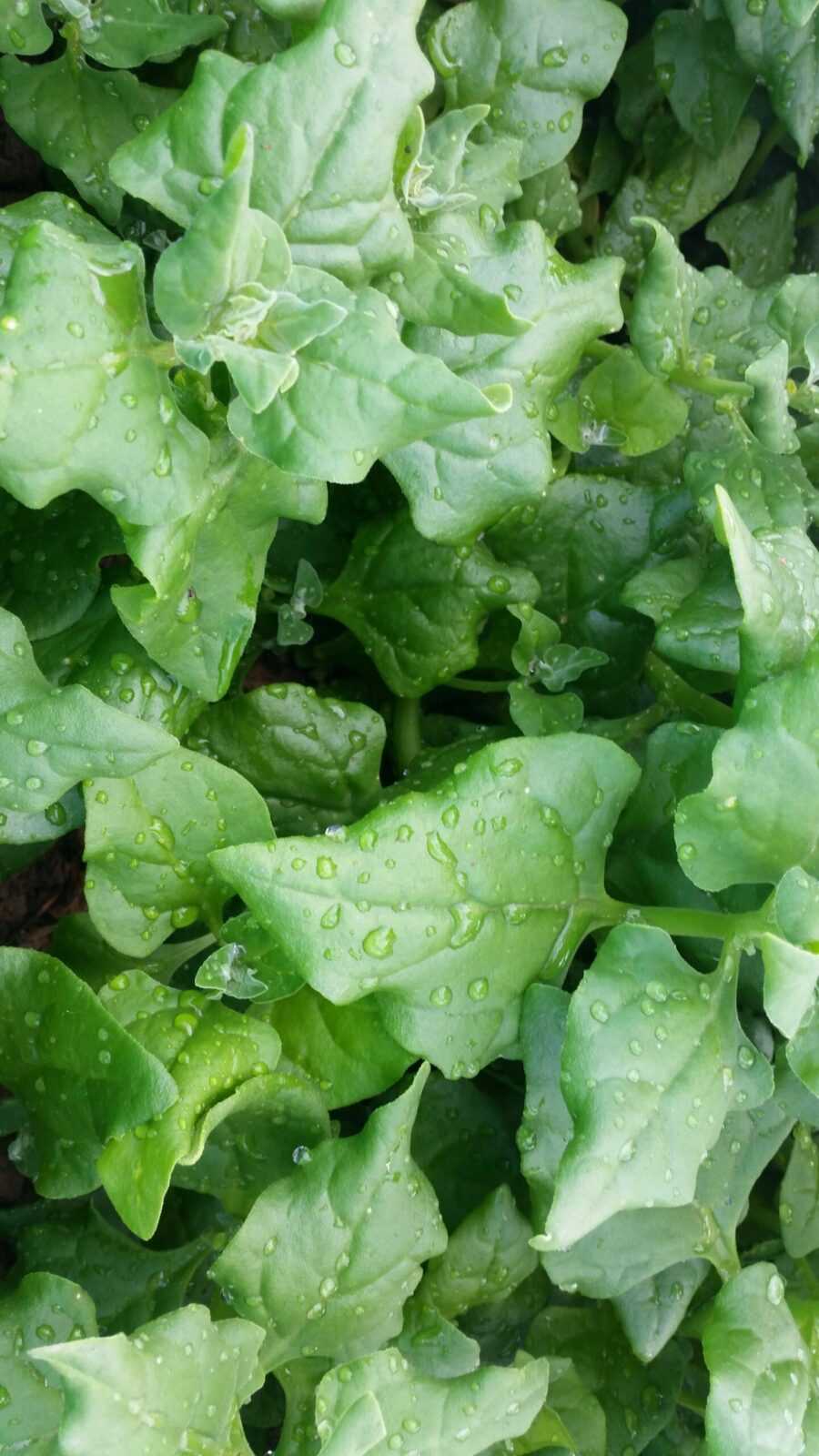
Its slightly salty taste is quite reminiscent of spinach, making it a suitable substitute. But New Zealand spinach looks nothing like spinach. Yes, it’s green, and you eat its leaves, but that’s where the similarity ends. The leaves of our New Zealand friend are much smaller, fleshier, and usually pointed at the tip, shaped like a diamond. It fits into any spinach recipe and can even replace chard in some dishes. Its fleshy texture resembles chard more than spinach, which is thinner. Because of its thickness, New Zealand spinach loses less volume when cooked, so if you use it as a substitute for spinach or for chard, but use only half the leaf volume listed in the recipe. (Note: some of our spinach recipes are Australian recipes specifically adapted for tetragonia. There, the quantities there are accurate for New Zealand spinach and need no adjustment.)
When cooking New Zealand spinach, separate the leaves from the stems, which are tougher and will interfere with even cooking. It is not recommended to eat these greens raw. Their leaves contain carotenoid antioxidants which are indeed important nutrients, but in their raw form they appear as oxalates that can complicate digestion (particularly for those with gallstones or kidney issues). A brief, several-minute blanching in water and rinsing the leaves afterward removes most of the oxalates and makes them easy to digest. Enjoy!
May we all enjoy a pleasant, calm week, blessed with good health!
Alon, Bat‑Ami, Dror, Einat, and the entire Chubeza team