The Weekly Newsletter of Chubeza Farm
THANK YOU!!
“Libavtini” – YOU HAVE CAPTURED MY HEART
You have captured my heart, my sister, my bride
You have ravished my heart with one of your eyes,
How fair is your love, my sister, my bride,
And the scent of your balms as the fragrance of Levanon,
Come with me from Levanon, my bride,
Come from the lions’ dens, from the mountains of the leopards.
I command you, daughters of Jerusalem,
That you stir not nor awaken my love, till it please.
- Song of Songs 4:9
Yehudit Ravitz’s beautiful rendition of this love song with the extraordinary lyrics from the Song of Songs inspire me to connect the ravishing (“Libavtini”) lubia, the third sister of the summer-grown legumes, to the romantic Tu B’Av fest held some two weeks ago. In its ancient roots, this holiday was highlighted by playful “love games” between young men and maidens but was also connected to the bonds formed between the tribes of Israel. Bonds created specifically between those who were different from one another, not between those who were alike. Just like the connection we’ve made between the three summer legumes in Chubeza’s field. This trilogy began with the tall, elegant okra, a distinctive legume which is not actually a bean. Then came the diminutive, hirsute soybean, and this week’s Chubeza Vegetable of the Week star --- the loveable lubia (Thai yard-long bean).
If you’re wondering why the latest green beans in Chubeza’s boxes are so long, coarse, and a bit strange, it’s because they’re not green beans at all, but rather… lubia. We “gift-wrap” them in your boxes in a crinkly bag. They really are very special, unique gift, albeit rather strange and unusual. But don’t expect them to be like green beans – they are something else entirely: Meet Iubia. V. unguiculata ssp. Sesquipedalis, a relative of beans, chickpeas, soybeans, fava beans, peas and other members of the Faboideae legume family we so love to nibble.
Said Rabbi Yona: “Why is it called a bean? Because it delights the heart and stirs the intestines.” - Yerushalmi Talmud, Tractate 1:1 (In Hebrew, this is a play on words….)
The ancient bean that grew for Rabbi Yona in the Land of Israel is, in fact, the lubia (the short baladi variety). During the days of the Mishna, today’s common (fresh/dry) bean was still found mainly in South America and not yet known in our region, while the lubia, which likely originated in Africa, was the most prevalent here.
When Rabbi Yona comments that the bean (shu’it) is amusing (mesha’a’sha’at), he probably means “filling and satisfying.” The Aramaic verb sha’ah is related to “filling and covering.” The continuation of Rabbi Yona’s words refers to a less amusing side of beans and (dry) lubia: their tendency to “tickle,” i.e., produce gas in the intestines…
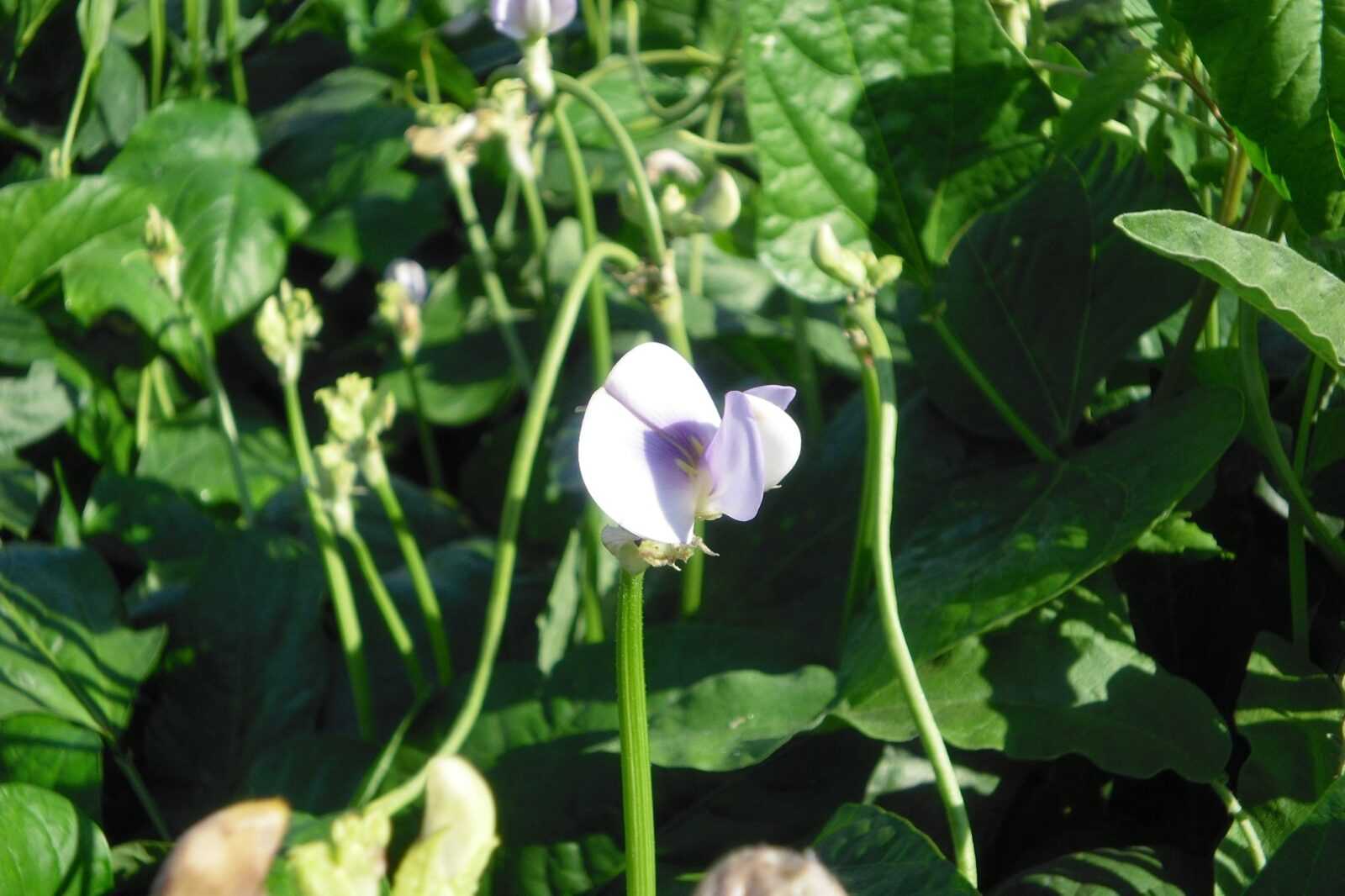
Wordplay aside, the lubia was deemed by our sages to earn a blessing at the Rosh Hashana table “May it be Your will…that our merits increase and our hearts be filled with gladness.” For me, the delight and charm of beans and lubia are also tied to their beauty and abundance – these plants are strong and lovely, their delicate flowers resemble two butterflies fluttering among the leaves (hence the family name papilionaceae), and the green pods we harvest from them are tasty, filling and heartwarming.
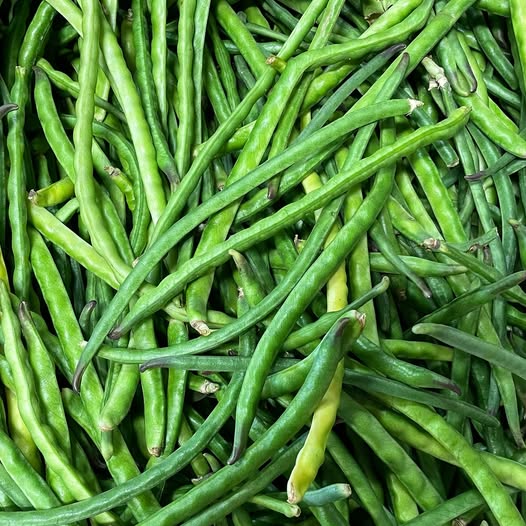
Both green beans and lubia come in fresh green and dry varieties, in an impressive variety of cultivars. The green (or yellow, purple, etc.) varieties are eaten fresh in soft, long pods. In the dry varieties, only the dry seeds are eaten – and available as well in a striking color array: red, white, speckled, brown, black, spotted… In springtime at Chubeza, our green and yellow beans grow on bushes. As summer heats up, we grow lubia, climbing upward and trellised on poles.
This year, we’re growing two types of lubia beans:
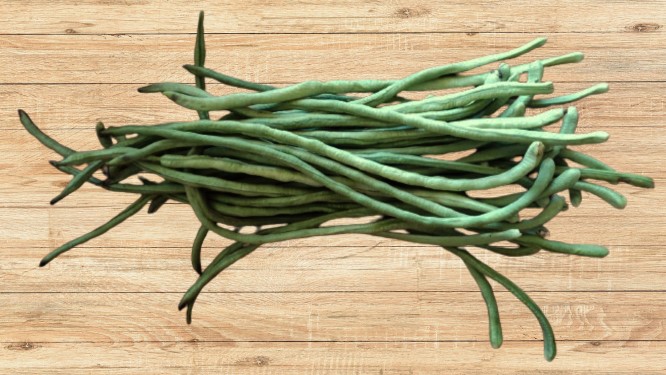
- The long Thai lubia, known in English as a “yard-long bean,” asparagus bean, long bean, Chinese bean, snake bean, and in Israel as a Thai bean/lubia, all describe this bean’s varied characteristics. It originates in Southeast Asia and can boldly reach half a meter in length.
- The short Iraqi lubia, likely the very one that Rabbi Yona referred to, originates in Africa and has been common to our region for centuries.
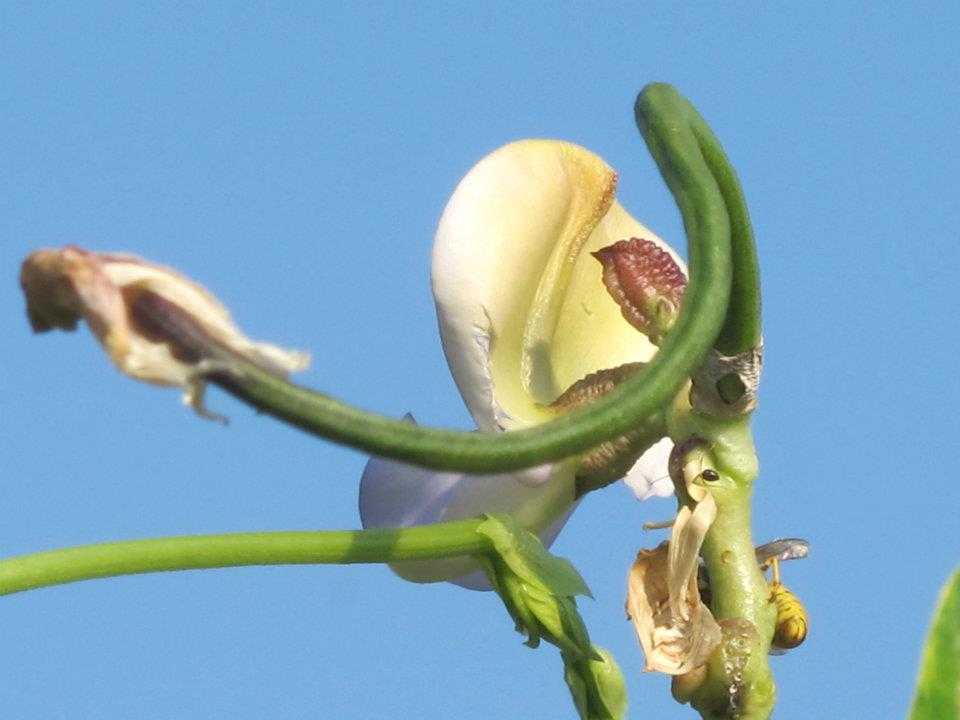

To vigorously grow, Thai lubia requires a great deal of heat, thriving throughout the sweltering months of summer (unlike green and yellow beans who faint under the scorching sun). It is sown in late spring and trellised on high poles, connected by a wide net stretched across for the young plants to adeptly climb. We sow the Thai lubia in a pair of beds on either side of the pepper plants so they can share the shade nets. With aplomb, the lubia plants climb expertly and efficiently.
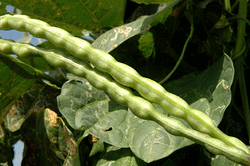
Within three months the flowering begins. On each flowering stalk, a pair of beautiful butterfly-like blossoms develops, from which a pair of pods ripens, joined at the tip like two twin green worms:
Unlike green beans, lubia grows slowly and yields pods only after more than three months (versus two months or less for beans). But this offers an advantage – we can continue harvesting the Thai lubia for a good while, until temperatures drop in wintertime.
Harvest the pods gently – don’t yank them, as the flowering stem continues to produce flowers along its length throughout the season.
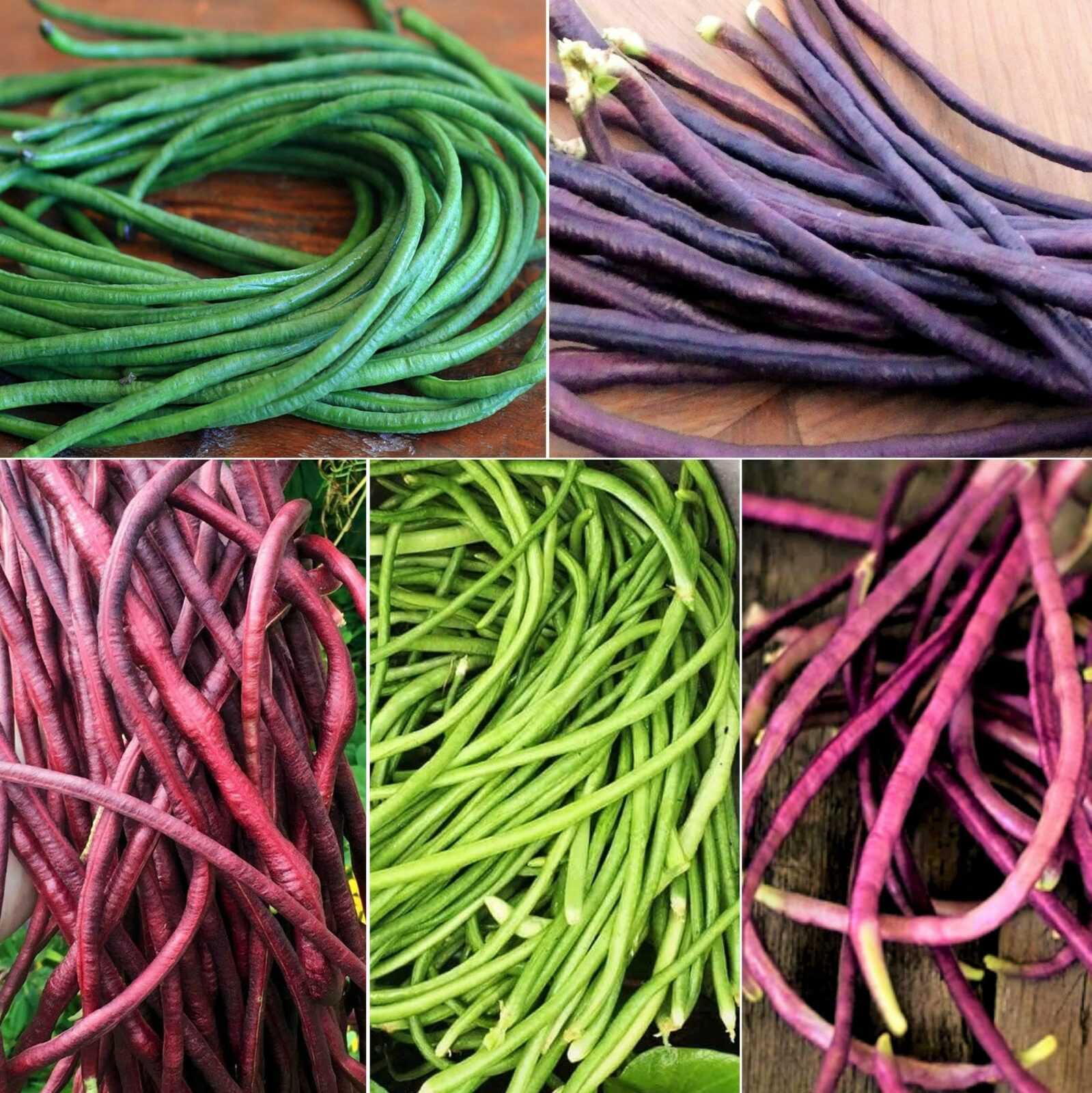
Thai lubia can be harvested, like at Chubeza, at a young stage when it’s some 30 cm long and 1 cm thick, and used like fresh lubia or green beans. You can also leave the pods to fully mature on the plant and use the black, red or white seeds (depending on the specific variety) like dry lubia or any other dry bean.
At Chubeza, we grow a green variety with black seeds inside, but throughout Asia there’s a dazzling array of colorful, rich lubia types. Pods come in green and reddish-purple hues, with seeds in black, white, brown or red.
Thai lubia can be used in recipes calling for green beans or fresh lubia, even in soups, quiches or fresh salads. In China, it is lightly stir-fried in a wok, the green bean of many stir-fry dishes. It tastes divine with fish and even pickled. Thai lubia is quite rich in vitamin A as well as boasting good amounts of vitamin C, iron, folic acid and dietary fiber.
Thai lubia can be cooked, steamed, grilled, pickled, added to pasta, rice, salad and any vegetable dish. It cheerfully adds flavor, color and a festive flair to any meal. The Thai lubia recipes featured on our Chubeza website range from easy to complex dishes - all delicious, of course. But if you don’t feel like firing up a cooking flame in the scorching heat, just help yourself to a long lubia “snake” and nibble away…
May this week bring real freedom to all, plus real relief from the heat!
Alon, Bat-Ami, Dror, Einat and the entire Chubeza team