The Weekly Newsletter of Chubeza Farm
THANK YOU!!
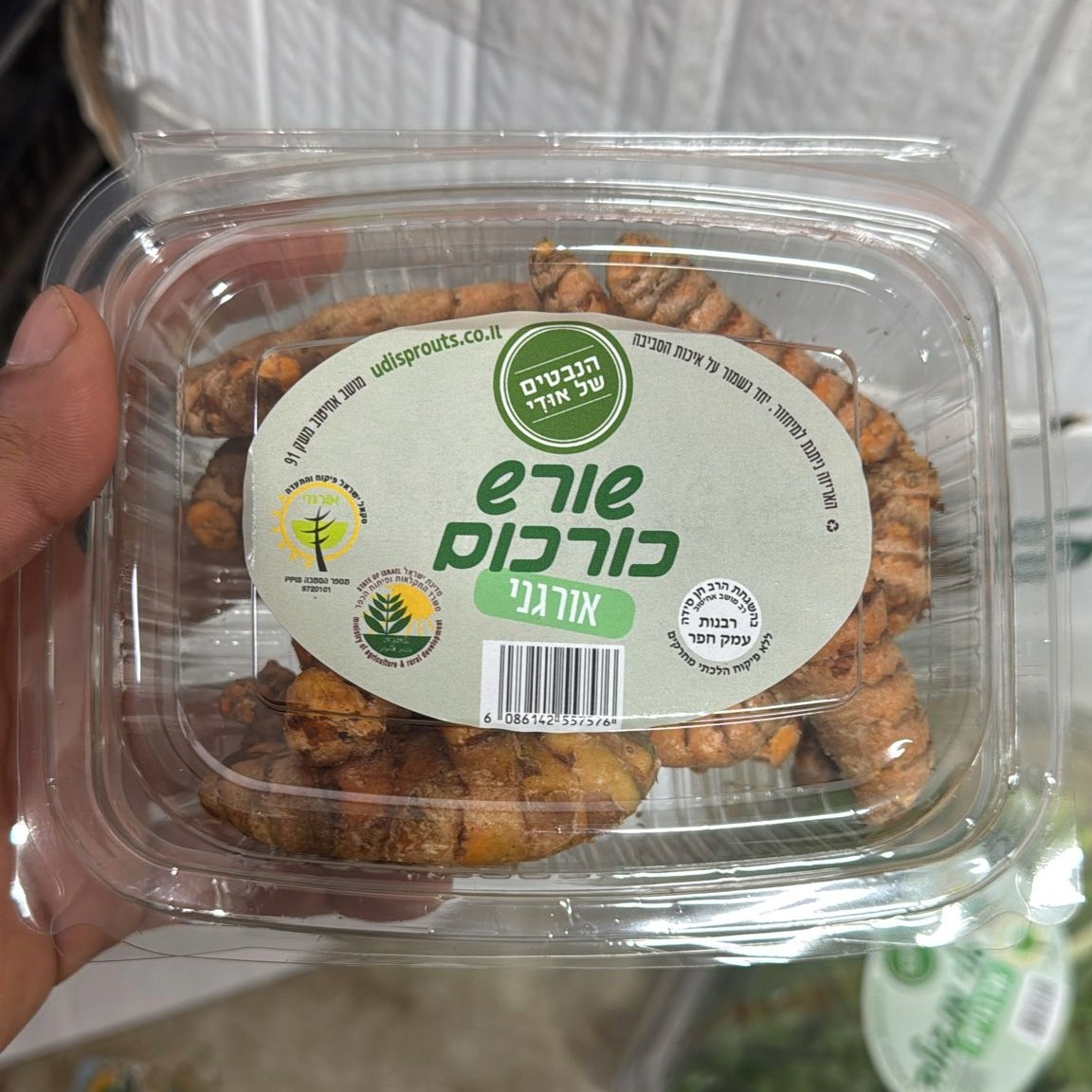
“Udi’s Sprouts” are adding another very special product to their distinctive lineup of sprouts and mushrooms: fresh organic turmeric root, homegrown in their greenhouses in Moshav Ahituv in the Hefer Valley. This turmeric is arriving in the nick of time—as winter weather brings illness and colds—to offer your body a powerful boost and your cuisine a vivid burst of flavor.
Price per 200-gram package of beautiful orange roots: 15 NIS.
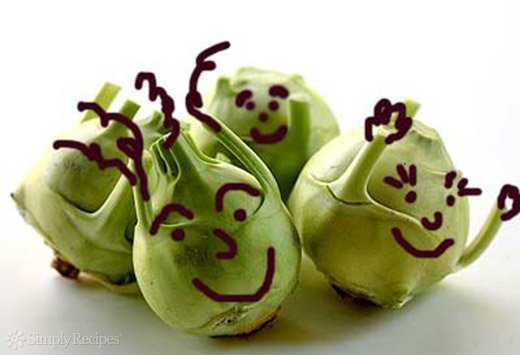
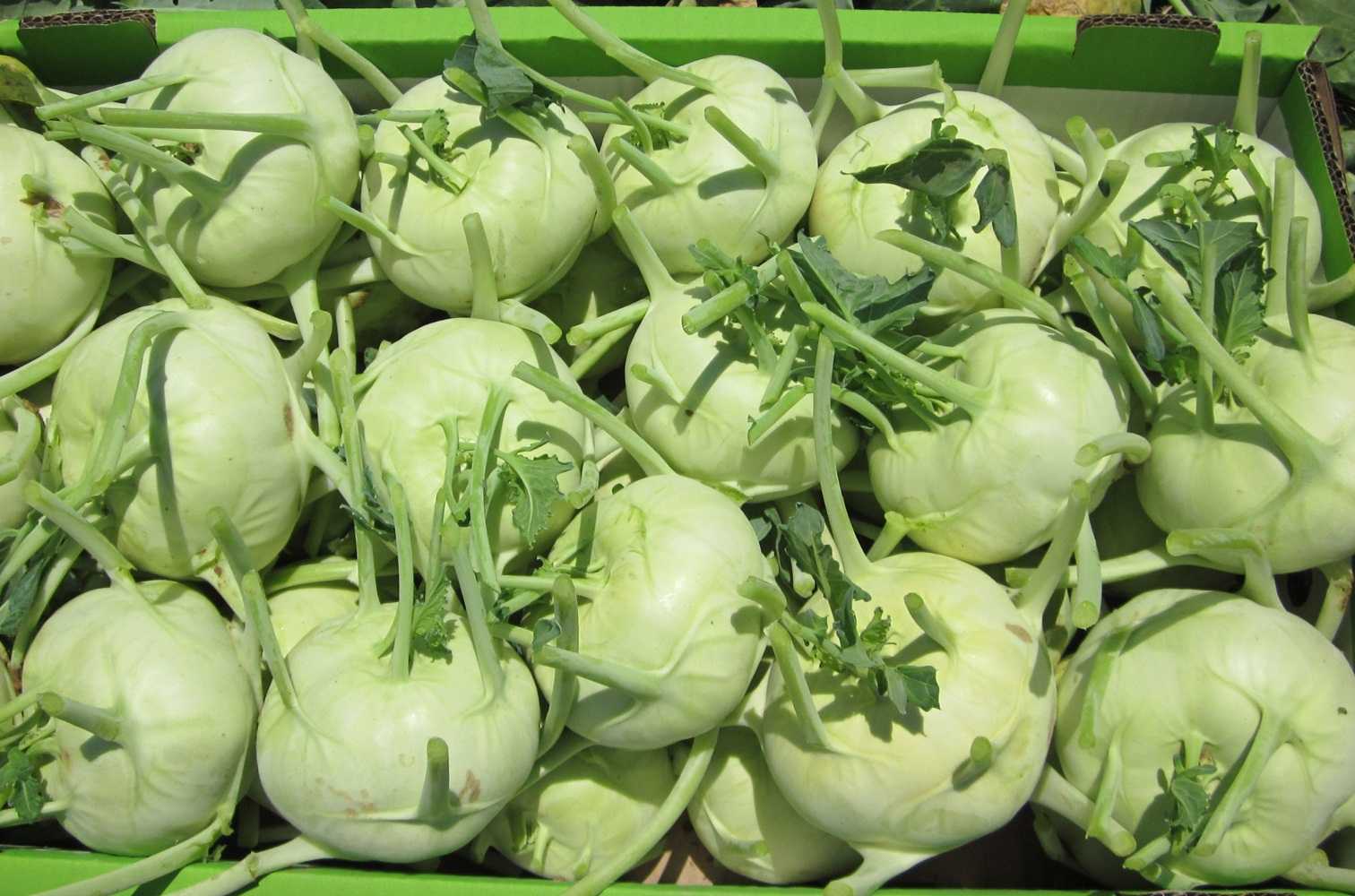
Often kohlrabi is likened to an alien, perhaps due to its green hue and outreached arms. Indeed, this week’s Chubeza Newsletter star sports a rather unique shape, perhaps because he himself is an unconventional phenomenon in the vegetable world. We know many vegetables that are the fruit of the plant (tomato, cucumber, pumpkin, pepper, eggplant, etc.,) or leaves (Swiss chard, cabbage, kale, arugula, parsley, and others) or the flowers (broccoli and cauliflower) and even the roots (beets, sweet potatoes, radishes and carrots). But our kohlrabi star is a stem. It never grew underground and is not a root. In fact, it is the lower part of the plant’s stem that has thickened and rounded. Very rare indeed…This rarity is shared by only two other vegetables, from different families: celery and fennel. But those two belong to an entirely different story.
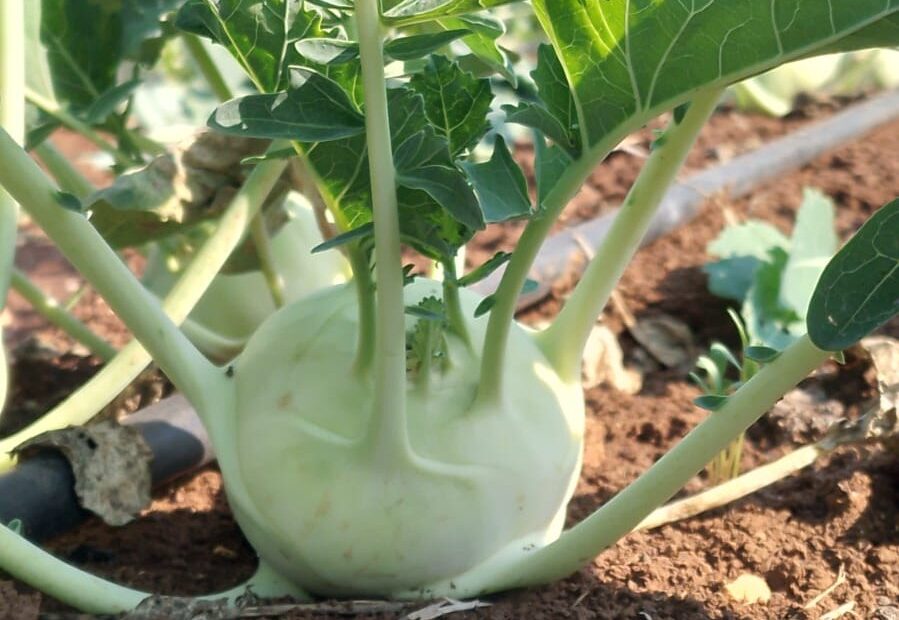
Kohlrabi is the son of the prominent, longstanding Brassicaceae family, which counts among their members such well-loved vegetables as cabbage, broccoli, cauliflower, kale and Brussels sprouts. Though these family members hog the spotlight, the bashful kohlrabi is a delicious veggie who shines bright in the medicinal value department.
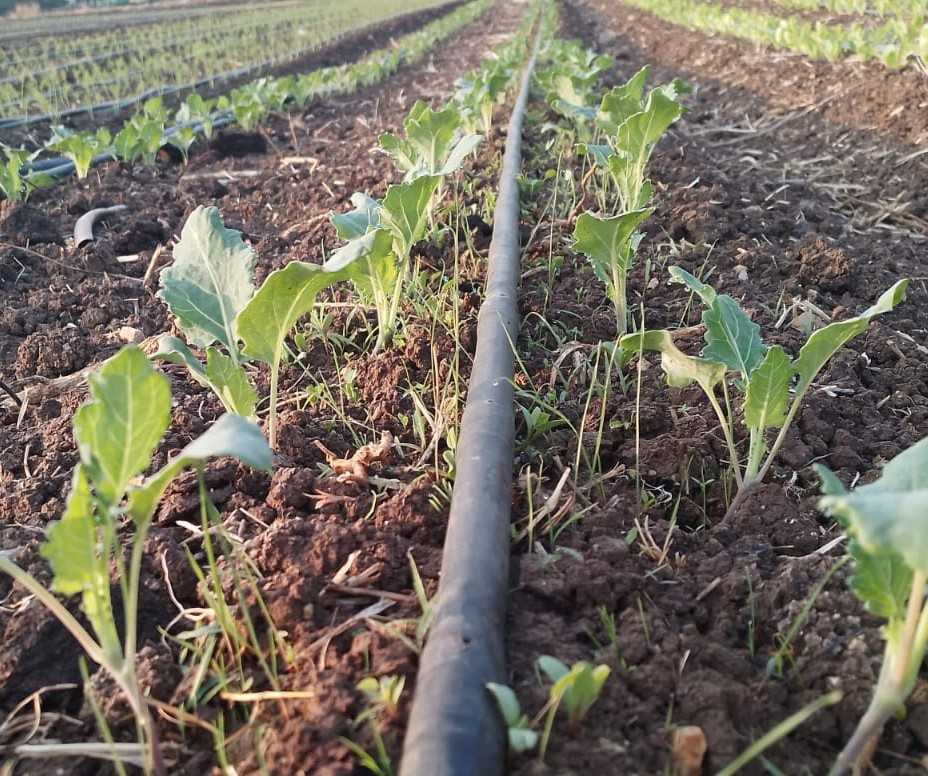
At the start of its growth, the kohlrabi plant resembles a cauliflower, cabbage, broccoli or kale plant. It sprouts lovely green leaves on an upright stem. But as it matures, the kohlrabi seeks its own individual identity. Suddenly its stalk thickens, curves, and rounds until a plump kohlrabi sits upon the earth (not beneath it!), light green (or purple, depending upon the variety), sweet and juicy.
Its name derives from the German: kohl=cabbage, rabi=turnip. But it isn’t really a hybrid of the two. The name was likely given because of this vegetable’s cabbage family lineage, but our kohlrabi resembles a plump turnip in shape. But this too is misleading, since kohlrabi, as mentioned, is neither a root nor tuber, but rather a thickened stem. Its Hebrew name, “Kruv Ha-Kalech” (cabbage stem), is actually more accurate, though admittedly cumbersome—befitting an alien vegetable.
The geographic distances the kohlrabi has traversed over the years could outshine the most frequent flyer. Like the rest of its family, the kohlrabi’s ancestor is the wild cabbage, or leafy cabbage, whose origins are quite ancient. Already in the first century, Roman agronomists and cooks were writing about it. Charlemagne, the first Holy Roman emperor, ordered that kohlrabi be planted in his kingdom. From Europe it traveled to far-distant North India in the 17thcentury, becoming a main component of the Hindu diet. From there, our vegetable migrated to North Africa, the Middle East, China and Africa, and eventually to the United States–mainly to the Southern kitchen. To this day, kohlrabi is a big star in Indian, Asian, German and Hungarian cookbooks.
The kohlrabi is speedier to ripen than its relatives, because to reach the edible part we don’t have to wait for the plant to bloom (like cauliflower or broccoli) or for the leaves to close (like cabbage.) In fact, kohlrabi should be picked early, before it has matured. A big kohlrabi means it was picked too late, and its texture is liable to be “woody” and fibrous. This is also the reason your Chubeza box occasionally brings you tiny kohlrabies. A harshly cold winter can stunt the kohlrabi’s growth, yet an extended wait for a Spring growth spurt can harm its juicy, crispy texture. That’s why we pick them small. The good news is that small-sized kohlrabis don’t even need to be peeled, thanks to their soft, delicate skin.
Kohlrabi can be eaten in virtually any form. It is commonly eaten raw, but it is delicious grilled, oven-roasted, or on an outdoor grill. It is super tasty cooked or steamed, not only in soup, but stir-fried in clarified butter or oven-roasted with salt, white pepper and sage. Kohlrabi can even be pickled. In Chinese recipes, it can substitute for radishes, turnips or water chestnuts. Its greens taste like kale and can be used similarly, added to soups, pasta sauces and stir-fries. Take a look at the Chubeza Recipe Section to get ideas of non-conventional ways to use kohlrabi.
Health-wise, kohlrabi boasts all the medicinal virtues of the Brassicaceae family. It is an outstanding source of Vitamin C (one cup of sliced kohlrabi supplies the recommended daily portion), and like cauliflower, is a great source of dietary fiber. Kohlrabi also contains high levels of potassium, folic acid and calcium. In folk medicine, it is considered to cleanse the blood and kidneys, and to benefit the lymphatic system and digestion. Nissim Krispil writes of Moroccan Jews who prepare kohlrabi and honey juice to remedy hoarseness and excess phlegm. In natural medicine, kohlrabi juice is mixed with other vegetables to treat asthma, improve lung function, sinus issues and thyroid function. Adding carrot juice will improve and quaff the taste of kohlrabi juice.
The kohlrabi is harvested young, sometimes less than two months after planting. But it is, in fact, a biennial plant, meaning that to complete its growth cycle climaxed by seed production, it must go through two growing seasons. In between is a winter rest period, or “incubation,” after which it will flower and produce seeds the following springtime.
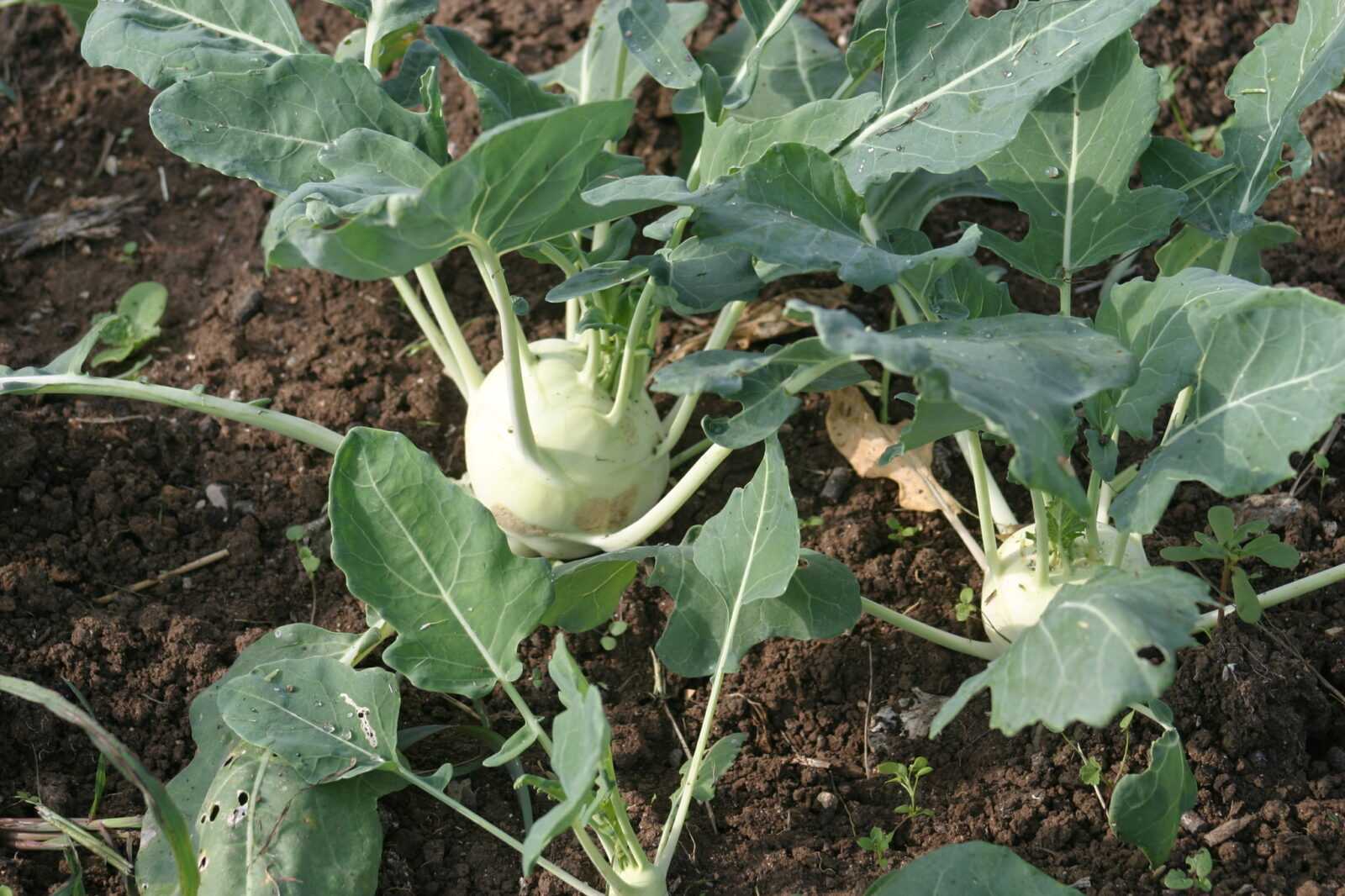
Being a winter vegetable, kohlrabi prefers cool weather. We try to extend the season as much as possible and begin planting from late August. But we’re always plagued by doubts whether the timing is right, as the first round of kohlrabi in our fields can find itself battling the lingering summer heat. When this poor vegetable suffers heat stress, it becomes vulnerable to pests and diseases. In particular, the tiny, very annoying tobacco aphid just loves climbing all over kohlrabi plants, “suffocating them with love.”
The tobacco aphid and countless members of her highly extended family settle on the vegetable plants’ leaves and literally blacken them. This pest feeds on the plant and weakens it, while secreting large quantities of honeydew, a sticky sugary substance that attracts the sooty mold fungi, covering the leaves in black and reducing their ability to photosynthesize. When this damages the kohlrabi, the result is pale, tasteless bulbs and a markedly small crop yield. (Very thankfully, this year we did not encounter this pest …)
The good news is that as the temperatures plunge, the destructive aphid becomes lethargic, thus the later-growing kohlrabi rounds are much less infested. Our little friend must now be snuggling tight under its winter blanket. Our current cool-rabi harvest is quite fine, yielding green, juicy, delicious fruit. Give it due respect and a place of honor on your plates as this super veggie delights your palate and heart!
Nearly a week ago, the body of a slain hostage Thai worker was finally laid to rest in his homeland. For Thai workers in Israel, this marked a crucial closure. We continue to fervently hope and pray for the return of Ran Gvili, the last Israeli hostage, who must come home.
May we enjoy blessed, plentiful rains and a fruitful winter!
Alon, Bat-Ami, Dror, Einat, and the entire Chubeza team