The Weekly Newsletter of Chubeza Farm
THANK YOU!!
How were the bikkurim taken up [to Jerusalem]? All [the inhabitants of] the cities of the maamad would assemble in the city of the maamad, and they would spend the night in the open street and they would not enter any of the houses. Early in the morning, the officer would say: “Let us arise and go up to Zion, into the house of the Lord our God.” (Jeremiah 31:5)
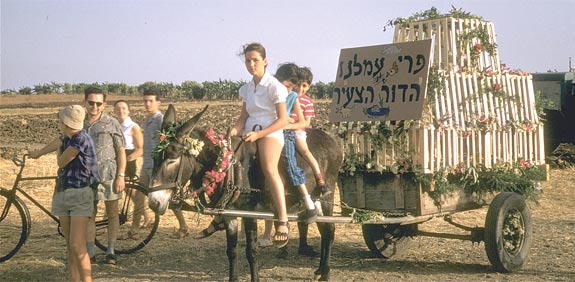
Those who lived near [Jerusalem] would bring fresh figs and grapes, while those who lived far away would bring dried figs and raisins. An ox would lead them, his horns bedecked with gold and with an olive-crown on its head. The flute would play before them until they would draw close to Jerusalem. When they drew close to Jerusalem they would send messengers in advance, and they would adorn their bikkurim offerings. The governors and chiefs and treasurers [of the Temple] would go out to greet them, and according to the rank of the entrants, they would go forth. All the skilled artisans of Jerusalem would arise before them and greet them saying, “Our brothers, men of such-and-such a place, we welcome you in peace!”
The flute would play before them, until they reached the Temple Mount. When they reached the Temple Mount, even King Agrippas would take the basket and place it on his shoulder and walk as far as the Temple Court. When he got to the Temple Court, the Levites would sing the song: “I will extol You, O Lord, for You have raised me up, and You have not let my enemies rejoice over me.” (Psalms 30:2).
-Mishnah Bikkurim 3 (2-4)
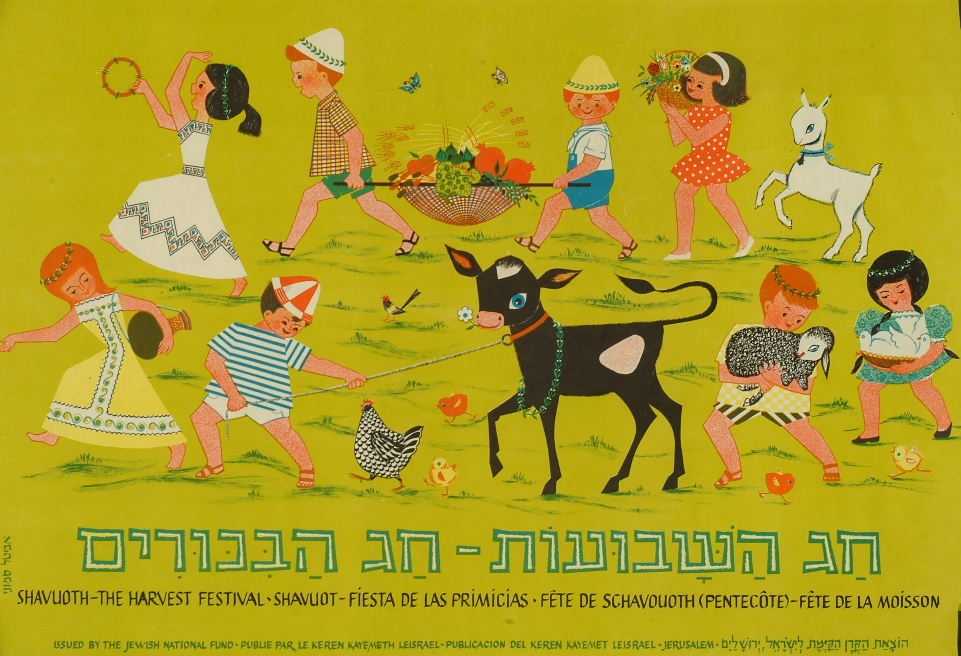
Seven weeks after Passover, which marked the beginning of the barley harvest, comes yet another celebration of ripening and renewal – the wheat harvest and the ceremony of bringing the First Fruits. Shavuot, the Festival of the First Fruits (Chag HaBikkurim) received its name from the offering of two loaves (Shtei Halechem) made from the season’s first wheat to ripen in the land. On this day, the official period for bringing First Fruits also began. During this time, farmers would bring the first fruits of their yield to the Temple as a thanksgiving offering to God. The season for bringing First Fruits ended on Sukkot or Chanukah, at the close of the fruit-bearing period.
Of course, fruit ripened at different times, not all on Shavuoth. Those that ripened earlier were dried or sold, and the money earned was brought to Jerusalem to buy an alternative offering. Some fruits ripen later and their time would come in due course. But from the Festival of the First Fruits, the signal was given to begin celebrating the abundance of the agricultural harvest and the joy of ripening and harvesting.

The ceremony of Bikkurim (First Fruits) carries a message of humility, surrender and acknowledgment that in agriculture - as in life - very little is in our hands. Despite our delusions, we don’t really control or dictate reality. We can plan, make decisions, and act upon them, but throughout the long, winding journey from seed to fruit, so much depends on forces beyond us: weather, precipitation, insects, animals, other humans, God/nature/the unknown.
The second dimension of Bikkurim is quite the opposite: a sense of great pride swelling the hearts of those who sowed, cultivated and prayed, waking up one day to see the fruit ripening and growing day by day, changing color, texture and fragrance until it reaches full ripeness. And all this happens despite the unknown, the unexpected and the surprises that loom from the first day a seed is inserted into the soil.
The joy of the first ripe fruit does not begin at ripening. Every stage of its development brings satisfaction and delight. When sprouts first emerge from the soil, they are already bursting with promise for the future. Discovering flowers in bloom on the plant makes the heart sing. Several weeks later, when you walk the field again and notice the first fruit growing from the fertilized ovaries, joy and wonder abound! And of course, that first bite of the ripe fruit is sublime!
Somewhat like a child, wouldn’t you say? The joy doesn’t begin when a child “ripens” and leaves home. The excitement and wonder begin from that first ultrasound flicker, and then, with great intensity, when the baby emerges into the world. Then again with the first roll, crawl, sit, stand, walk… The first “Ima” or “Abba,” the first art masterpiece drawn by crayon, the first tower built from blocks, the first words read and written, the first flutter of young love, the struggles between friendship and independence, responsibility and fun. Each step along the way has its very own hues of joy and excitement. This is what is so extraordinary about growing and ripening. Maturity is outstanding and desirable, but so is the journey to get there. The process, the in-between, is astonishing and beautiful and worthy of its own celebration.

Farming is hard work, no doubt about it. We wake at the crack of dawn to physically demanding work outdoors, at the mercy of the weather. We harbor worries, cautious hope and prayers. And the financial reward is tentative, at best….
And yet, fieldwork also offers a very tangible and relatively immediate reward: usually, within 1-3 months, you have produce in hand. Not spiritual, not abstract or symbolic. There’s actual fruit you can and should touch, observe, smell, feel, and of course - taste. This great pleasure – the discovery of the first fruits – is certainly worth kneeling, sweating, getting wet and straining your muscles for. You are directly encountering nature’s creation in the very simplest way. Just standing before ripe, beautiful first fruits, the joy and sense of accomplishment are so pleasant and fulfilling that it hardly matters to claim full credit. It is easy to be generous and share the joy with God, neighbors, blessed raindrops, or your agricultural guide. It is sheer delight!
There is something so joyful about First Fruits. To me, they always seem so beautiful and shiny, so accomplished, colorful, plump, and juicy. Perhaps the anticipation is what paints the fruit in vivid hues, and the surprise adds to their charm. Even for us veteran farmers, this experience repeats itself every season, with each new crop and each new set of first fruits. I’m pretty sure that if blood samples were drawn from farmers after a successful First Fruit harvest, the level of chemical instigators associated with euphoria and positive feelings would be sky-high. It’s no coincidence that spring is considered a time for love, so if you want to court a farmer, just time it during the New Fruits season for a great headstart.
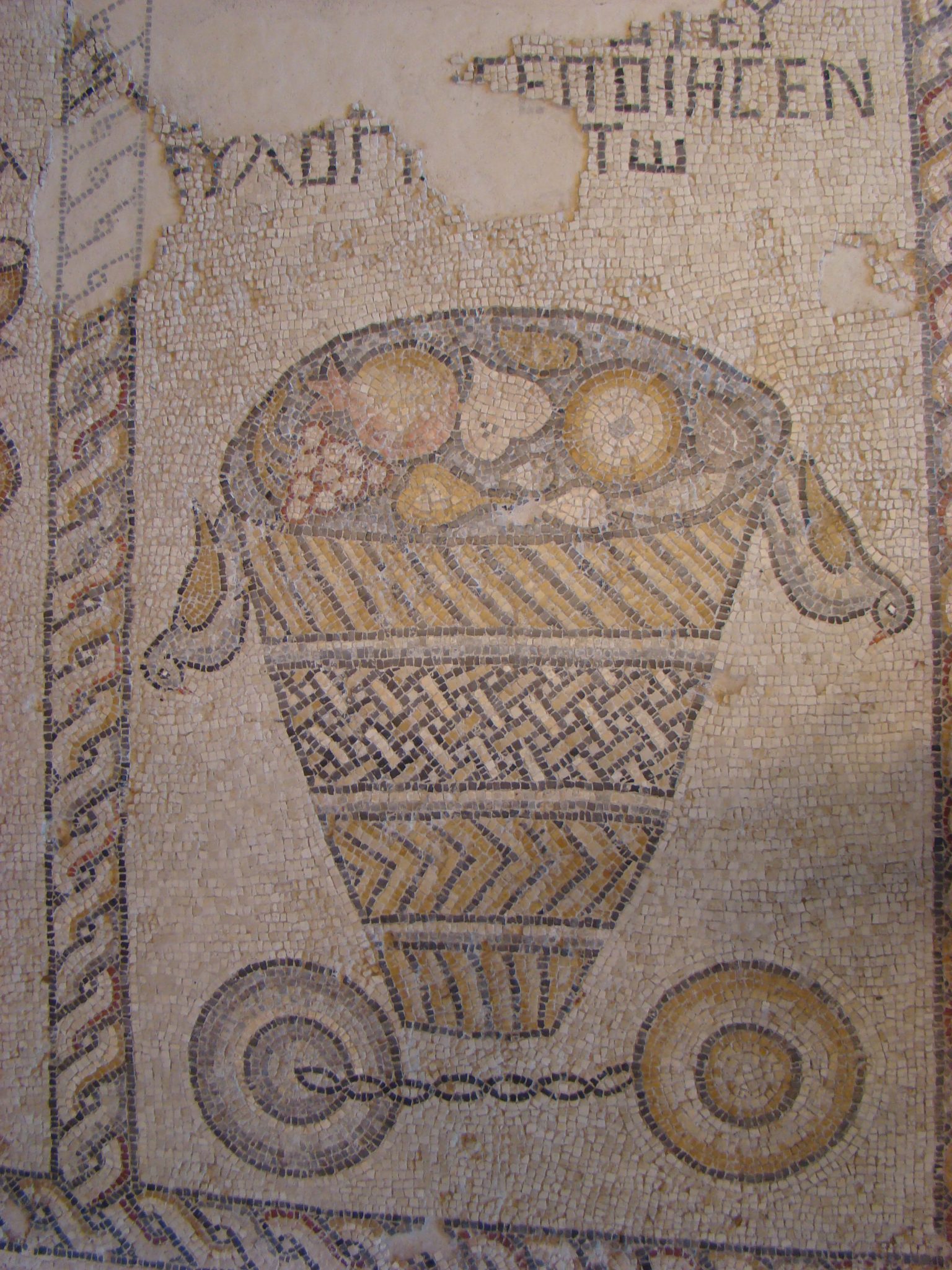
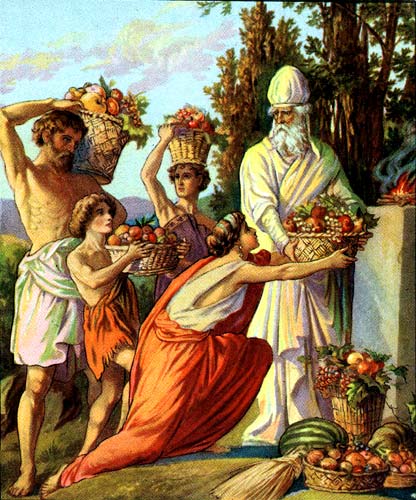
Usually, when one thinks of the bikkurim festivals, we imagine the bearers of the first fruits walking calmly through the field’s rows of trees or plants, gathering a little bit of this, a little bit of that, tying their offerings nicely in a wicker basket and joining the festive bikkurim procession. Well, this was certainly a grand, impressive ceremonial event, which is probably the main reason why it was not at all close in time to the harvest. Although the pilgrims arriving from the nearby vicinity were indeed joyful, the distant pilgrims coming from the periphery found this to be a phenomenal occasion. But, it took a major effort to walk the route to Jerusalem with the fruits of their gardens in hand. To honor those coming from afar, and to make them feel no less – perhaps even more – important, the First Fruits offering was gratefully received whether the fruits were fresh (that is, if one lived near Jerusalem), or fruit harvested in distant fields that were dried to last the long journey.
So, since there was no rush to get to Jerusalem, the pilgrims could take time to adorn the procession ascending to the Holy City. With an ox, a flute and an olive-crown, they made their way under the scorching sun (remember, this was between Sukkot and Shavuot), carrying baskets in which dried figs, raisins, dates, fine olive oil, pomegranates and dates peacefully rested.
In honor of the Shavuot Festival of First Fruits, which celebrates fresh produce while giving equal respect to preservation and storage, and in honor of the approaching summer with its heat, we remind you of the Chubeza Vegetable Storage Guide we prepared for you. Here it is, at this link. When you search the Chubeza website for information about a specific vegetable, you will also find storage instructions.
This Shavuot, we at Chubeza are also celebrating our own first fruits! The acorn squash and Japanese pumpkins have already ripened and hopped into your boxes. Fakus, butternut squash, and eggplant will join them soon, and… the melons are on their way! May we all – farmers, cooks, and eaters alike – always keep room in our minds and hearts for the diversity of nature and the people around us. May we never forget that the harvest exists so that we can all eat and live. Together.
Bat-Ami, Alon, Dror, Einat and the entire Chubeza team