The Weekly Newsletter of Chubeza Farm
THANK YOU!!
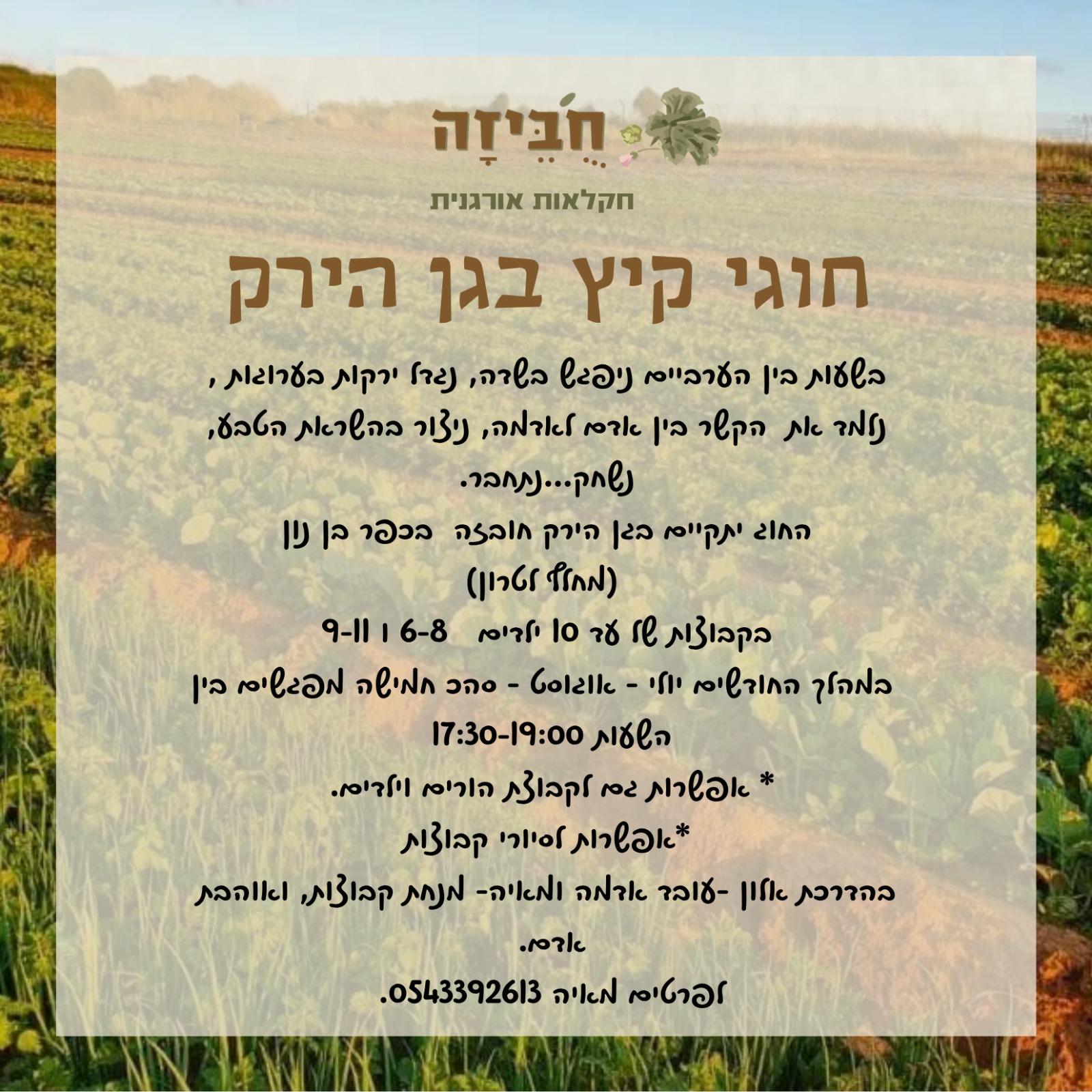
Starting next week and throughout July, Chubeza will be holding great summer workshops for children, led by Alon and his partner Maya. Here are the exciting details — We can’t wait to see you!
- July 8 – Meet Each Other – and Meet the Soil: Getting acquainted through games; a field walk, along with vegetable tales, and great salad-making fun using freshly-picked field veggies and wild imagination.
- July 15 – Creating garden beds with Alon’s guidance, planting and seeding, plus a great game — “Grandma’s Veggies.”
- July 22 – Continued gardening in the field, nature crafts, an amazing game in the corn jungle, and of course — food time!
- July 29 – Garden work, sitting around the bonfire, and making pitot on a saj. (Parents are invited, too).
To help everyone get acquainted, the spotlight will be on connecting and bonding.
Age groups to be formed based on registration.
For details, contact Maya: 054-3392613
Sweet round fruits have begun to peek out from our boxes over these past weeks — proving that sweetness is certainly not exclusive to just the fruit of the tree. Which is why each year we proudly grow sweet fruits not on a tree or bush, but in a calm stretch across the open field. The melon and the watermelon are now permanent, greatly loved guests in our summer boxes. Both belong to the squash (cucurbit) family, a prominent summer clan, and are cousins to their extended family members – the pumpkin, zucchini, cucumber and fakus.
Unlike their cousins which are picked when mildly sweet, and sometimes even before maturity, melons and watermelons are harvested ripe, juicy, and bursting with sweetness — a delectable summer treat which nearly makes the scorching heat worthwhile.
This year, something new and great is happening in our melon field!
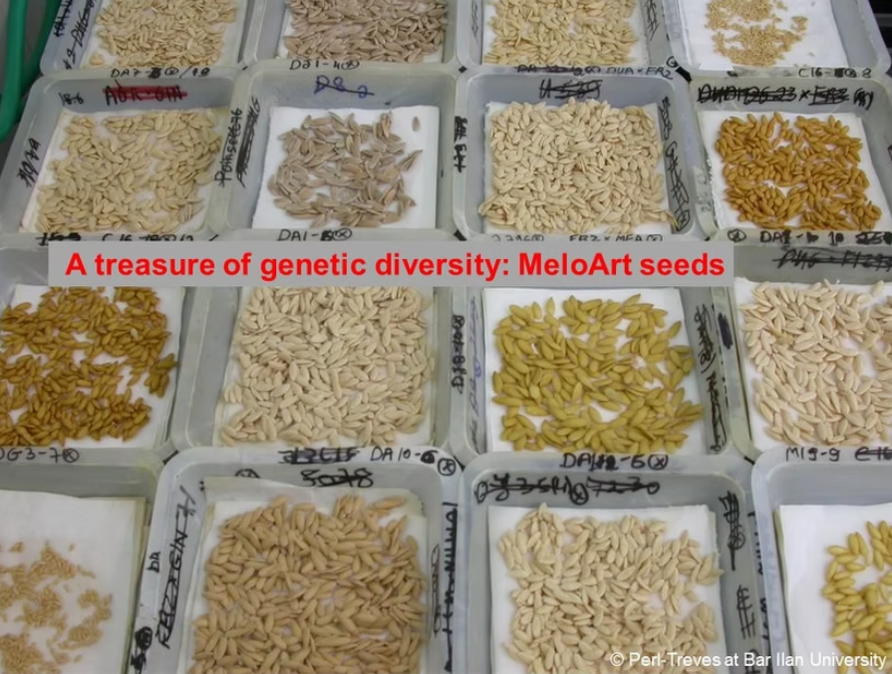
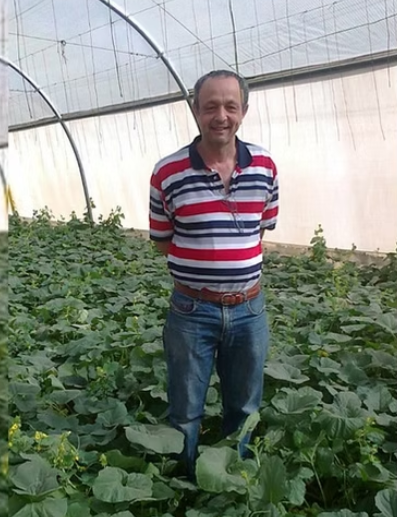
Last year, Professor Rafi Perl-Treves, a noted melon geneticist and long-time Chubeza customer, suggested we try growing several novel melon varieties developed at his company, Melon-Art. With years of experience at Bar Ilan University as a plant geneticist specializing in the squash family of vegetables, Rafi has researched and examined plants’ resistance to disease, fruiting, and botanical diversity in melons.
Thousands of melon varieties exist globally — running the gamut in taste, color, size, shape, scent, and texture — yet farmers select only a small number of the melon’s characteristics and potential to be cultivated and widely grown. Mainly, familiar melon varieties are chosen for shelf life, durability, and the capability for a large harvest and long shelf life.
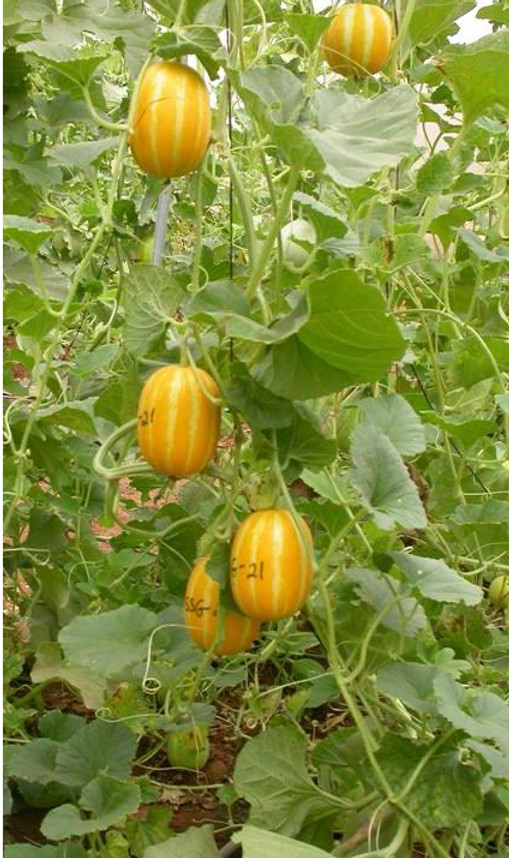
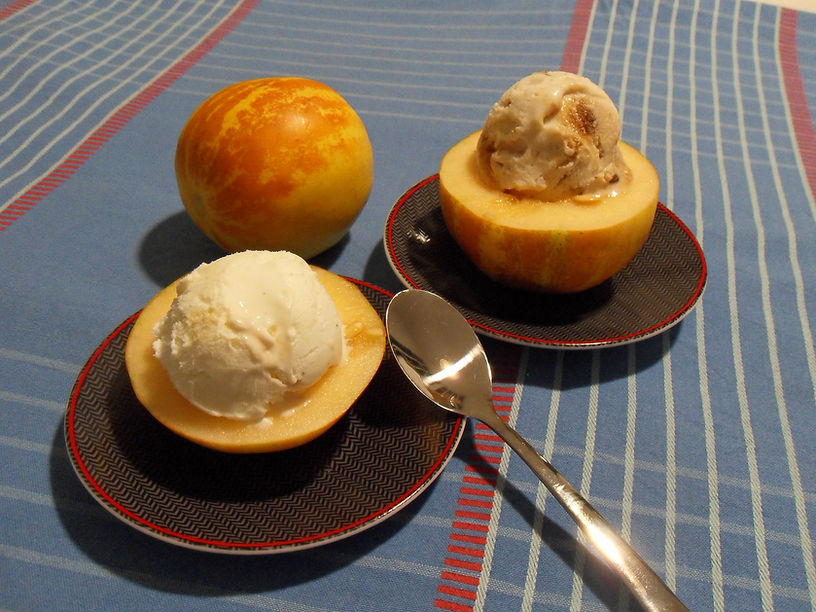
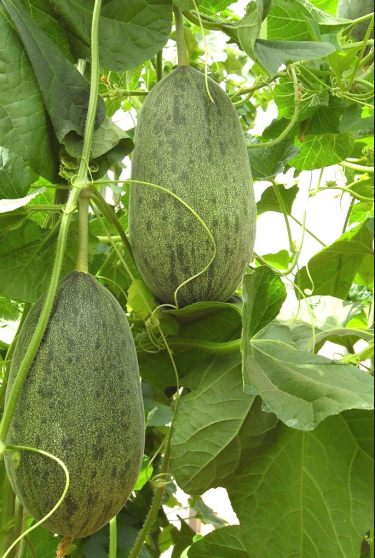
But Rafi took a creative detour to pursue his hobby of developing a range of distinctive melon varieties. Freed of the rigorous demands of research and commercial restraints, Rafi used traditional breeding techniques to develop miniature, personal-sized melons sporting beautifully vivid colors, bold patterns (striped, dotted, and colorful), a distinctively delicious taste, thin rind, and aromatic fragrance.
Despite aromatics’ key role in ripeness, mass-market melons often sacrifice scent to prolong shelf life, for good reason: the fragrance is linked to ethylene production — the ripening hormone for melons and other fruits. Ethylene’s presence in fruit is quite contradictory to a long shelf life – a critical trait for commercial plant breeders.
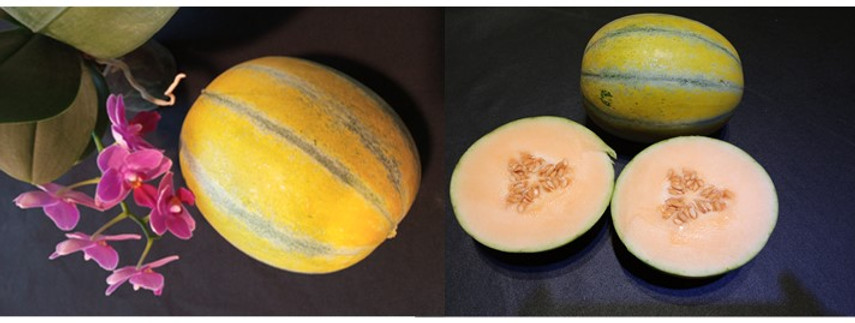
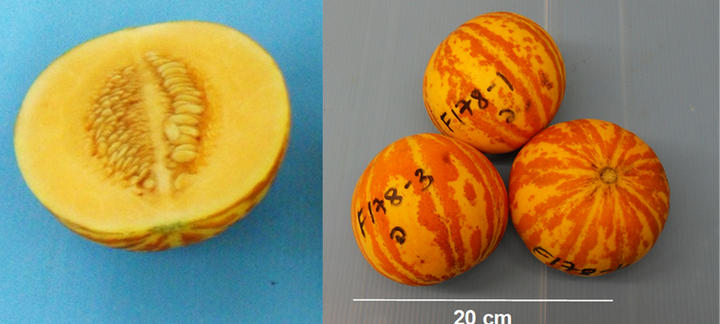
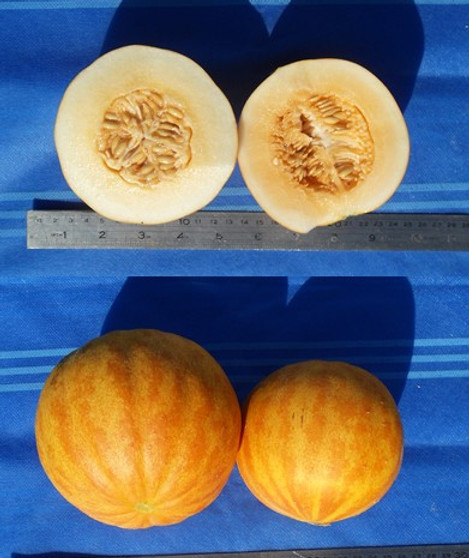
But we know that Rafi’s melons are ripe to perfection when their color changes from green to yellow/orange and they practically leap off the vine to be picked. It’s best to eat them close to picking, and not to store them for long periods. Of course, this is impractical for large melon growers who need to market fruit to chains and fruit markets that last several weeks or even months. But this is where small farms like Chubeza shine - our crops race to reach you just after they’re picked!
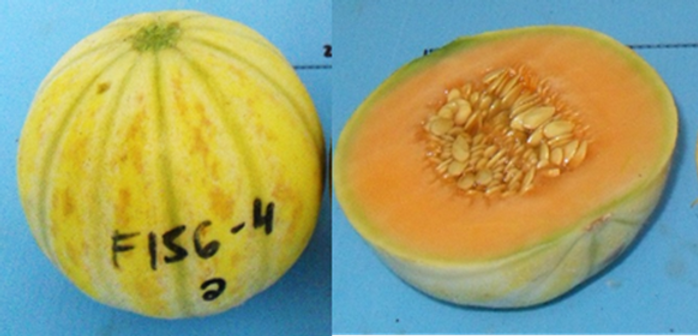
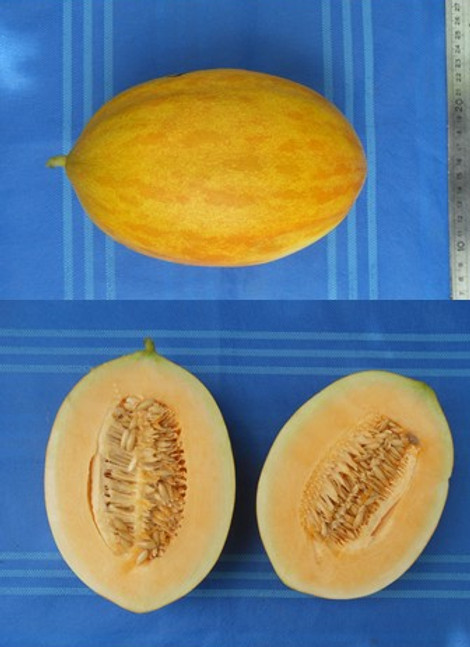
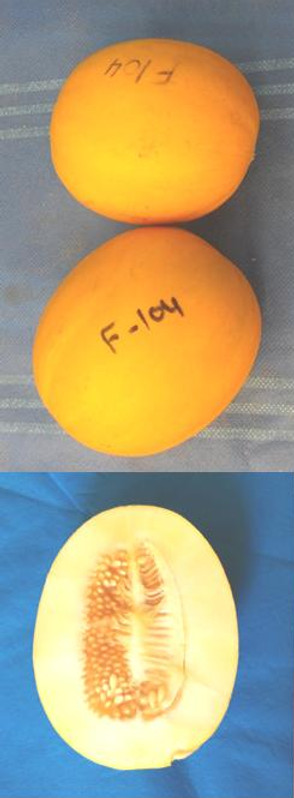
This season, Chubeza delightedly grew six Melon-Art varieties, ranging in size from clementine to papaya. Rafi gave us these six varieties for starters:
- Ginger – A melon the size of an orange, golden-speckled outside, orange-pink inside. Intoxicating aroma and a rich, delicate flavor.
- Striped Magic – The size of a clementine, with orange stripes on the outside against a light-hued background. It orangish flesh is sweet and delicious.
- Libi – Gorgeous, orange-sized golden melon with silvery stripes, pink-orange interior, sweet and rich.
- Asian Delight – An orange-sized melon with a distinctive sweet-and-slightly-tart taste, yellow and smooth on the outside and light-colored inside.
- Tamari – The size and shape of a papaya, with deep golden-orange skin, pale and distinctly sweet flesh.
- Little French – Tiny Charentais melon as small as a clementine, intensely fragrant, with fuzzy stripes, bright orange flesh, and delightfully sweet.
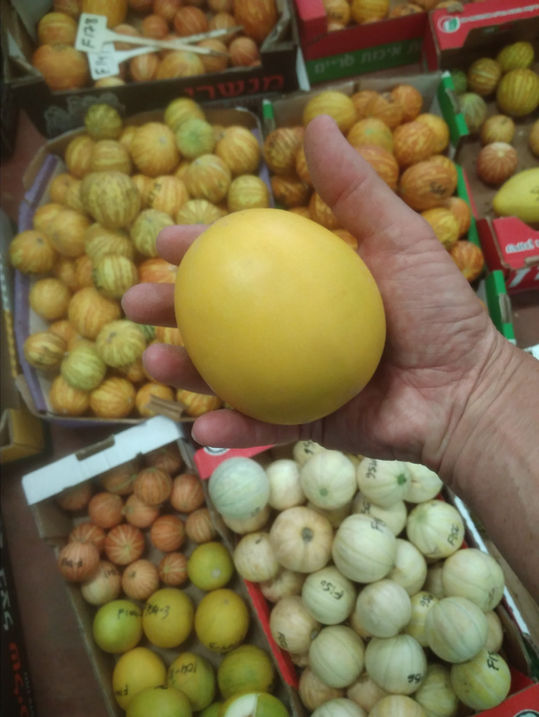
Since this year we’ve grown only a small number of these amazing, distinctive citrus treats, you won’t find them in your standard Chubeza boxes just yet. But – you can add a trio of these deluxe melons today via Chubeza’s Order System, under “Fruits & Vegetables.”
We’d love for you to do some home tasting and send us your thoughts! Your feedback means a lot to us — and to our friends at Melon-Art!
May the sweetness of these melons bring at least a little comfort as we await the speedy return home of every single hostage.
From us all at Chubeza