The Weekly Newsletter of Chubeza Farm
BEETS US!
This past week, we almost forgot it was winter… The sun beams brightly in the sky, and our days are pleasantly mild. But – only till midday! After a nice morning, somewhere around three in the afternoon, the big weather shift rolls right in: temperatures drop, the sun disappears, and the spring illusion fades as a cool, wintry night enters. Next week, rain is forecast to return, so keep your fingers crossed for Chubeza! One vegetable that heralded the arrival of autumn is staying with us through the winter, nearly to the end of spring. Kudos to Chubeza’s Vegetable of the Week – the beautiful, sweet beetroot, which truly adds both flavor and color to life!


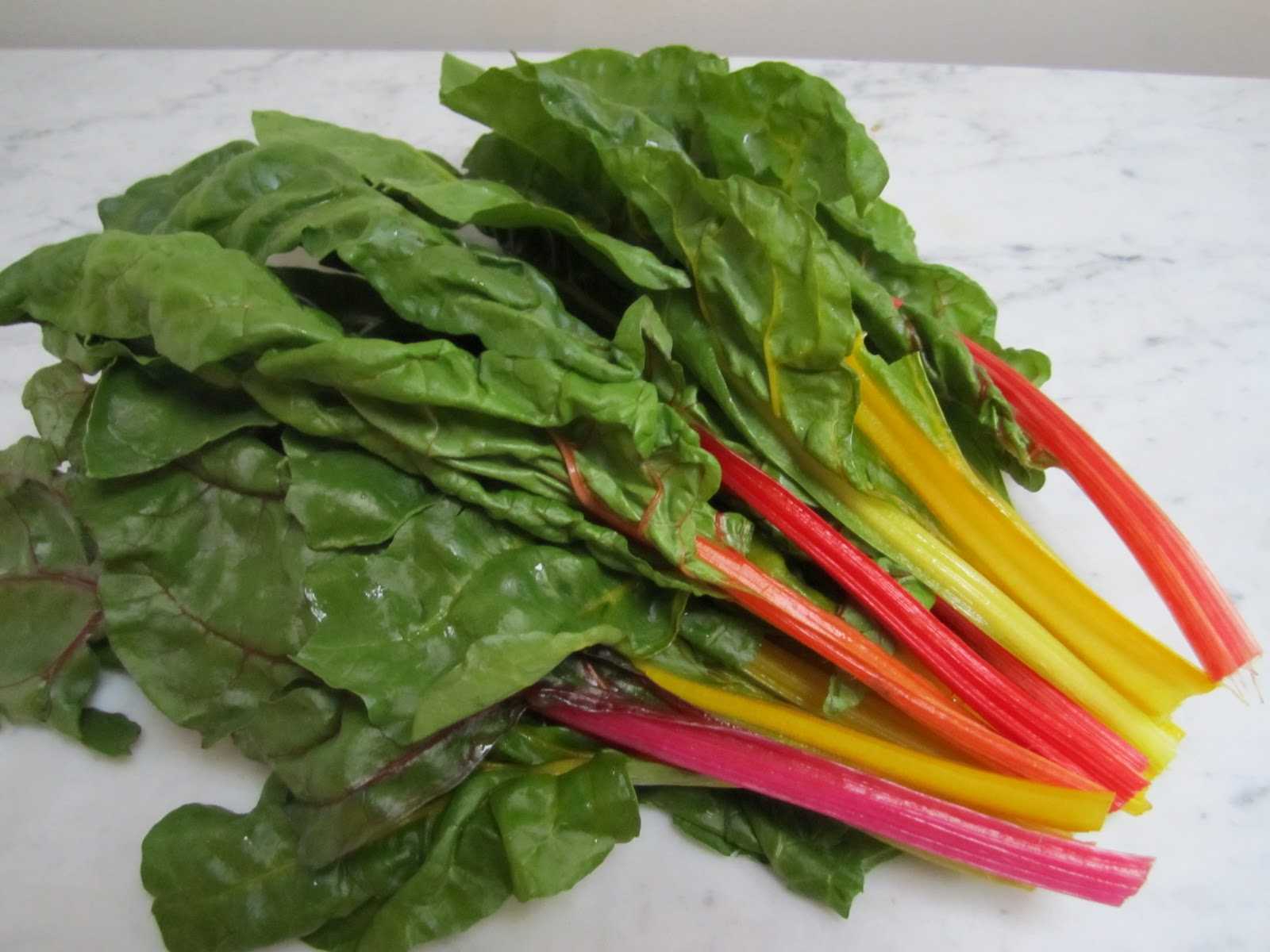
The first chapter in the Annals of Beet History is actually the history of leaf beets, namely chard, the beet’s closest relative and likely its older brother. Their common ancestor was probably a wild beet that grew along the Mediterranean coast, whose leaves and stalks were gathered by early foragers. Naturally, the first farmers who cultivated the beet attempted to develop a plant that yields larger leaves and thick, fleshy stalks, i.e., the chard.
These farmers were probably Greeks and Romans living along the Mediterranean coasts. One theory suggests that the family received its name beta because its seed pod resembles the Greek letter Beta. The Hebrew word for beet, selek, derives from the Arabic Silik.
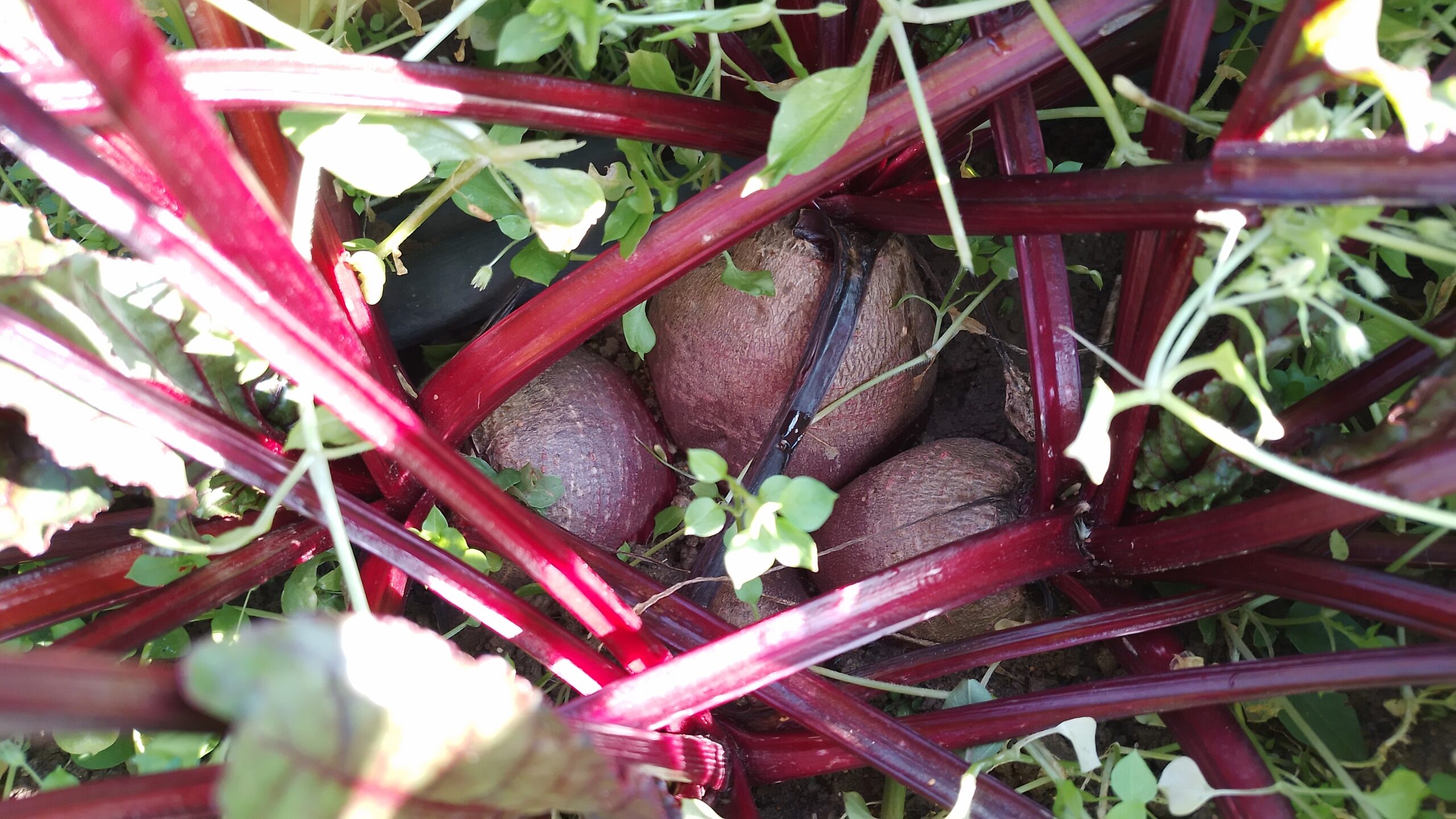

Evidently, the beetroot became edible only around the second and third centuries. The first beetroot recipes for the Roman kitchen appeared around that time, some touting such praise as “better than cabbage!” In the beginning, just young wild beet roots were gathered and cooked, and only in the 16th century does documentation attest to a genetic mutation in the seeds brought from Italy to Germany to create: the beetroot. To this day, one of the beet’s nicknames is “Roman beet.”
Even then, it was a rare vegetable in Europe. At the start, beetroot was primarily used medicinally. Red beet was boasted to be beneficial in treating amoebic or bacterial dysentery, internal injuries, nasal congestion and jaundice. Only in the 19th century did its culinary virtues gain renown.

The beet family seeds deserve to be lauded as well. What appears to be a single beet or chard seed is actually a cluster of seeds tightly packed inside the dry fruit. Thus, several seedlings often emerge from a single planted seed cluster, meaning they must be thinned after germination. (Some seed companies separate the seed clusters and offer single seeds to allow for more precise planting and reduce the need for thinning. But we stick with nature…)
Where thinning is not done immediately, the young plants may reach 10 centimeters tall with leaves ready to be cooked or added to a salad. Usually the seeds sprout slowly, each at its own pace, over an extended period, creating beets of various ages and sizes happily growing side by side. Thus, when we harvest them, we walk through the entire Chubeza beet bed to pick the biggest roots first to create more space for the remaining roots to grow.
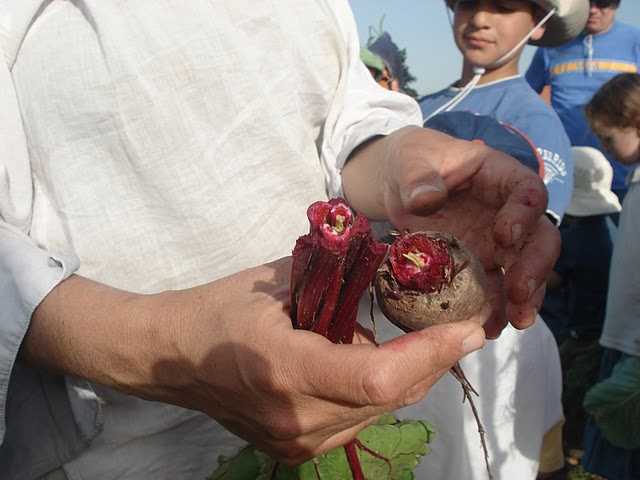
In traditional folk medicine’s doctrine of “like cures like” (similia similibus curentur), plants are believed to indicate their medicinal uses based on their shape, color or resemblance to body organs. The beet’s deep red hue has long made it associated as a remedy for treating blood circulation.
Contrary to the purple pigments found in such vegetables as cabbage, onion, eggplant, lettuce, pepper, and basil, the beet’s unique purple originates from a unique class of pigment called betalains. These compounds boast particularly hearty antioxidant properties and are potent fighters against cancer and heart disease. The beet also contains salicylic acid, an aspirin-like compound which is anti-inflammatory and may contribute to cardiovascular health. Beets are often considered one of the “cleansing” vegetables highly beneficial for the liver, kidneys, and even swollen legs and constipation.
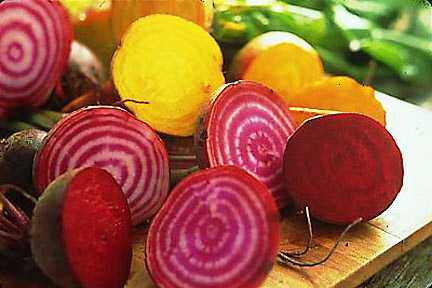
Ironically, while the beet is lauded for internal cleansing, its external experience is quite the contrary. Beet cells are unstable and tend to “leak” when you slice or peel the root. Cooking helps stabilize the cells a bit, which is why leaving on the peel will reduce the staining. These pigments stabilize under acidic conditions, thus making pickling your beets a good (mess-preventing) idea.
Beets don’t just stain your hands. We all know the red beet juice-dyed horseradish. Natural coloring powder extracted from beets is used as a popular food dye for pizza “tomato” sauce, pink lemonade and edible inks used to mark cuts of meat.
Beets are usually round and red, but not always. They come in a kaleidoscope of colors and patterns, from striped (Chioggia) to yellow, white, purple, and more. And you’re already acquainted with the elongated Chubeza beet alongside its roly-poly brother.
Despite – or possibly due to – its relatively high sugar content (even higher than carrots and sweet corn), the beet is a dieter’s friend, containing only 30-40 calories. Plus, it is rich in folic acid, vitamin C and potassium.
Tips:
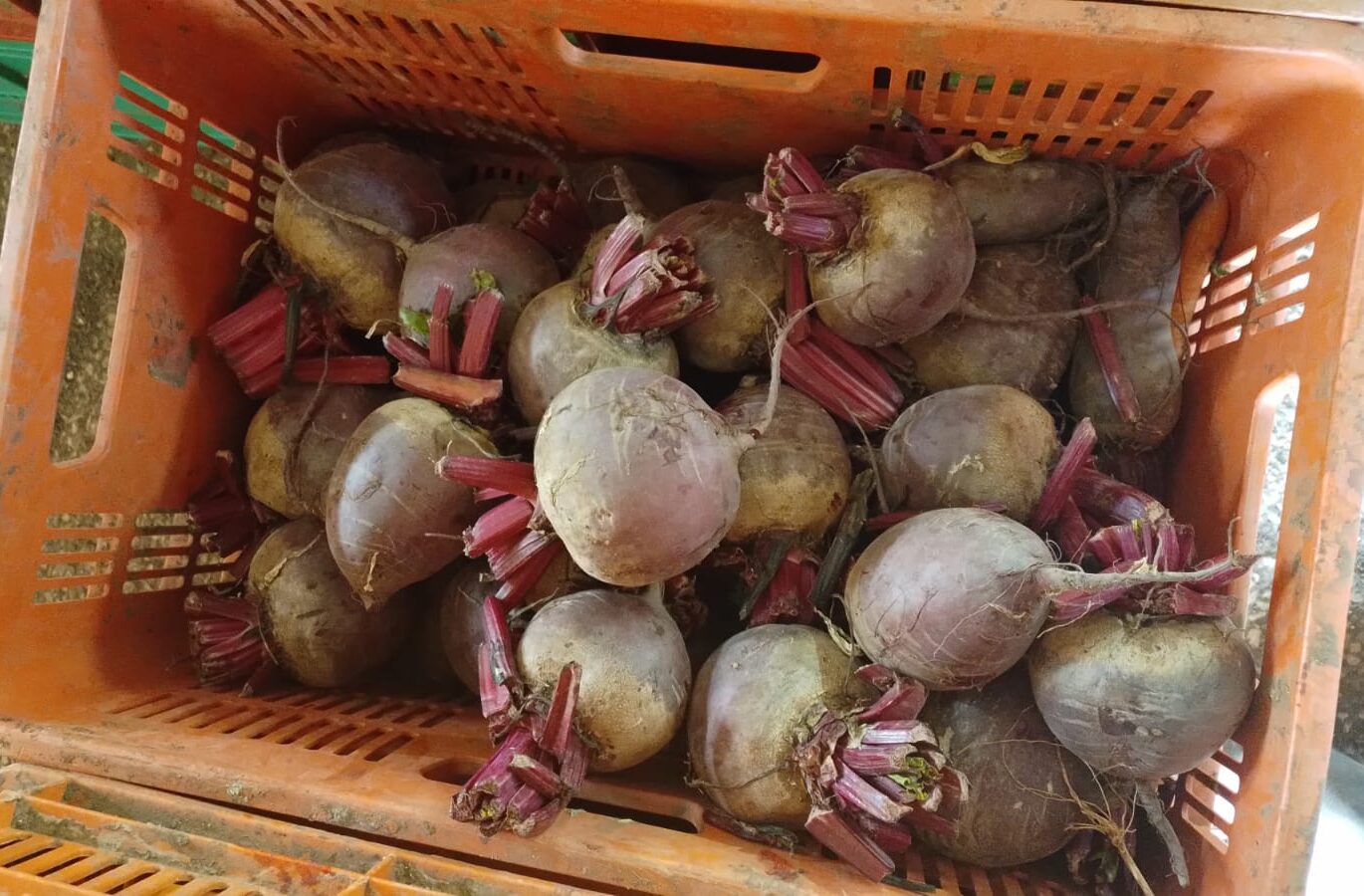
- Storage: Trim any leaves (they draw moisture from the root and dry it out, like carrots or radishes), leaving about 3 centimeters of the stem. Do not cut the root itself. Store the leaves separately, wrapped in a towel and plastic bag.
- To prevent “bleeding”: Don’t cut or peel beets before cooking. After boiling, steaming or roasting, the skin slips right off.
- Cooking: Adding a little vinegar to the cooking water reduces the odor and helps preserve its color. The cooking liquid creates a clear beet stock which can be used for food coloring (like for rice, p’titim or couscous). Since beets are naturally high in sodium, avoid adding salt when cooking.
- Roasting: To prevent staining, wrap beets in aluminum foil. You can also add your choice of seasonings such as garlic, lemon slices, cumin or coriander seeds inside the foil. The flavors penetrate to enrich the beet as it roasts.
- Microwaving: Pierce an unpeeled beet several times with a fork to release steam. Place in a microwave-safe dish, add a bit of water and cook uncovered for around 4 minutes for a single beet, or until tender.
- Removing beet stains from hands: Rub with damp salt and lemon juice, then wash with soap and water.
- Don’t throw away the leaves! When our beets come with a bundle of greens attached, keep them. They are excellent cooked like spinach or Swiss chard for a great semi-sweet flavor.
Wishing you all a wonderful week bringing good news and – at the start of next week – RAIN!
Alon, Bat-Ami, Dror, Einat, and the entire Chubeza crew