The Weekly Newsletter of Chubeza Farm
THANK YOU!!
It’s been such a hot week. While we complain and sweat and drink and try desperately to cool off, there are actually those who are elated by the heat and humidity. And one of them, the extra-special eggplant, is the star of this week’s Chubeza Newsletter!
In Chubeza’s fields and in your boxes, eggplants truly shine only now, from the scorching summer season till the end of autumn, as the sweltering outdoor temperatures remind them of home: Southern India and Sri Lanka, where their journey was launched.
From India, eggplants traveled on to Burma and China, earning a mention in ancient Chinese writings as early as the 5th century. From there, they continued to the Middle East, where they remain a prominent ingredient in the local cuisine to this very day. The Muslim Moors of North Africa who conquered Spain in the eighth century brought the gospel of the eggplant to southern Europe, while the Italians made their acquaintance with the exotic vegetable via trade with Arab merchants in the 13th century.
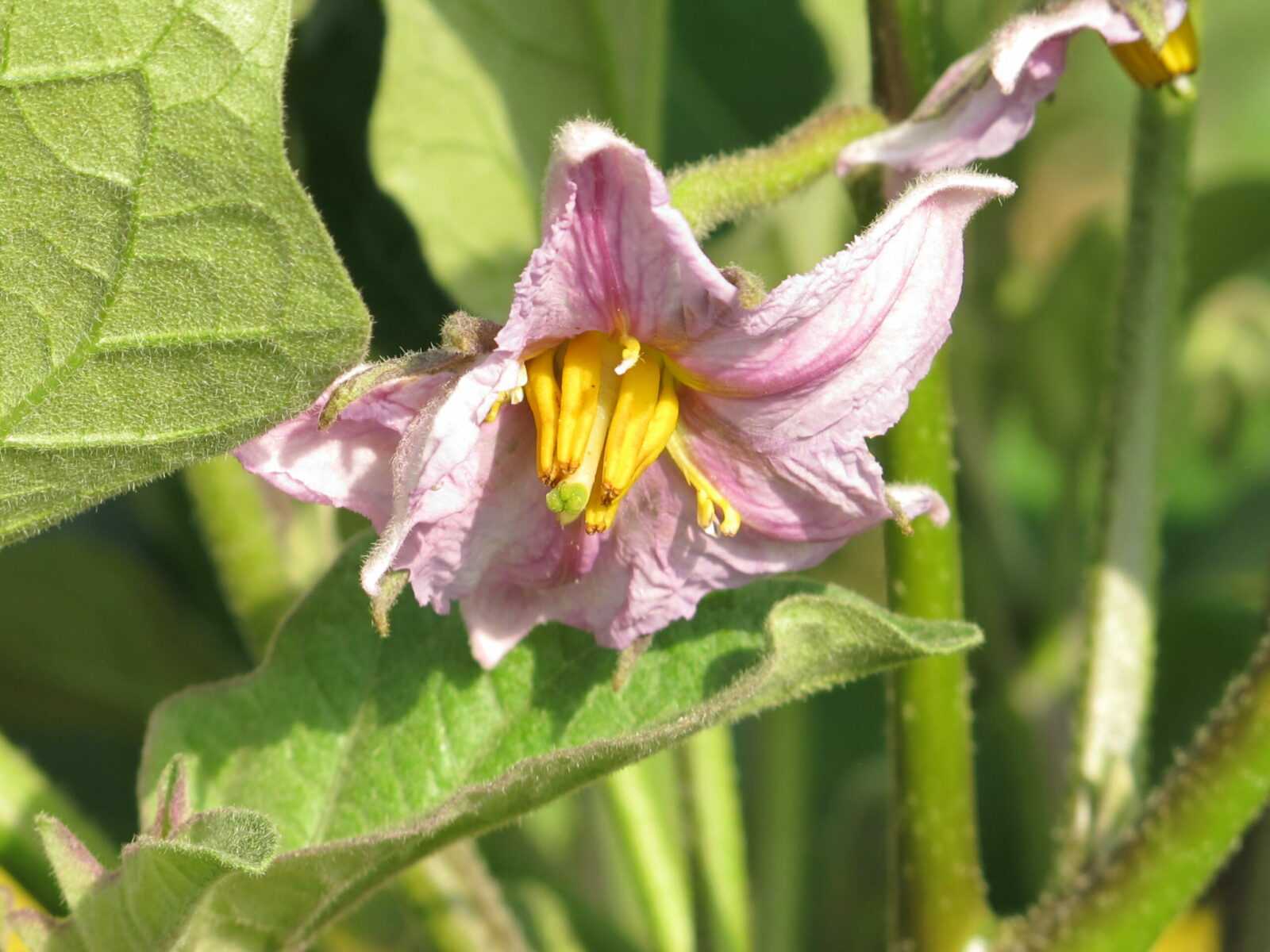

The eggplant, so beloved in Israeli cuisine, is one of the vegetables grown in greenhouses during the cold season to maintain a constant supply to its Israeli aficionados. So yes, it’s technically “in season” all year, but at Chubeza, we bid the eggplant farewell when the cold sets in and delightfully welcome its return with the great heat of the following summer. We plant eggplants in our field when winter is already turning to spring, at the end of March, when the zucchini and pumpkins have already been growing here for a month or more. This is when the first eggplant seedlings arrive – youthful and sleek with silky leaves –and begin to acclimate to the soil. About a month and a half later, in early May, we plant the second round. The seedlings grow calmly and strengthen, gracing us with lovely purple flowers that start peeking out between the leaves some two months later.
The eggplant is an androgynous plant, meaning each flower is both female and male. The flowers usually self-pollinate, though sometimes they get by with a little help from a friendly fly-by insect.
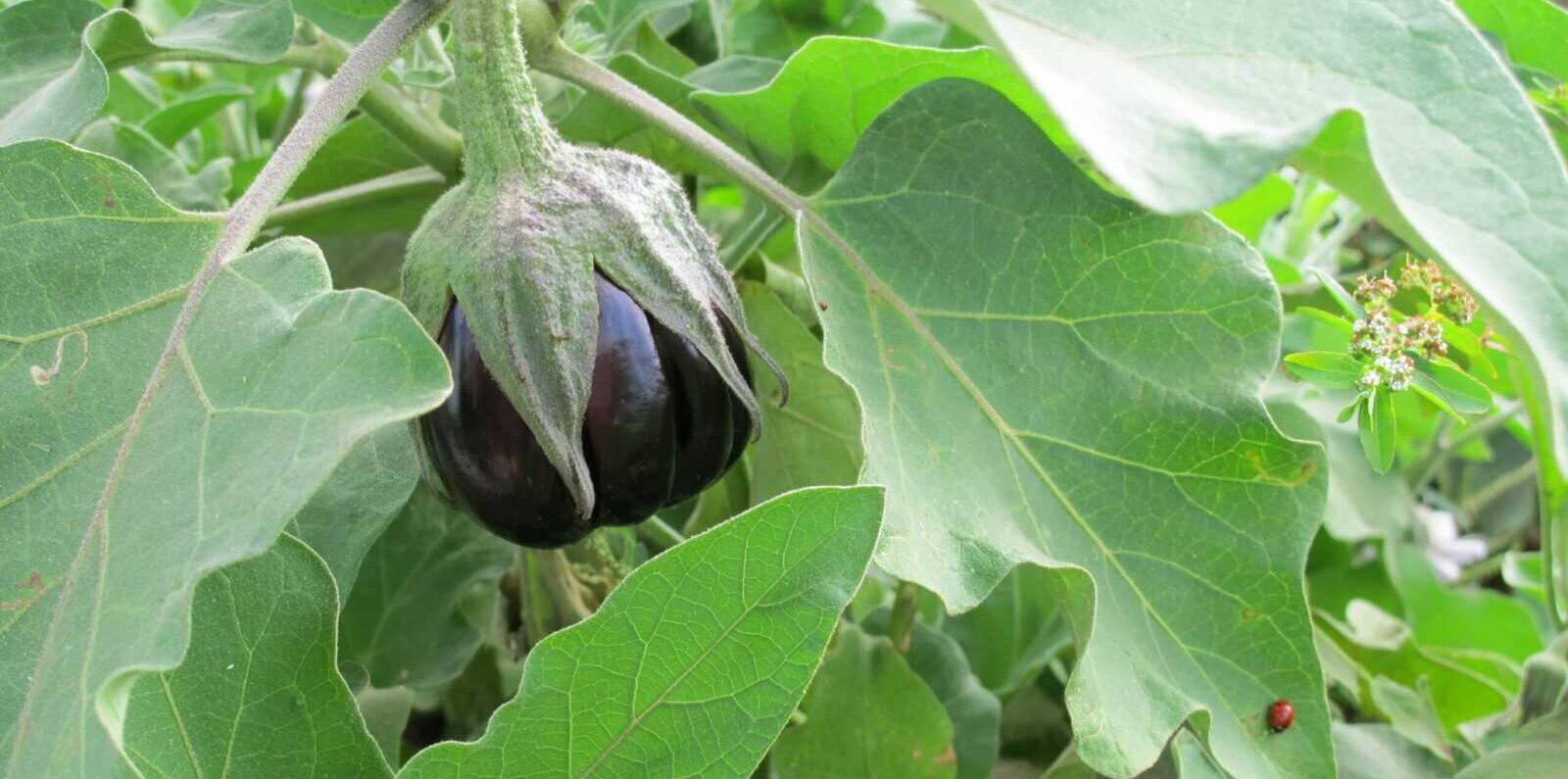
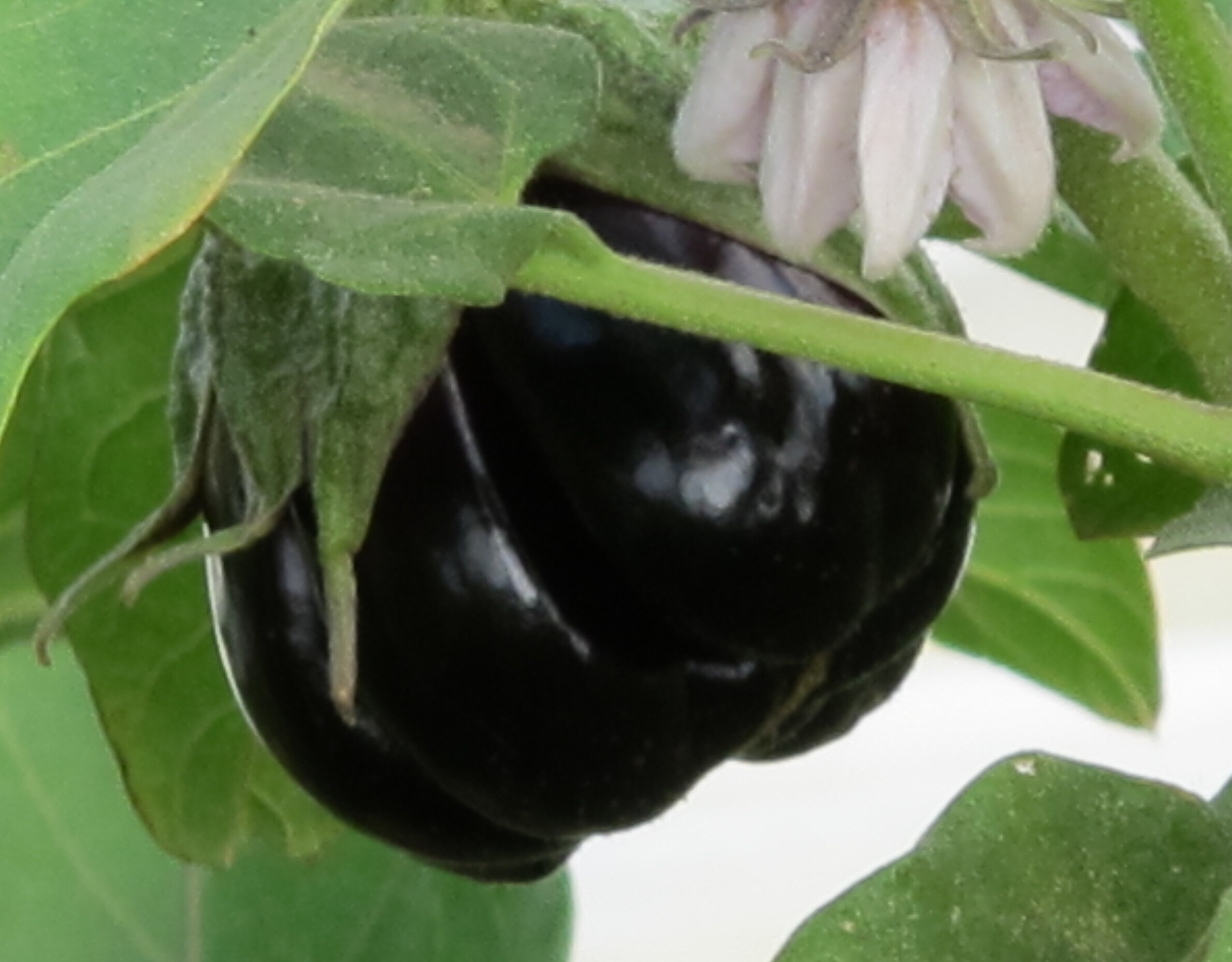
Within a few weeks, the flowers are fertilized and develop into plump, dark fruits. That is when the harvest season begins. We prefer to pick medium-sized eggplants rather than wait for giant fruits that have passed their peak. To determine if the eggplant is ready, we measure it, and also press gently to check firmness. An unripe eggplant will be hard and unresponsive to pressure. A ripe fruit is more flexible, but firm.
And here I’m duty-bound to debunk Urban Legend #1: there is no such thing as a male (fewer seeds, less bitter) and female (more seeds, more bitter) eggplant. The difference in seed quantity is due to spraying with plant hormones (auxins) used to prevent the leaf and flower drop, particularly during the cold months. (It goes without saying that in organic farming – and in Chubeza’s fields – no such sprays are to be found…)
Eggplants arrived in Israel long before the early Hebrew pioneers, for, as noted, this vegetable was – and still is – an important and ancient vegetable in the Arab cuisine. The concept of meshing the eggplant to the charcoal grill likely reached this region around the time the wheel was invented… But the eggplant also holds a place of honor in the Zionist kitchen of the nascent State of Israel. During the years of austerity after the State was established, eggplant recipes were invented and designed to take full advantage of this vegetable’s three most prominent traits: availability, low cost, and an amazing ability to absorb flavors. In Israel’s early days, eggplants served as a convenient substitute for the real thing. Liver is expensive? Just liver-flavor the eggplant. Tomatoes sky-high in price? Just blend one tomato with ten eggplants, and voila: a tomato-flavored eggplant! Even dessert dishes of sugar-coated eggplant, baked like a strudel, made their way onto Israeli restaurant menus. Alongside these wonder foods, the eggplant has always starred in Mideast cuisine as a component in various salads, and as fried rounds to eventually become, in Israeli culinary jargon… “antipasti!”
There are those who proclaim the eggplant as king of the local vegetables, but with or without a royal title, it is definitely a respected guest of honor in the emerging Israeli kitchen and one of the most deeply-rooted homegrown representatives of this area.
The first crucial exam for basic essentials in the local kitchen is long-term adaptability. Does it appear over the years in simple, homey recipes alongside the “gourmet” dishes of prosperous times? The eggplant passes this test with flying colors: from a range of eggplant salads to popular fast-food like sabich, to high-falutin’ roasted eggplant with tahini and foie gras, eggplant with tuna tartare, creamed eggplant, eggplant jam, and more.
Even its Hebrew name is already quite old, coined over a century ago by Avraham Moshe Lunz, writer, publisher, journalist, Land of Israel researcher, and member of the prestigious Hebrew Language Committee over a century ago. In 1897, Lunz corrected the vegetable’s name to chatzil, based on the rare Arabic word haysal. (Today, eggplant’s common Arabic name is badinjan).
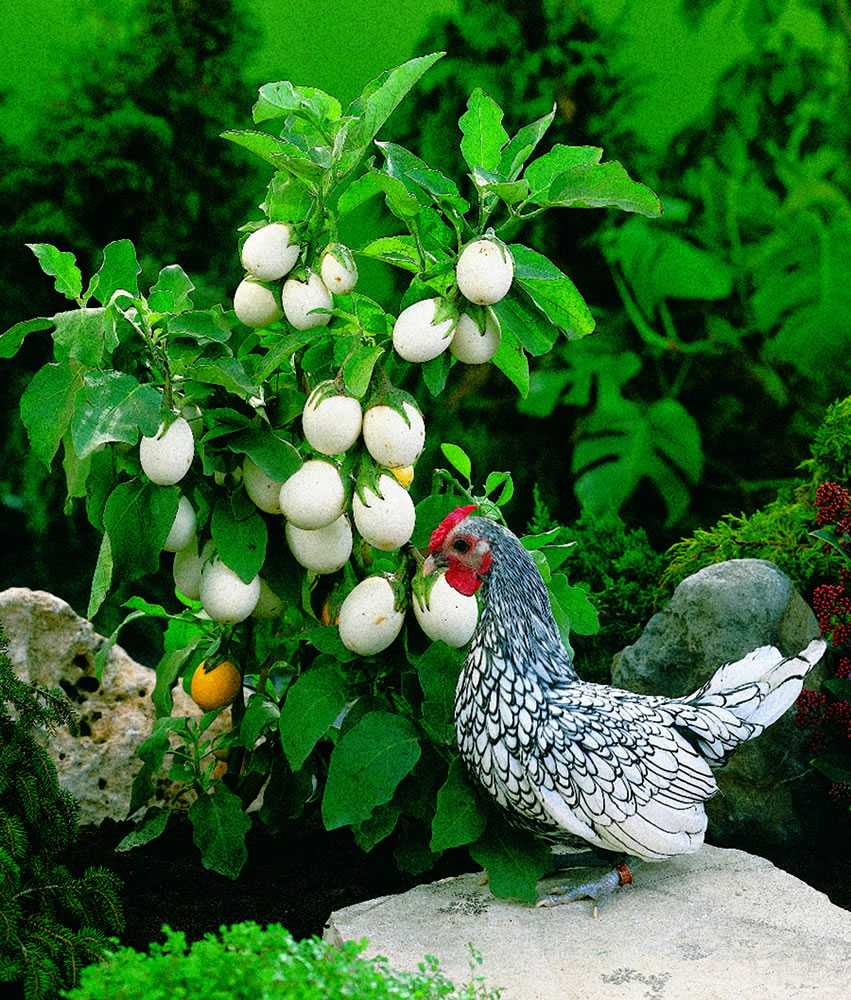
The English name “eggplant” comes from the shape of the first eggplants that arrived in Europe: white, small and oval, resembling eggs hanging from a bush.
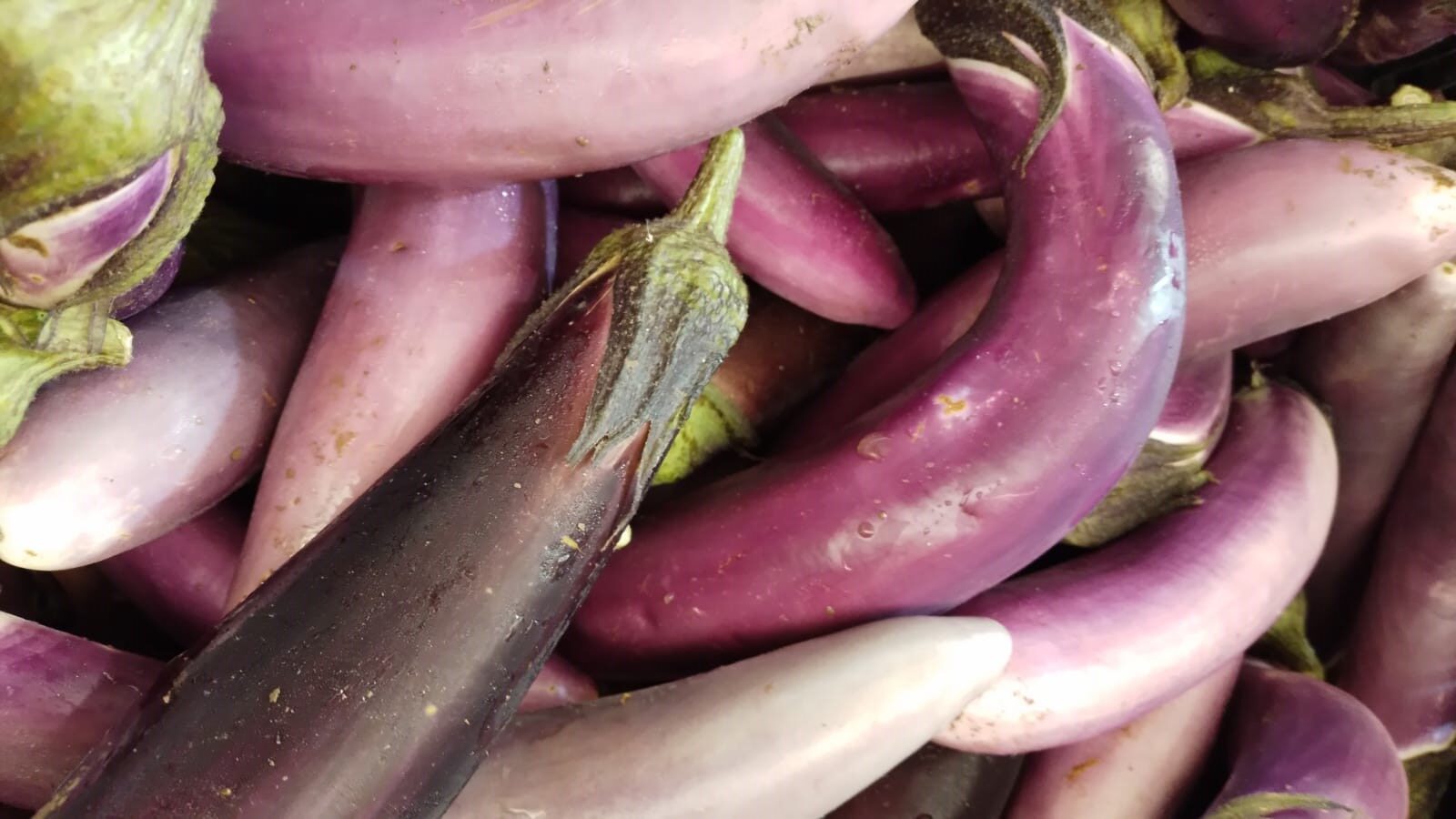
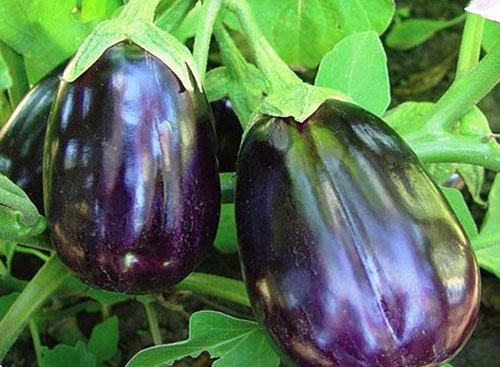
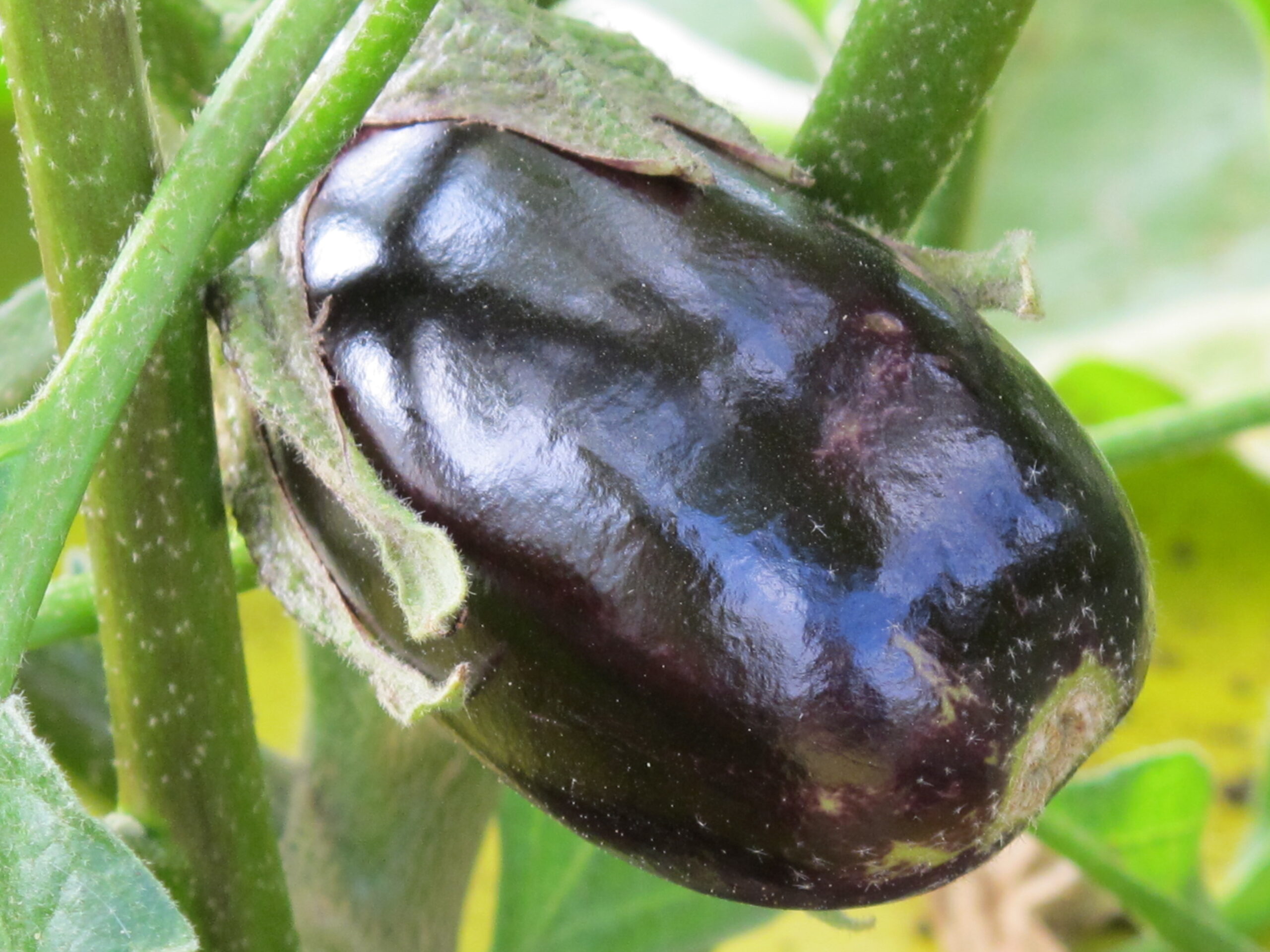
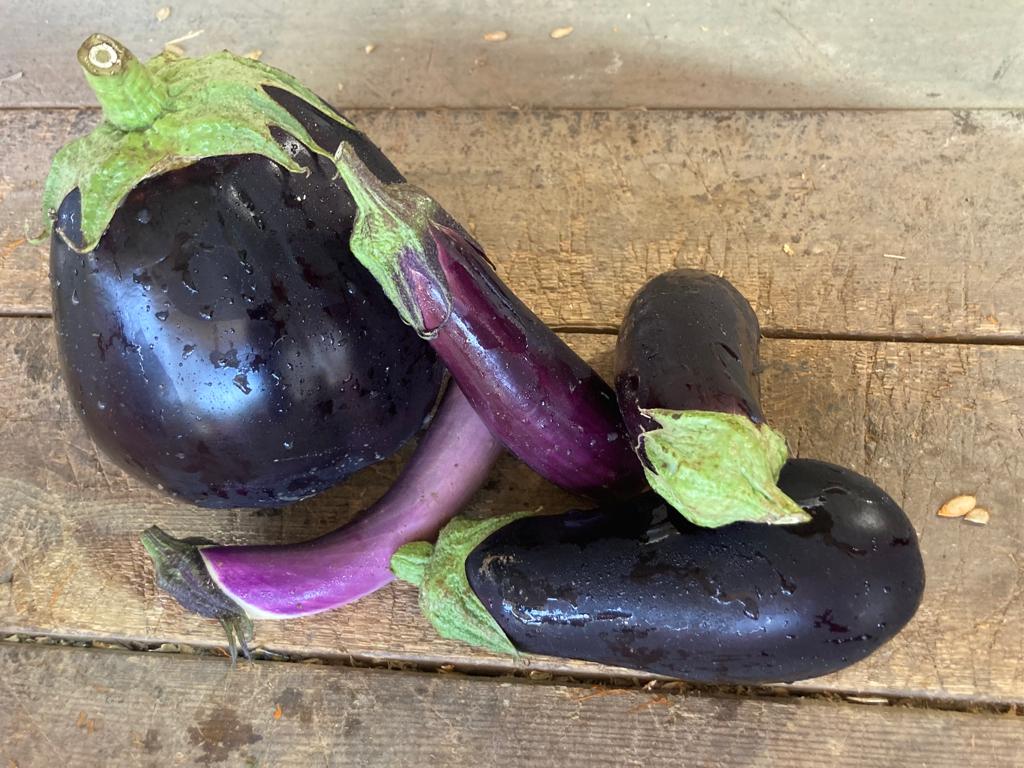
There are many eggplant varieties around the world, in differing shapes and hues. In Israel we are mainly acquainted with the large dark-purple oval variety, and in recent years the striped “zebra” eggplant debuted. But eggplants also come in green, brown, yellow, elongated, round, tiny and giant varieties.
This year at Chubeza, we grew three eggplant varieties - the familiar "Barba-abba," a baladi (homegrown) variety with round, fan-shaped fruit, and a third variety of long, light purple Japanese "finger" eggplants.
As members of the nightshade (Solanaceae) family, the first eggplants were met with utmost suspicion by the Europeans. Nightshades include a wide assortment of such plants as the tomato, pepper, potato, and others – some of which are highly toxic. Due to this family connection, most nightshades were suspected of being poisonous. Even today, there are those (for example, in macrobiotic diets) who avoid nightshade veggies. These harmful substances exist in the eggplant in small amounts, mostly in the leaves and stems. Due to this nightshade phobia, eggplants were initially grown in Europe solely as ornamental plants, with their large leaves, impressive structure and lush purple flowers delighting gardeners.
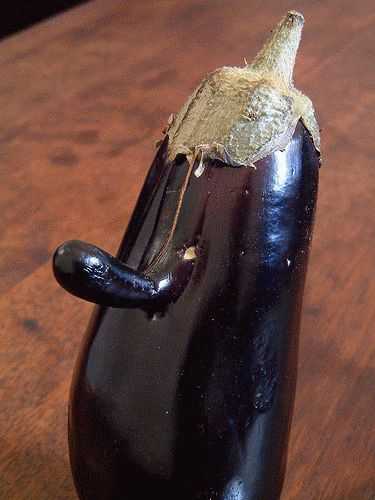
Today, the eggplant is renowned for its medicinal and nutritional value. It boasts compound elements that constrict blood vessels, thus beneficial for treating hemorrhoids and bleeding wounds. Eggplants promote secretion of liver and bile juices and are beneficial for anemia, constipation, stomach ulcers and inflammation of the colon. The eggplant contains antioxidants that may help prevent strokes and bleeding, and the phytochemical monoterpene which may promote the prevention of heart disease and cancer. Researchers have been examining the eggplant’s possible role in battling cancer by reducing steroid hormones which encourage the tumor growth, and preventing cell oxidization that lead to cancer’s spread. A folk remedy for scorpion stings is applying a slice of raw eggplant directly to the sting. To relieve frostbite, eggplant tea is chilled to room temperature and its soothing compresses applied to the affected areas.
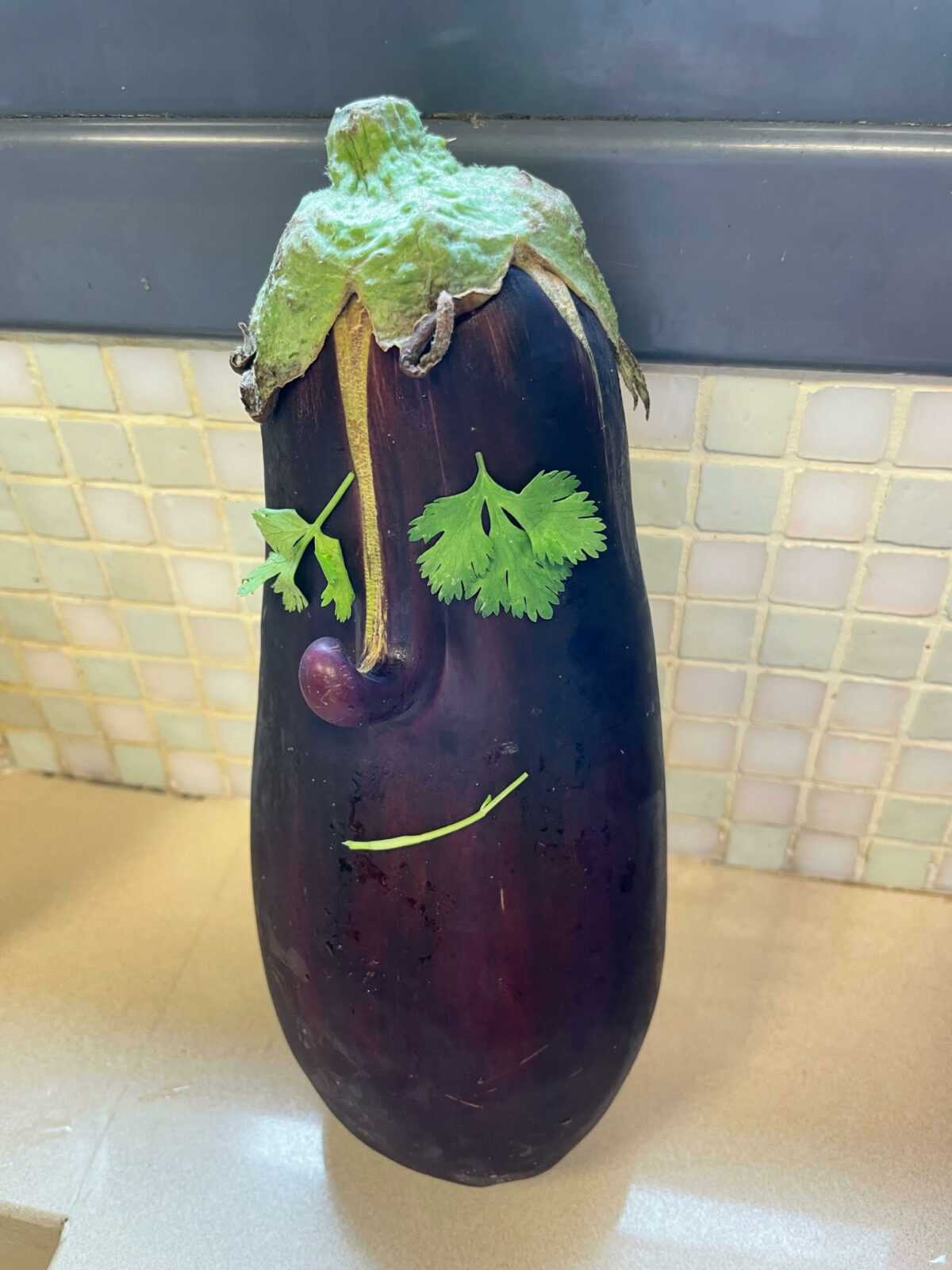
But the best use of the eggplant is to eat it! Steamed, roasted, baked (or fried, but use very little oil since its spongy texture absorbs large amounts of oil), grilled, chopped and mashed, stuffed, sliced or cubed. Your dependable peacemaker, eggplant pairs nicely with cheese or meat, tahini or tomatoes, but also does quite well on its own with just coarse salt, lemon juice and parsley. Bon Appétit!
May you all survive these sweltering days in the shade, drinking up, and enjoying great fun in the pool or at the seashore (or in an air-conditioned room). Just remember: even the endless August heat is temporary. Autumn is out there, waiting in the wings…
Alon, Bat-Ami, Dror, Einat and the entire Chubeza team