The Weekly Newsletter of Chubeza Farm
THANK YOU!!
Summertime is primetime for pods! Chubeza’s late summer boxes are now brimming with okra pods, lubia pods, and for a stretch of time, also edamame — green soybeans. Soy is a lovely, vibrant green plant, very similar in appearance to green beans, but its leaves are round like bean leaves, not pointed at the tips. Though not your most common vegetable, edamame was actually one of the first crops we sowed in Chubeza’s field over 20 years ago...
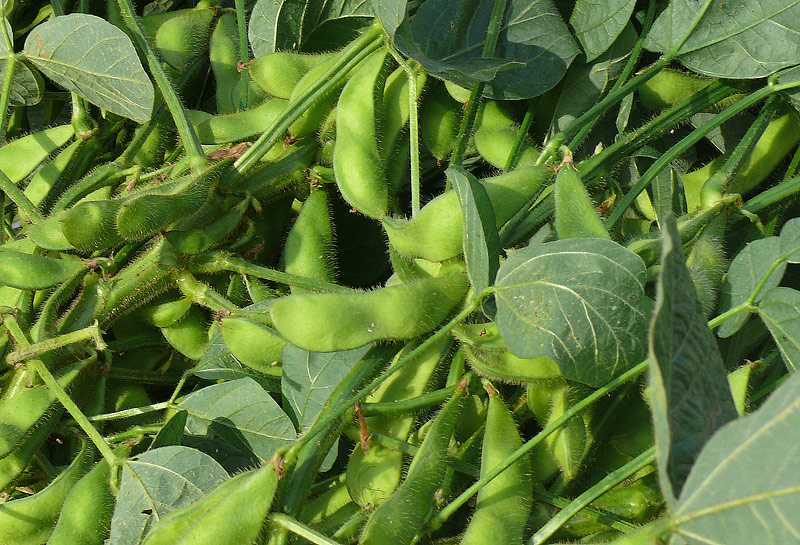
When I worked and studied agriculture in California, I enjoyed great success growing edamame and assumed it would be a cinch to grow in Israel as well. Instead, we faced a good few years of learning experiences (failed attempts) to grow edamame in the Holy Land. Any success was only partial, not amazing. The pods were green and pretty, but they didn’t really fill up with the round peas we toiled so hard to grow. A great many of the pods remained green, hairy, flat, and painfully – empty…In yet another attempt, the pods were indeed plumper, but the soy dried out easily, turned yellowish, and the beans inside aged. After a number of unsuccessful years of trials, our head and hands grew weary, thus we opted to take a break for a few years…
Until some ten years ago, when one of the seed companies suggested we try a successful edamame variety did we opt to give it another try. But just with one or two beds at the start. We also changed the date for seeding. Turns out that in Israel, soy prefers to be seeded from early spring until late summer- early autumn. (In the past, we’d sowed it in the scorching summer heat.) And wonder of wonders: this edamame crop produced strong, beautiful green bushes, yielding chubby green pods! Since that time, we try to find seeds (not always available) and grow these joyful pods.
Some 5,000 years ago, the legendary Chinese Emperor Shen-Nong, the “divine farmer” considered to be the father of Chinese agriculture, designated soy as one of the five sacred species of grain essential to Chinese civilization - alongside rice, wheat, barley and millet. As this early soy originated in northern China from a wild plant named Glycine ussuriensis, the Chinese began domesticating it for food and medicine around the 11th century BCE, making soy one of the earliest crops to be cultivated by humans. By the first century CE, soy had reached central and southern China and Korea. By the 7thcentury, it was already found in Japan, Indonesia, the Philippines, Vietnam, Thailand, Malaysia, Burma, Nepal and northern India. It took till the 18th century for soy to reach the West.
It’s fascinating how far this ancient crop has come, serving humanity since antiquity. From its cultivation in Chinese fields over 5000 years ago, mainly as a sacred, respected seed used extensively as “green manure” to enrich the soil for future harvests, soy has morphed into its modern state: engineered, labeled, restricted by patent holders, and destined for today’s unconventional uses – glue, paint, synthetic fibers, soap, ink, candles, lacquer, rubber substitutes, and of course, fuel.

Soy belongs to the legume or Fabaceae family, whose distinguished members include peas, beans, black-eyed peas (lubia), fava beans, chickpeas and more. Growing dry soy takes around four months for the plant to fully mature, harden, dry, and produce brown seeds. At this stage they are picked to begin their final journey through breakdown, extraction, fermentation, grinding, distillation, and other forms of (torture) processing.
Like corn, almost everything we eat contains soy, from baby formula to the ubiquitous soy oil, through meat and fish (soy is a component in livestock and fish feed), through soy flour in baked goods, soy protein in milk substitutes, soy fibers and soy lecithin in virtually every processed food that requires binding, rising or “design.” It is strange to say that this food “contains” soy, because it actually contains various separated, broken-down, and processed components extracted from soy right down to their last drop of protein. Can we still call this soy? I’m not so sure...
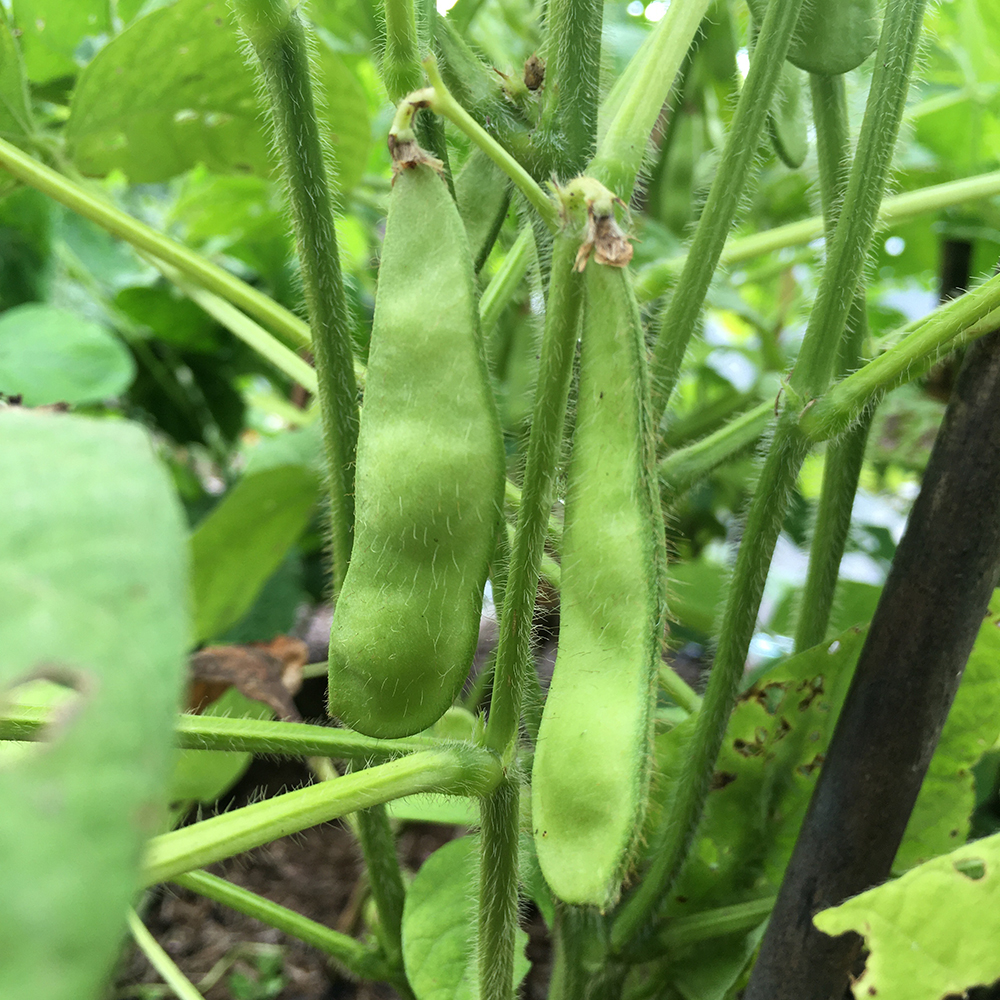
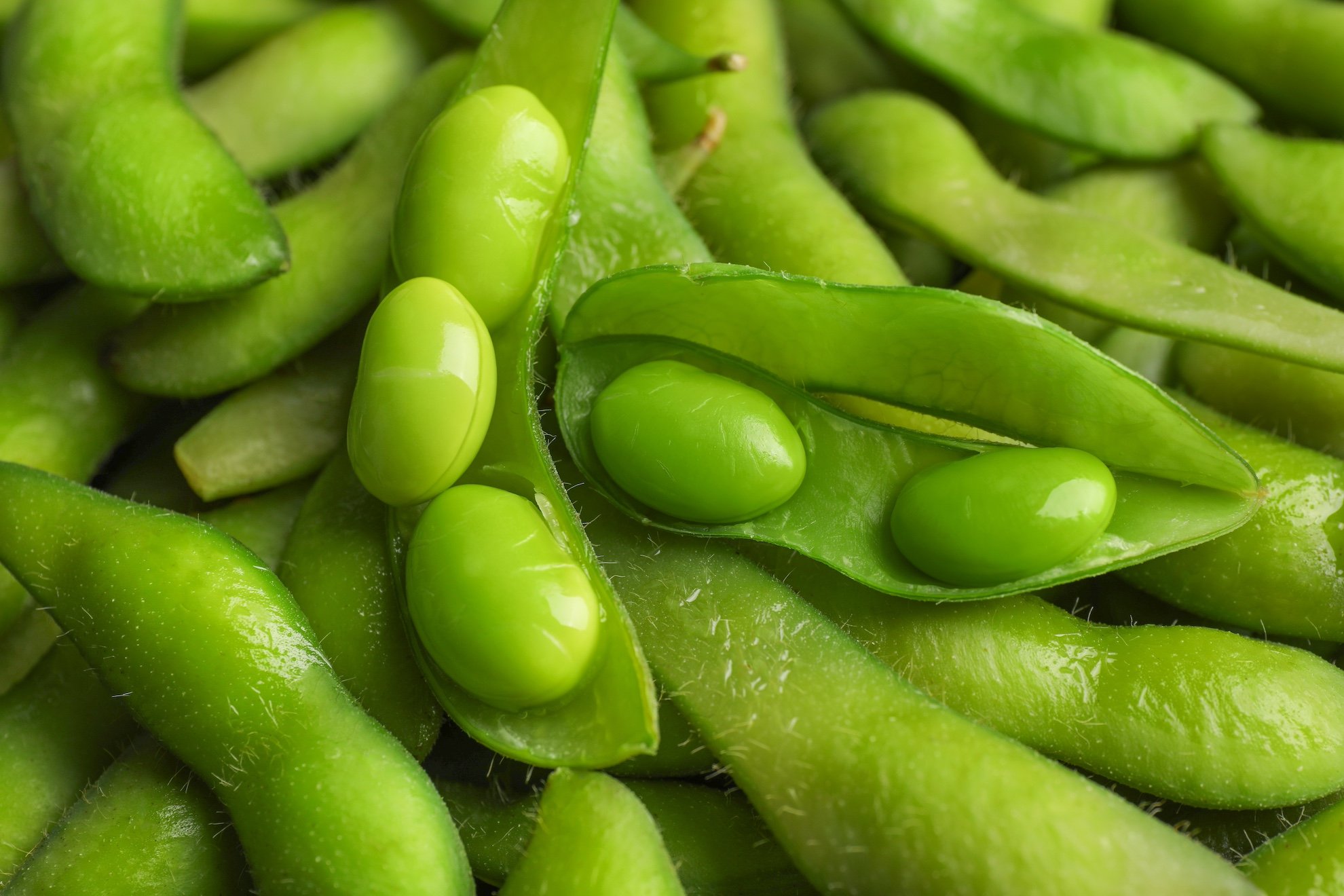
But here at Chubeza, our young soybeans are picked when they are green and still deserving of the title edamame – beans on branches (eda - branch, mame - bean). We harvest them in bunches, and your task is to separate the edamame pods from the branches – rewarded by delicious results!
Soybeans abound in health benefits: they are rich in protein, similar in composition to meat protein. This protein stabilizes blood sugar levels and helps reduce the risk of diabetes. Edamame also contains vitamins A, C and K, and such minerals as iron, magnesium, potassium and calcium. It is rich in dietary fibers, which can absorb toxins and remove them from the body. Soy contains lecithin, which helps balance cholesterol levels and prevent arteriosclerosis. Lecithin also aids in fat breakdown and contributes to weight loss.
Edamame also contains choline and inositol, compounds that improve memory function and help transmit signals in the nervous system. Soy protein includes saponins, renowned for helping prevent cancer and heart disease. Edamame is rich in isoflavones – the plant form of estrogen – and can improve such menopause symptoms as hot flashes, reduce the risk of heart disease, and prevent bone density loss, primarily in the spine and hips. And beyond these wonders, edamame also contains a peptide called lunasin which manages to reduce cholesterol levels in the body by both inhibiting cholesterol production and helping to lower “bad” cholesterol (LDL) levels. Enjoy!
May we be blessed with increased love, prosperity, and of course – good health!
Alon, Bat-Ami, Dror, Einat, and the entire Chubeza team