The Weekly Newsletter of Chubeza Farm
THANK YOU!!
Over the past few weeks, you’ve been receiving one of the first vegetables of spring – zucchini! (The good news is that this is just the beginning – more veggies will soon make their grand premiere.) As the pioneer of its family, we happily dedicate this hearty spring Newsletter to the remarkable zucchini.
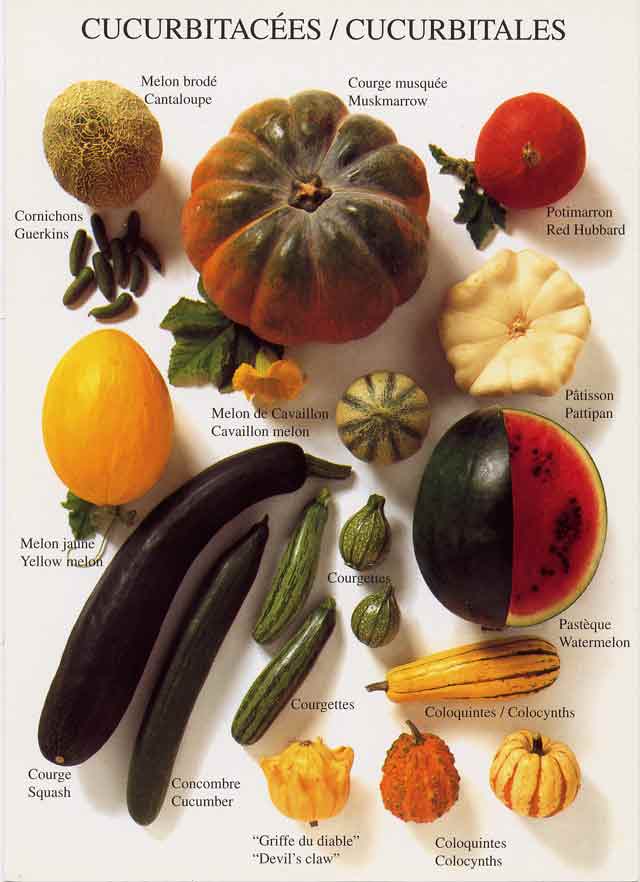
Zucchini (squash) belongs to the prominent Cucurbit family, a very diverse, widespread clan whose members are grown primarily for food, but also for other interesting uses. The Cucurbit family tree splits into five main branches: 1. cucumber, fakus and melons; 2. watermelon; 3. various types of pumpkins and zucchinis; 4. the ornamental, inedible pumpkin used for decorative purposes, serving utensils and musical instruments; and 5. Luffa gourds, whose flesh is used to create natural sponges.
Pumpkins and squash are indeed close cousins from the same family branch, but we relate to them in different ways, which affects their individual characteristics:
Pumpkins are harvested at maturity after a long growing period of some 3-5 months, when their rind is hard and the seeds inside are tough and plump. (We usually scoop them out before cooking.) Conversely, zucchini is harvested young, after only one or two months of growth. Its peel is still soft and easily scratched. The seeds, thin and nearly imperceptible, are eaten right along with the vegetable.

Zucchini and pumpkins are natives of Central America. Columbus introduced them to the Europeans, who first grew them only in botanical gardens, enjoying their beautiful blossoms. The Israelites, who longed for the “cucumbers of Egypt,” pleaded, “We remember the fish we ate in Egypt at no cost–also the squash, melons, leeks, onions and garlic…” Apparently they were not craving what we call squash or zucchini, but probably the fakus, their cousin which grew in those days in Africa and the Middle East.
Zucchini received his Hebrew name kishu from the Arabic kusa (originally from Akkadian), its formal name being “pumpkin of the zucchini.” From this comes the Hebrew word miksha, referring to a field where cucurbits—watermelons, pumpkins, melons, zucchinis—are grown.
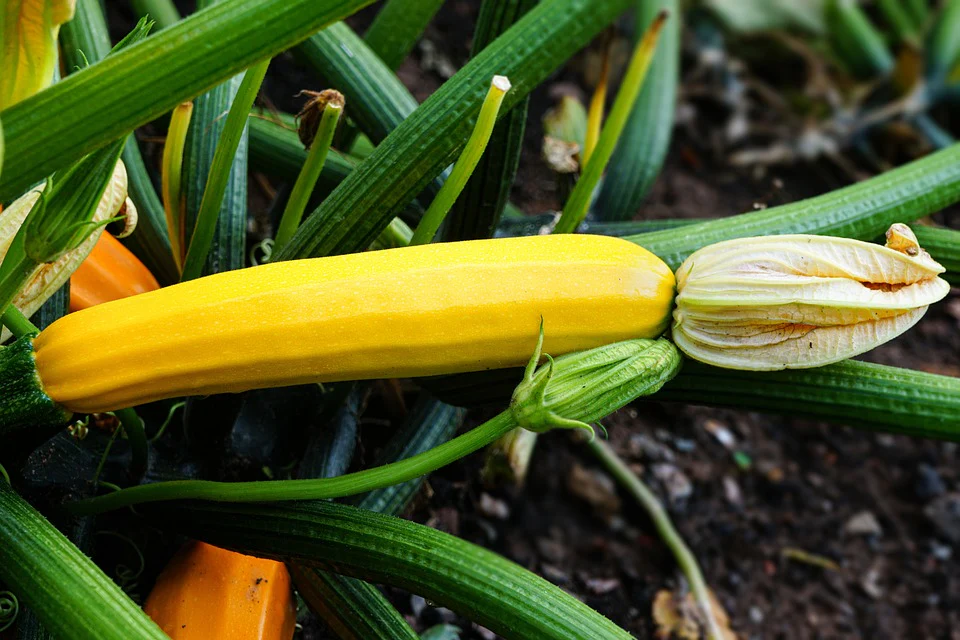
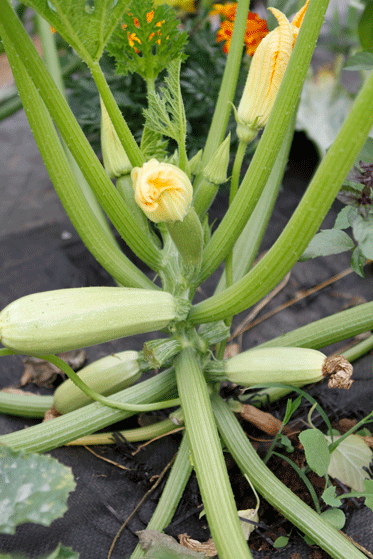
Even within its immediate family, zucchini varieties vary from one sibling to another. The Middle Eastern zucchini is plump and light green. His longer and thinner brothers received their name from the Italian zucca for pumpkin, thus “a small pumpkin.” Chubeza grows light-green, yellow and dark-green zucchini.


Preparations for zucchini season start here at the end of winter. We sow and plant our zucchinis from late January to early February, when it’s still mighty chilly. To protect them from the cold, we spread a plastic cover over the soil. We then cover the seeds/seedlings with another plastic sheet to insulate them from the harsh cold and storms that continue to visit us well into late winter. The result is a kind of tunnel warmed by the sun’s rays, shielding the seedlings from the biting frost and end-of-winter storms. When winter makes way for spring and it gets too hot under the plastic, we cover the zucchini plants with Agril fabric – a non-woven cloth (albad). These sheets are very thin but insulated. Not opaque, they allow the sunrays to enter, and they’re relatively strong. In winter we use Agril to protect delicate greens from hail, and in springtime we spread it over the Cucurbits during their early growth to protect them from insects.
These aren’t your everyday vegetarian insects who just want to nibble on some zucchini leaves, but rather ordinary flies, mosquitos and other fly-by insects who merely wish to land a hand or foot on the zucchini – without first washing that hand or foot. Thus, they transmit viruses and diseases that harm young zucchini plants. Leaf viruses and diseases are the worse threats to the wellbeing of the Cucurbit family, with the zucchini, fakus, melons and various small pumpkins being the most sensitive of all. Which is why we cover them with cloth as they start out in the world, just as we put screens on our windows at home to prevent flying insects from entering the living room.


Once the zucchini begins to bloom, we remove the cover, because it’s time to strike up the band for the Pollination Dance. And here, the big stars are the humming flying insects…
So how does the impressive green zucchini plant morph into a ripening, fruit- bearing plant? Along the way, there are big, beautiful yellow flowers that attract the eyes of passersby – especially yellow-loving insects. The zucchini plant bears two types of flowers: male and female (everything said here about zucchini holds true as well for pumpkins, cucumbers, melons, watermelons, fakus and the rest of the Cucurbit family). From afar, both types of flowers resemble each other, but up close the difference is quite clear.
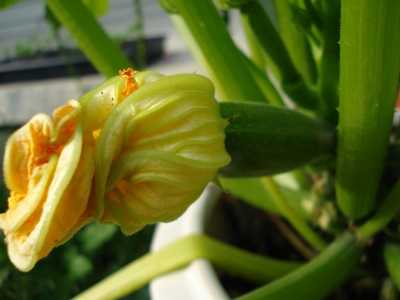
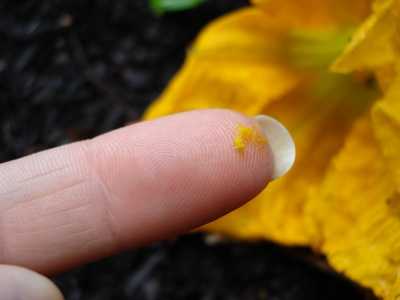
The insects, dazzled by the bright yellow hue, enter the male flower, have their fun, collect some nectar and pick up some pollen along the way. Then they move on to frolic in the next nearby playground, the female flower, where they scatter the male pollen around. The now-pollinated female flower closes and contracts. If you look closely at the base of this flower, you’ll see a fresh, young little zucchini beginning to swell and grow. It needs only a few days before he’s ready for careful harvesting, so as not to scratch or damage the shiny, delicate peel. Zucchinis grow so quickly that we harvest them daily. Those we overlook on the vine for several days will reach monstrous proportions…
Zucchinis are quite low in calories and rich in dietary fiber. They contain magnesium, potassium and folic acid, Vitamins A and C and other antioxidants. Zucchini has a fresh, neutral flavor (some may call it bland), but no need for a PR campaign: its neutral taste is probably the ingredient that made zucchini a star in almost every country’s cuisine. In France they are used in ratatouille and quiches; in Italy they are prize components of caponata, frittata, antipasti and pasta primavera. The Italians also harbor a special fondness for sauteed zucchini blossoms. Romanians and Bulgarians cook them in ghiveci, in Turkey they star in fritters, in the Middle East they’re stuffed with rice and ground meat, and Iraqis give zucchini top billing in kubbeh soup. In the Far East, zucchinis are stir-fried in a wok, while in the United States they make their way into yummy zucchini bread and jam.
But hey, zucchini can also be eaten without cooking, frying or baking at all. Just juice them for a great detox drink, or enjoy them fresh in your salad, like cucumbers. When cucumbers were scarce in Chubeza’s field, we cheerfully chopped zucchini to fill our lunchtime vegetable salad, which was polished off in seconds.
May we all be blessed with only good news, with no violence in our hearts or on the streets.
Alon, Bat-Ami, Dror, Einat and the entire Chubeza team