The Weekly Newsletter of Chubeza Farm
THANK YOU!!
Next week, as we celebrate the Purim holiday, Chubeza has a small “v’nahafochu” (reversal) of our own:
Most of Monday’s deliveries will take place as usual, with these exceptions:
*Modiin, Mevo’ot Yerushalayim, and Jerusalem routes: Those of you in these areas who normally receives your box on Monday will receive it this coming week on Sunday evening.
Wednesday boxes will be delivered on Thursday — except in South Tel Aviv, Holon, and Bat Yam, where deliveries will take place on Wednesday evening.
You will receive a personal WhatsApp message with your specific delivery time.
Wishing everyone a joyful Purim, one that transforms all hardships to blessings!

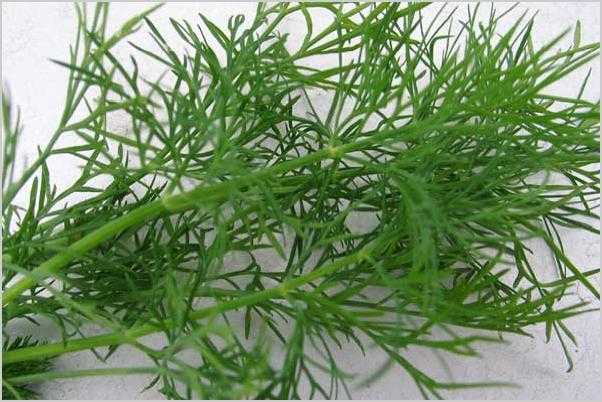
And, in the Purim spirit, we’re now completing our Chubeza Newsletter Trilogy of Amazing Herbs. This time, the star is DILL….an herb in disguise! An herb whose Hebrew name doesn’t even suit it. It’s a gentle, fragrant, and very adept medicinal herb that eases stomachaches, toothaches, and frazzled nerves, plus supporting nursing mothers. Yet it unfortunately received the Hebrew name shamir, which actually belongs to a particularly aggressive thorny wild plant. The herb’s proper Hebrew name is Shevet Re’achani (aromatic shevet).
The name shamir properly refers to a thorny wild plant which, together with its partner, forms the pair shamir v’shait — a phrase describing tangled thickets of weeds growing in abandoned fields. Nature teacher and researcher Amotz Cohen believes that dill (shamir) refers to the common thorny sira plant found throughout Israel. But the name shamir became rooted in Hebrew as the name of the beloved culinary herb, likely because of its visual and botanical resemblance to fennel (shumar).
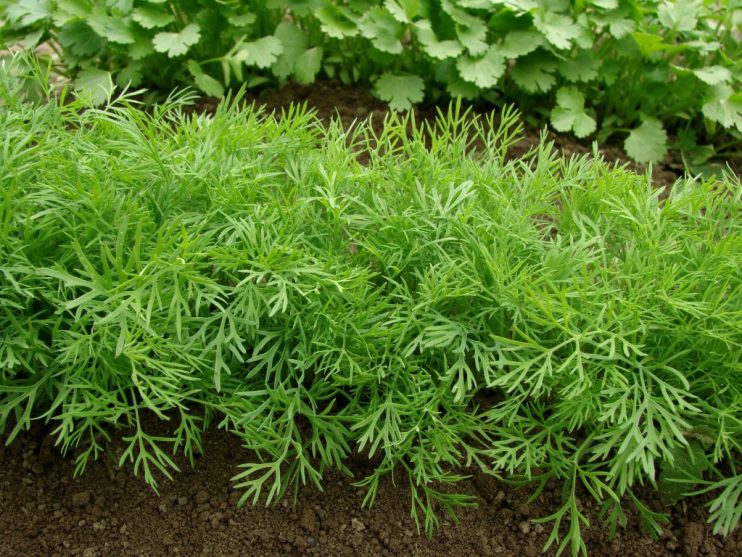
The English name “dill” is derived from the ancient Norse dile/dilla meaning “calming and soothing,” likely reflecting the common folk medicine use of dill tea to help babies fall asleep and to soothe their painful gums. Sometimes mothers would bake dill biscuits to ease teething woes. Dill tea relieves stomachaches and other digestive ills, especially in infants and children, as well as increasing nursing mothers’ milk.
Back to dill’s proper Hebrew name shevet, this is the name I love because it fits the mood so well. After hours of holding a baby, rocking, singing lullabies, whispering comfort, the calming assets of dill tea finally allow you to… sit (lashevet).
A Talmudic wordplay even connects dill to Shabbat:
“The Caesar said to Rabbi Yehoshua ben Hananiah: Why does the food of Shabbat smell so fragrant? He replied: We have a special spice called shevet (dill) that we add, and its aroma spreads…” (Tractate Shabbat 119).
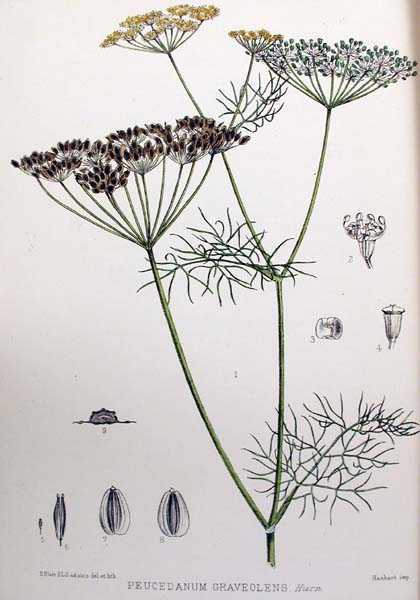
Dill originates from southern Europe (the Mediterranean Basin) and Russia. It is an annual plant from the Umbelliferae family, which also includes parsley, cilantro, celery, carrots, parsnips, and fennel. Its branching stems and feathery leaves bloom in umbrella-shaped clusters — the source of the family’s name. After flowering, dill seeds can be collected and used for seasoning and medicinal aids.
Its strong aroma may also explain why dill was used as a charm to ward off demons and ghosts, considered a “must” in every beginner’s witch kit. It is also said to be an aphrodisiac. Plus, a tip from Pythagoras recommended holding a bunch of dill in your left hand to prevent epileptic seizures (perhaps because seizures were thought to be caused by the demon). Among the Greeks, dill symbolized prosperity, as wealthy families flaunted their wealth by burning oil spiked with dill.
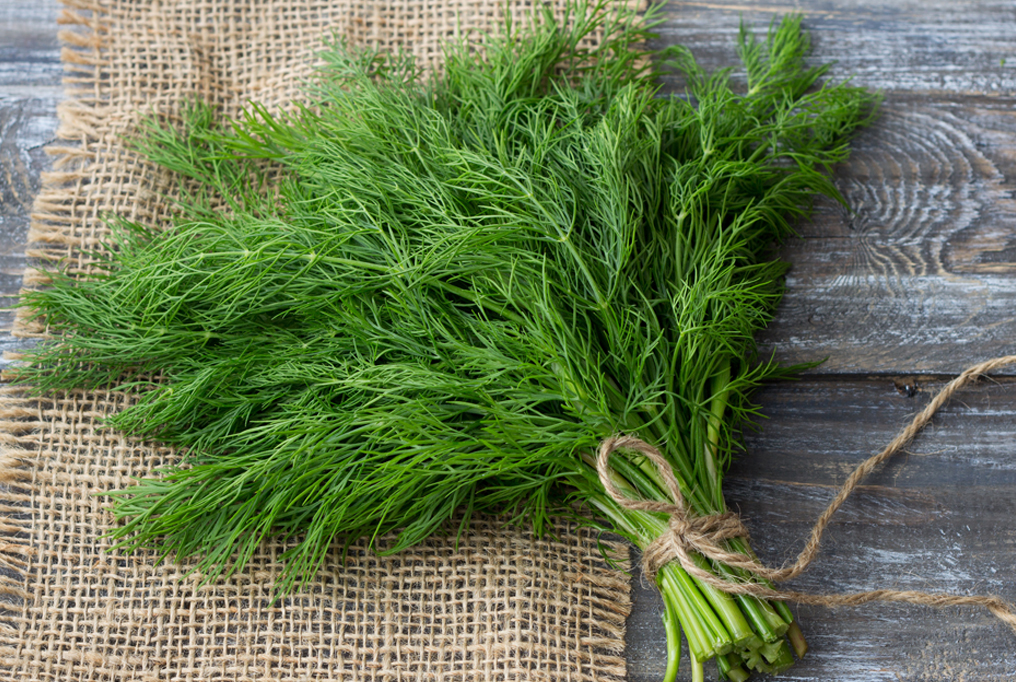
Dill has likely been cultivated since ancient times. Our ancestors used it to season stews and for pickling, taking full advantage of the entire plant. As the Talmud (Avodah Zarah 7b) describes:
“Dill must be tithed, seed, vegetable and stalk,” i.e., all parts of the dill are in use and hence must be tithed.
This diversity continues till today: green dill sprigs season pickling brine, garnish soups, cheeses, salads, and seafood. Dill seeds flavor baked goods, potatoes, vegetables, cakes, sauces, and liqueurs. In India, ground dill seed is a starring ingredient in curry.
Umbelliferous herbs, including dill, contain phytochemicals with cancer‑preventive properties. They block various hormonal activities linked to the development of cancer cells. Recent studies indicate that dill boasts a high level of antioxidant capabilities as well.
Additional research reconfirms the virtues of dill in soothing the digestive system. It has been found to be chock full of bactericide compounds and to have a protective influence on the stomach lining.
Dill is a source of such vitamins and minerals as potassium, beta carotene (pro-vitamin A), folic acid, and vitamin C.
Some folk remedies for dill:
• Dill tea: Steep fresh dill greens, or boil 5 heaping teaspoons of seeds in 1 liter of water for 15 minutes. Strain.
• To relieve gas, regulate digestion, increase milk supply for nursing moms, freshening breath, and easing a cough: Sweeten with honey and drink 2–3 cups a day. Give colicky babies 5 teaspoons of dill infusion daily.
• To get rid of bad breath: Gargle dill tea several times a day.
• For eye inflammation: Soak a compress in the warm infusion and place over the eye.
Wishing you a wonderful week both rainy and bright, fragrant with blossoms, seasoned with a smile, and free of stomachaches, toothaches, and heartaches!
Alon, Bat-Ami, Dror, and the entire Chubeza team