The Weekly Newsletter of Chubeza Farm
THANK YOU!!
For as long as we can remember, Uncle Albert had been a wondrous figure in our family… When he moved to the lonely farmhouse… we all thought his spirit would break within a week or two… but he surprised us all. He lived in solitude, earned his living by the work of his hands, and still found time for hobbies – he cultivated the poems of Francis Jammes. In beds of parsley, he lovingly trimmed elegant letters, words, and lines. When we came to visit him, we found in every garden bed a poem shining with modest green. And opposite it, with sweat streaming down his temples, Uncle Albert, glowing like a drowsy saint.
- From the story “Uncle Albert” in the collection Coastal Estates, Amir Gutfreund
This week – continuing our duo of culinary herbs – we turn to the one and only, the herb that accompanies us all year long and appears in Chubeza’s boxes perhaps more than any other vegetable: parsley.
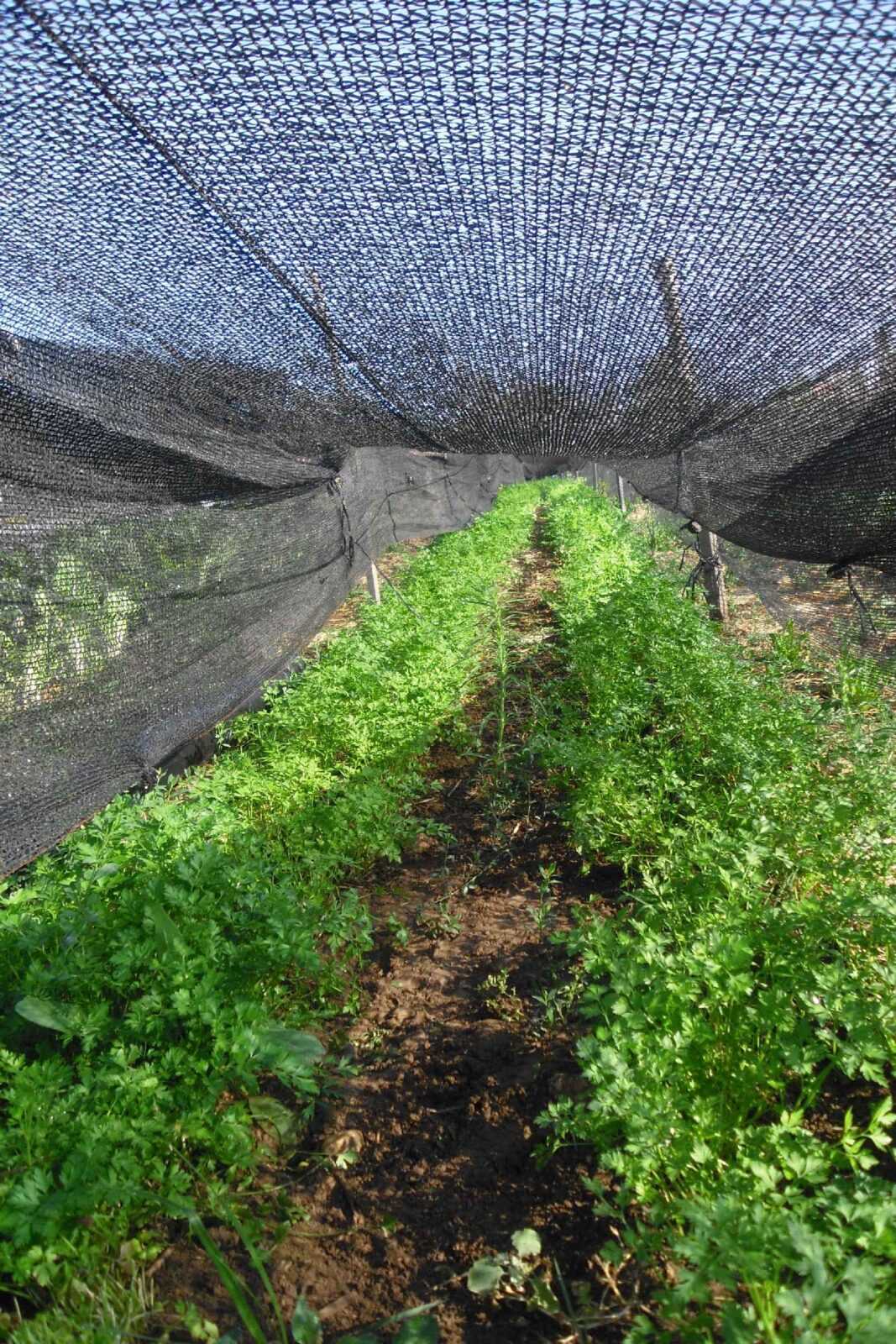
Parsley has been here in the Mediterranean region for many years – originating in southern Europe and the Mediterranean basin. The first mention of the herb appears in ancient Greece: while the Greeks crowned victors with wreaths of parsley, they also scattered parsley leaves on graves. They gave parsley its name, distinguishing it from its relative, celery: petroselinon = “rock celery” (petros – rock, selinon – celery). This described celery that grows among rocks, as opposed to water celery (regular celery) which grows near water sources. However, as it was a sacred symbol of victory and death, parsley was not served at the table.
The first to actually cook with the herb were the Romans, but parsley owes its true culinary conquest to the Italian princess Catherine de’Medici, who married a Frenchman and insisted on importing Italian herbs along with her. From there, the road was short to parsley becoming a staple seasoning in every kitchen of the region.
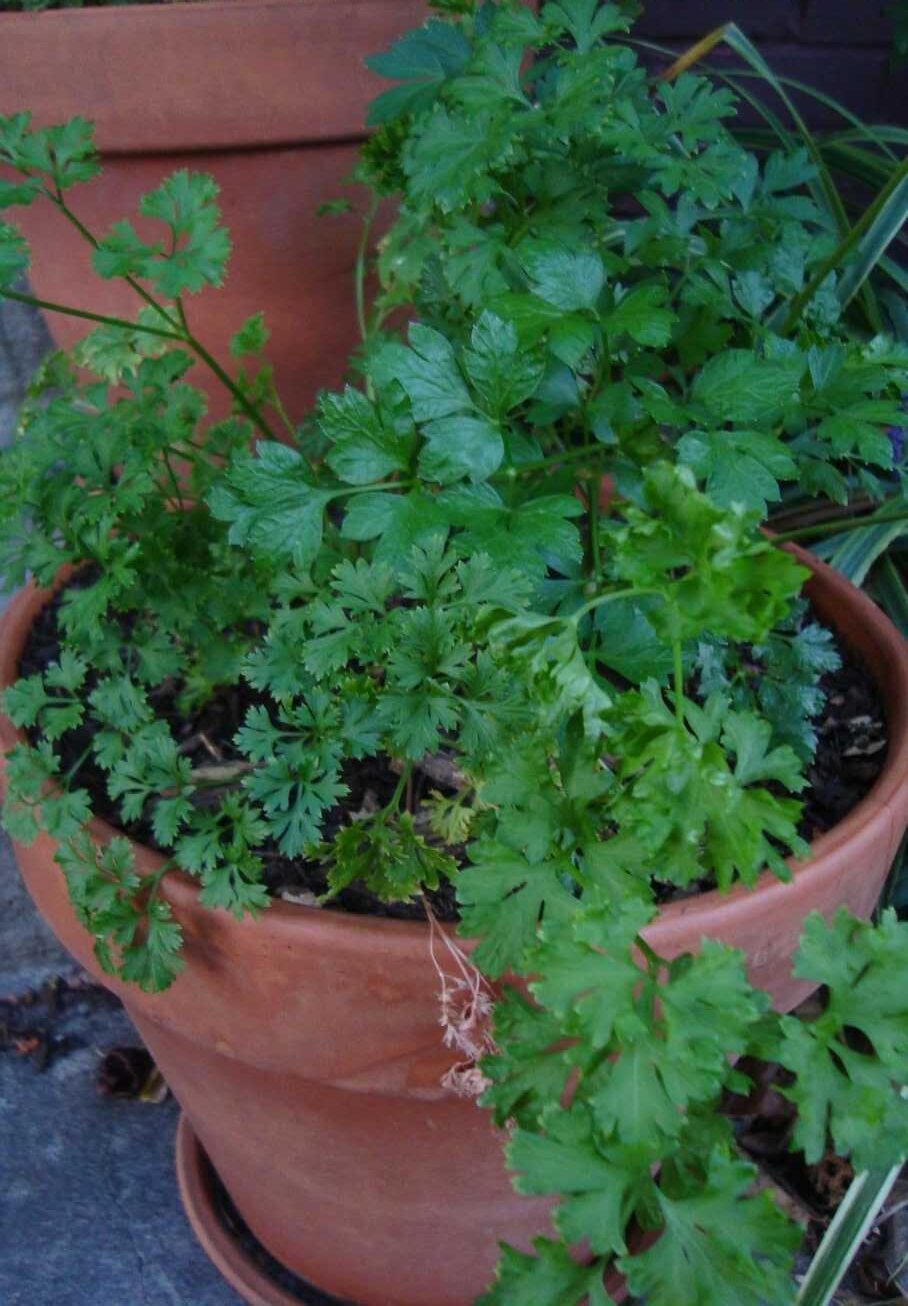
And like someone who has been here for a very, very long time and has seen empires rise and fall, seasons change, and stars debut and fade, Lady Parsley has all the time in the world: she germinates very slowly. In cold temperatures it feels like an eternity. Sometimes we almost give up: a month passes with no sign of parsley, but just then, right before surrender, soft green threads suddenly appear. And from the moment it sprouts, parsley stays with us. It survives heat and cold, sun and partial shade. It continues to produce green leaves again and again even after many harvests, alive and kicking long after cilantro and dill have flowered and gone to seed. Unlike these two annuals, parsley is biennial and will last two years before flowering and producing seeds.
Parsley has long been a common plant in gardens and in pots on windowsills. Various beliefs have been tied to growing parsley, perhaps because its seeds germinate so slowly, especially in cool weather. In chilly England, the belief arose that this is because of the number of trips to the devil and back that the seeds must make before they can sprout. Therefore, germinating parsley seeds under glass is a good idea in cool weather, as it warms the soil – and perhaps also prevents visits to the underworld…
A feminist folk belief claims that parsley grows successfully only in homes where the woman is dominant. Of course, the version held by those who struggle with the existence of strong women is that parsley grows only for wicked women and witches… If your parsley has already sprouted and is growing nicely, do not dare uproot it – doing so brings bad luck. If you give someone your parsley, you part with your luck along with it, so next time you move houses, try to find a home with a parsley planter on the windowsill…

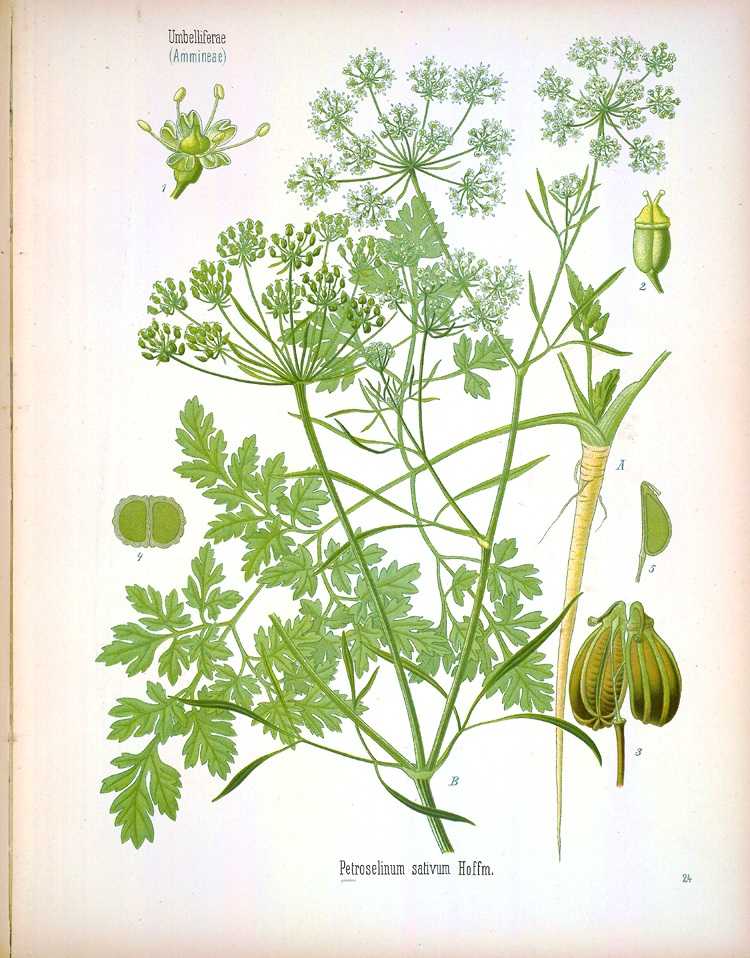
Leaf parsley (as opposed to the variety grown for its thickened root) has two leaf forms: flat or curly. The curly type, prettier and more decorative, is used mainly for garnish. The flat type is the simple, common parsley, usually used in cooking, as it is richer in the essential oil apiol, which gives it a stronger flavor.
As a long-standing citizen of the Western world, parsley is known as a rich source of various vitamins and minerals, including vitamin C (three times more than citrus fruits!), folic acid, beta-carotene (pro‑vitamin A), potassium, and magnesium. But recently it has gained renewed sparkle from an Asian direction: Japanese scientists have recently discovered a new vitamin – pyrroloquinoline quinone, or PQQ for short. (The last discovery of a new vitamin was in 1948!) This vitamin, apparently belonging to the B‑vitamin group, plays an important role in fertility, and researchers believe it has additional health benefits. Good sources of PQQ include parsley, green tea, green pepper, papaya, natto (fermented soybeans), and kiwi. And of course, herbs in the umbellifer family, including our parsley friend, contain phytochemicals, many of which have cancer‑preventing properties. These phytochemicals block various hormonal activities associated with cancer development.
Throughout history and to this day, parsley has been used to treat a broad range of medical issues. It almost seems like the ultimate miracle cure: drinking parsley infusion helps treat digestive disorders, urinary tract infections, and kidney diseases. Puffy eyes are treated with compresses of parsley tea. Parsley helps lower cholesterol, is effective in reducing high blood pressure, prevents blood clots, and protects against heart disease and arteriosclerosis. It soothes menstrual pain, and when used externally, alleviates skin problems. In addition, parsley strengthens the immune system, has anti‑infectious properties, helps detoxify the body, and is good for treating fluid retention, including edema and obesity. It helps prevent dysentery and is good for the lungs, stomach, liver, and thyroid gland. However, pregnant women and nursing mothers are advised not to consume large quantities or use liquid parsley extracts, as that may stimulate the uterus and has a drying effect on breast milk. Of course, this does not refer to a pinch of seasoning here and there, but to significant amounts.
We wish you a week and Family Day filled with all the good that parsley brings: life, health, family, luck, and joy.
Alon, Bat‑Ami, Dror, Einat, and the entire Chubeza team, happy for the sunshine but hoping for winter’s speedy return