The Weekly Newsletter of Chubeza Farm
THANK YOU!!
DECEMBER
The smell of sea, an autumn breeze,
And golden orange nectar tease.
A sweet and sour, cloudy day
Calls to step out, come what may.
To walk and march, breathe deep and true,
The air of sunsets, red and blue.
To walk and march, breathe deep and true,
The air of sunsets, red and blue.
- Natan Alterman
From the Hebrew: Aliza Raz-Melzer
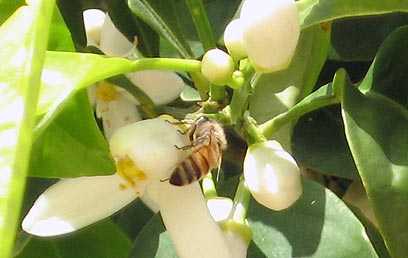
To our great distress, winter is taking its good old time in arriving. Those hearty blue skies insist on shining down on us every morning, with a troubling dryness that’s totally wrong for November. And yet—the amazing citrus fruits have arrived in all their glory! Every week, Chubeza’s Fruit Boxes contain one or more representatives of that distinguished autumn-winter family: oranges, clementinas, pomelos, or grapefruits.
Citrus fruits got their Hebrew name pri hadar from the biblical command to take “the fruit of a citrus (hadar means “beautiful” in Hebrew) tree” as one of the Four Species related to the Sukkot holiday. Their name suits them well—these very special fruits are indeed splendid and beautiful all year round. As evergreen trees, they never shed their leaves, sporting their lush, glossy green foliage year-round. The fruits themselves are juicy, glowing in ardent, striking colors that warm the winter, regal and majestic. The intoxicating scents of their blossoms and fruits crown the aura of grandeur surrounding this family.
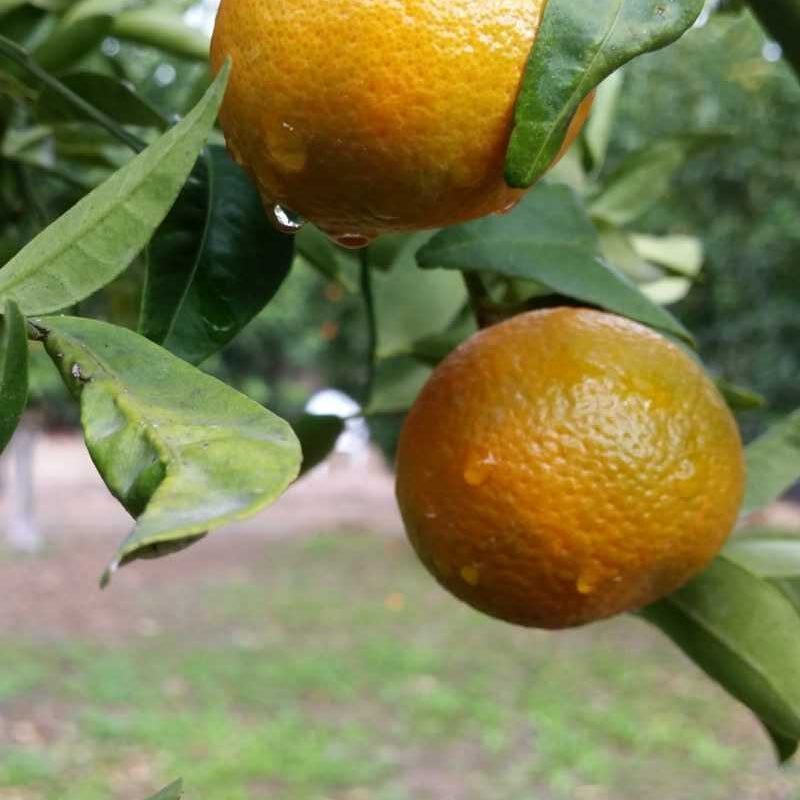
Citrus fruits belong to the rue (Rutaceae) family, which also includes their cousin the rue shrub—a common ancient medicinal plant with a pungent, not-so-pleasant smell. Citrus fruits hail from tropical and subtropical regions of Southeast Asia. The mandarina (from which the clementina is a hybrid) comes from China, the orange likely originated in India, as did the lime; and the pomelo came from Malaysia. Cultivated varieties and even many wild ones are hybrids (not grafted—more on that later). It’s hard to find pure ancestral citrus species in nature, likely due to natural hybridization, even without human intervention. (A busy bee might have visited both a male grapefruit tree and a female mandarin tree, for example).
Because citrus trees hybridize easily and naturally, growers almost always graft two trees together to cultivate citrus. They take a rootstock from a tree that’s resistant to diseases and weather conditions, and graft onto it a scion from the desired variety.
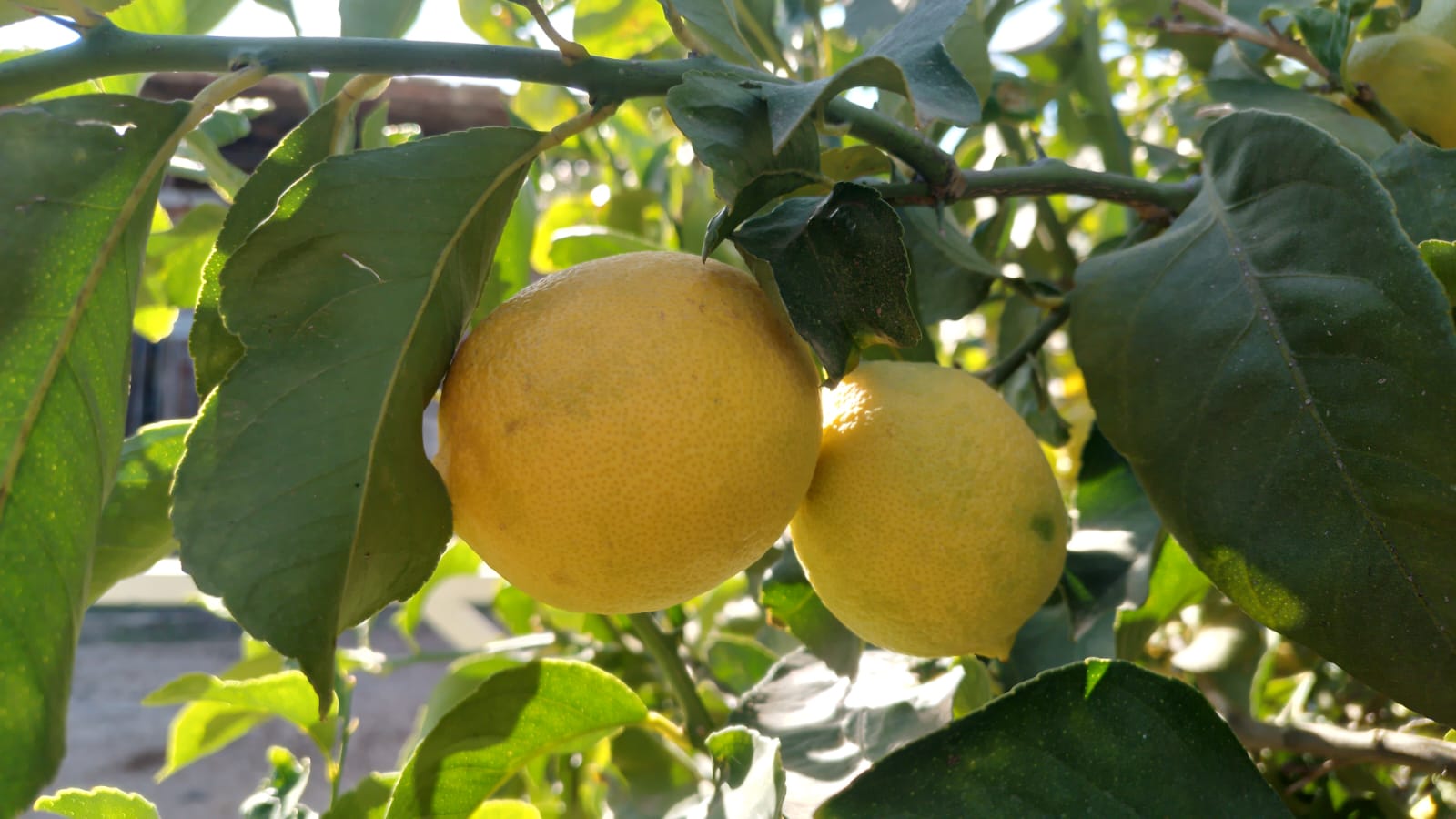
Citrus fruits change their look and character as the season progresses: we know the green oranges of early summer—tart and full of first-fruit excitement—followed by the yellow and orange ones, boasting a riper, sweeter taste. Part of the color change is due to ripening over time, yet part is due to weather: citrus colors develop in cool winter climates. In tropical regions with no real winter (no cold weather), citrus remains green even when mature—tropical oranges are green. Lime trees are especially sensitive to cold and usually don’t experience cold enough conditions to develop color. But if stored in a cool place during winter, their color turns yellowish!
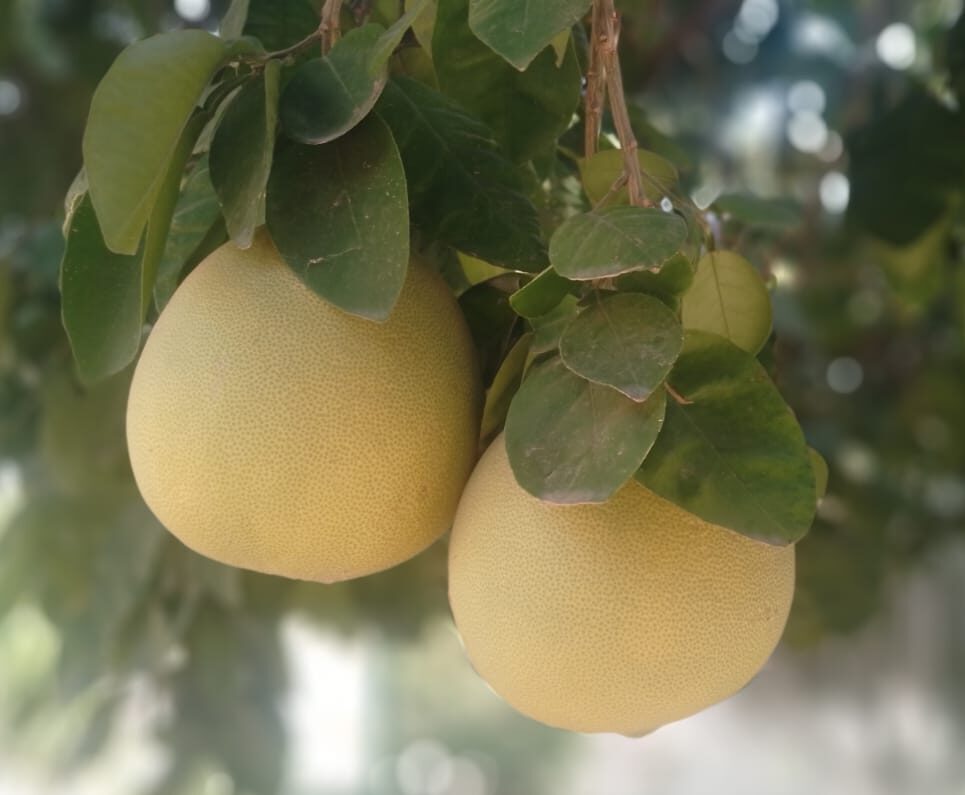
When we speak of coolness, we don’t mean actual cold, and certainly not temperatures approaching freezing. In general, citrus trees are not frost-resistant—too low temperatures can kill them or severely damage the crop. Different varieties have varying levels of sensitivity. Their preferred conditions include humidity, consistent sunlight, fertile soil, and sufficient water—whether from rain or irrigation. These conditions are indeed found in their main growing regions today: southern China, the Mediterranean, South Africa, Australia, the southern U.S., and parts of South America.
Envious of the citrus trees they saw in warmer regions, Northern Europeans developed—after the advent of glass production—citrus cultivation in giant containers under glass protection. The orangery at the Louvre Palace in 1617 is one example which became a hallmark of aristocratic homes in the 17th and 18th centuries.
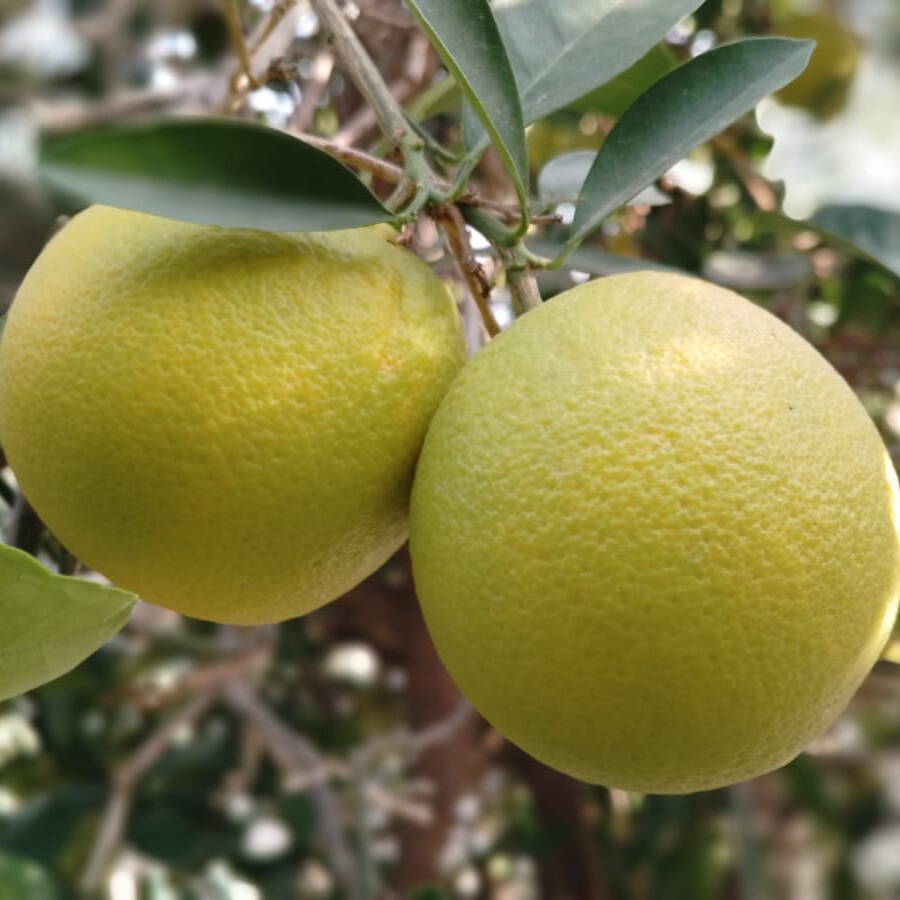
In our sunny Holy Land (sometimes even in December), we don’t need glass greenhouses. As early as the Hasmonean period (2nd century BCE), etrogs grown in the land are mentioned. The citrus industry was especially significant before 1948 and in early Israel, remaining so until the 1970s and 1980s. But gradually, as Israel’s water crisis worsened, citrus trees’ water needs became an increasing burden on growers. New competitors and tough market conditions also shrank the industry. Many orchards were uprooted and replaced by villas; the intoxicating scent of citrus was replaced by exhaust fumes.
Yet, against the general trend and independently of it, Israeli organic citrus growers continue to cultivate wonderful citrus fruits. One of the most successful is the Shiff Farm in Moshav Beit Hanan, where the Shiff family grows a variety of fruits, with citrus playing a central role. Their excellent oranges and pomelos appear in your fruit boxes, and soon clementinas will join them too.
This week’s Chubeza Newsletter is dedicated with love and sorrow to the memory of Hadar Goldin, returned to his family and homeland after 11 years. May Hadar’s memory be blessed. We continue to demand the return home of every single hostage.
Meanwhile, as we anxiously wait, we hope that perhaps this weekend will finally bring the rain so desperately needed by the citrus trees, by our sinuses yearning for moisture, by the viruses in the air that must be washed away, and simply so we can snuggle under a down blanket, watch the drops that steadily keep falling, and peel an orange whose intoxicating scent fills the house. Rain, rain, COME AGAIN!!!!!
Alon, Bat-Ami, Dror, Einat and the entire Chubeza team