The Weekly Newsletter of Chubeza Farm
THANK YOU!!
This week we are delighted to announce the return of very special products we have greatly missed:
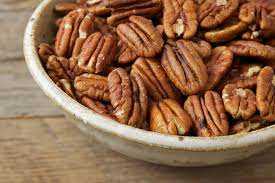
- Delectable organic pecans, grown by the Schiff family in Moshav Beit Hanan on the Coastal Plain. These fresh, shelled, delicious pecans are a sheer delight!
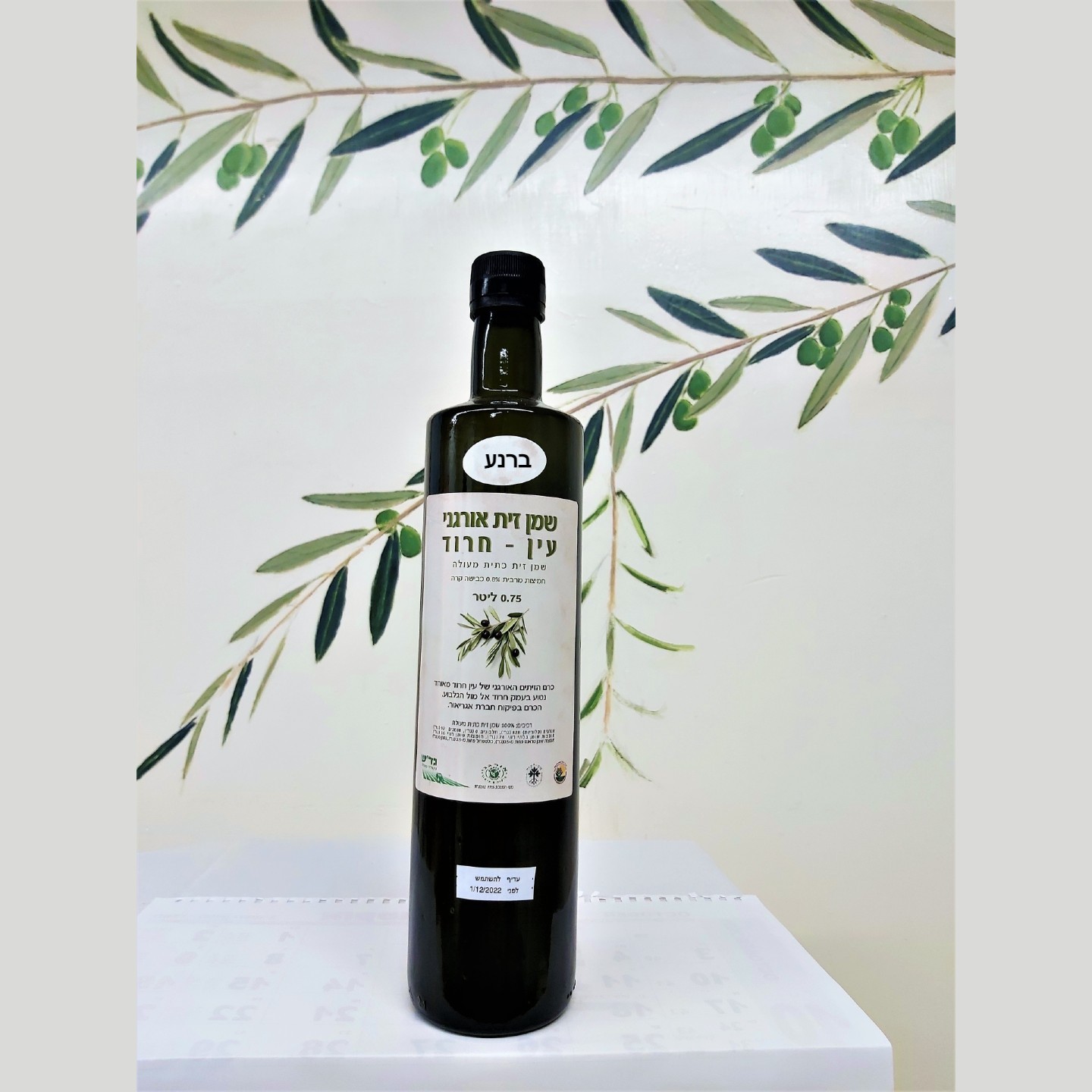
- Organic olive oil from Kibbutz Ein Harod, in the historic Jezreel Valley, made from native Israeli Barnea olives grown in the kibbutz groves.
Order these and other distinctive, delicious products via our ordering system, delivered straight to your home in your Chubeza box!
In last week’s Newsletter, we delved into the development of agriculture and the cultivation of various plants round the globe, reaching the pastoral state of millions of small farmers tending the varieties that eventually adapted to soil, climate, and local pests. In the process, thousands and tens of thousands of varieties and sub-species of plants were created for food and other uses. Sadly, this is no longer the case...
A major part of this alteration is related to the "Green Revolution" - a process that occurred between 1940-1960, mainly in Mexico and India. This revolution marked a transition to the use of new species, using chemical fertilizers, pesticides, mechanization, and monoculture (growing one type of crop over large areas). The project emerged when Mexico turned to the US for help in facing the looming crisis of mass hunger resulting from a rapid population growth (and a slowing down of food production). Joining forces with the Rockefeller Foundation, they established a practical research center aimed to accelerate wheat production in Mexico. Headed by American agronomist Norman Borlaug, the research team succeeded to develop new wheat varieties that produced double the yield, were easily mechanically processed, and maintained high resistance to diseases and pests. After great success in Mexico, these working methods were adopted by India, where elite rice varieties were developed. For his pioneering work, Borlaug was awarded the Nobel Peace Prize.

"Green Revolution" researchers and farmers had good intentions, true. And the varieties they developed were indeed "super crops," but in their wake came the problematic side effects of this accelerated pace and expansion of food production: the extensive use of chemical fertilizers and pesticides, intensive cultivation of land which diminished soil fertility, and, circling back to us - a significant decline in seed diversity. Thousands of wheat, rice, or corn varieties grown worldwide prior to the Green Revolution were reduced to several dozen elite hybrid varieties grown industrially worldwide. Farmers could not save these new hybrids from year to year (a hybrid variety does not yield an identical offspring), thus control over seed production and distribution was completely altered. From millions of farmers round the globe, each saving the best seeds from year to year, the global seed market is now controlled by several seed corporations only.
The Israeli wheat is a prime local example: wheat was probably domesticated in our region some 10,000-12,000 years ago. A century ago, Aharon Aharonson discovered wild wheat near Rosh Pina in the north, and over the years there was continuous cultivation of traditional local wheat. Adapted to the soil and specific micro-climates, thousands of traditional varieties with different, diverse characteristics developed in villages throughout the region. The local varieties were mainly durum wheat – hard wheat from which pita bread (and pasta) are made. The Zionist pioneers from Europe in the 20th century changed the picture... They, who came to Israel to “build and be built,” to create the “New Jew,” still found it hard to give up the food they’d grown up on, and the local wheat just didn’t produce their beloved European-style loaves of bread... Thus, they imported their own wheat seeds to Israel, which eventually took over the bulk of the local yield, with most of the traditional varieties lost in the process.

Luckily, there were agronomists who insisted on preserving the traditional varieties, believing that even if not all varieties are grown commercially, it is important to preserve the diversity. Over the years, wheat and other seeds, both cultivated and wild, were carefully collected from across the country and preserved in research labs. A parallel process took place (and continues to take place) worldwide, where seeds are collected from wild plants and traditional cultivated plants to be preserved in seed banks at deep freeze (-18 degrees Celsius), stringently dry conditions. The world’s most famous seed bank is on an isolated island north of Norway, hewn inside a glacier with some one million seed samples from the world over. Take a look:
But aside from the need for nostalgia and a blast from the past, what is the point of preserving millions of crop varieties, some of which are not even commercially grown? Why invest so much energy and effort in collecting and preserving them? Shouldn’t we just let bygones be bygones and move on to 2025? The answers are – of course – varied, but truth be told, the need is even more powerful in 2025...
Scientific and medical research is largely based on botany. Much of the medicine we know today utilizes substances derived from plants, thus the genetic decrease of plants also reduces the chance of finding the next plant-based medicine. Often, the desired active component is found in greater quantity and potency in wild plants, and less within domesticated and hybrid plants. A wide variety of plant species allows continuing research into the properties of plants, not necessarily for food purposes.
Sadly, our modern era has been riddled with natural disasters (tsunamis, earthquakes, forest fires) and manmade wars. The result is always critical damage to plants and fields. In the Malaysian and Indonesian tsunamis, rice fields in the disaster areas were critically struck, resulting in the loss of traditional, locally adapted species. Seed banks came to save the day: seeds that had been kept for emergencies were brought out and re-sown in the fields. Warfare in Iraq and Syria also harmed the variety of seeds, in this case due to looting and vandalism of local seed banks. The Syrian war caused the destruction of the important seed bank of Icarda, an organization that conserves and researches agriculture on the edge of the desert. Eventually, this seed bank was transferred to Morocco and Lebanon after being replenished from seed banks worldwide where the organization's collections were preserved.
Plant epidemics, too, pose a grave danger in an era of monocultural and non-diverse cultivation. The great famine in 19th century Ireland damaged most of the potatoes in Ireland, already scarce species, causing massive starvation. Then there is the Panama Disease that damaged banana roots, nearly wiping out the banana industry after the dominant specie was severely struck. And today, a particularly violent strain of wheat rust threatens wheat crops as well.
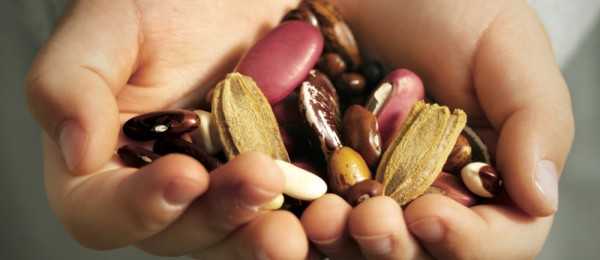
Lastly, the climate changes already at our doorstep will be accompanied by high temperatures, less precipitation, and new pests. To cope with these changes, plants need to adapt, develop tolerance, and withstand even harsher conditions. The solution to these pandemics and climate changes lies in genetic research, dedicated to locating the resistant traits to those diseases, to attain the ability to create hybrids of new, vigorous species. And for that, we need…. you guessed it: genetic variety that exists in traditional and wild plants.
To create a new variety, developers select wild and traditional species with such traits as disease resistance, drought adaptation, and tolerance to high temperatures, to breed new, improved species. Such development takes about 7-10 years. Fingers crossed!
May 2025 bring good news, abundance, and diversity, respect for the past, and hope for the future!
Alon, Bat-Ami, Dror, Einat and the entire Chubeza team